
Virtual staging is a cost-efficient way to showcase properties online by digitally furnishing empty spaces. It helps buyers visualize a home’s potential, speeding up sales and improving online engagement. By using high-quality photos, tailored design styles, and quick delivery of images, real estate agents can create listings that stand out. Here’s what you need to know:
- What It Does: Adds furniture and décor to photos of empty homes, making spaces more appealing.
- Why It Works: Staged photos attract more attention online and help buyers connect with the property.
- Key Benefits:
- Low cost: Around $20 per image.
- Fast turnaround: Images ready in 12–24 hours.
- Customizable: Tailored designs for specific buyer demographics.
Virtual staging is especially effective for living rooms, kitchens, and master bedrooms – key areas that influence buyers. With services like Fast Virtual Staging, agents can quickly enhance their listings and adapt designs as needed to meet market trends.
How To Stage Your Home When Selling (Before & After Photos Of Staging A Home)
How Virtual Staging Works: From Empty to Furnished
Transforming an empty room into a beautifully furnished space is easier than you might think. A straightforward three-step process takes bare rooms and turns them into polished, buyer-ready visuals. This method helps real estate professionals create standout property listings that grab attention and generate interest.
Step 1: Taking High-Quality Photos
The foundation of effective virtual staging lies in high-quality photos. The better the original images, the more realistic and appealing the final staged visuals will be. To achieve this, photos should be taken in natural daylight, with proper lighting, and from eye-level angles (about 5 feet high). These factors help create an authentic and inviting look.
Natural sunlight is ideal, so shoots are often scheduled for mid-morning or early afternoon when light is evenly distributed across the room. Using wide-angle lenses allows photographers to capture a larger portion of the space, giving virtual staging designers more flexibility in arranging furniture and creating a sense of flow. Corners and doorways are typically the best spots for capturing multiple walls and adding depth to the final images.
Vacant rooms are preferred for staging, as they provide a blank canvas. If furniture is present, it must be digitally removed before new pieces are added, which can take extra time. To streamline the process, many real estate agents schedule photo sessions after the property has been cleared. Once the photos are ready, the next step is choosing a design style that resonates with local buyers.
Step 2: Selecting Design Styles
Choosing the right design style is all about aligning with buyer preferences and complementing the property’s architecture. Different areas of the U.S. have distinct tastes, and successful virtual staging reflects these regional trends.
Contemporary and transitional designs are popular nationwide because they appeal to a broad audience. These styles feature clean lines, neutral colors, and versatile furniture that enhances the space without overpowering it. Common color choices include warm grays, soft whites, and earthy tones, which not only photograph well but also create a welcoming atmosphere.
Regional trends also play a role. For example, coastal homes often lean toward light and breezy designs, while mountain properties favor cozier, warmer tones. Urban condos might showcase sleek, minimalist furniture, whereas suburban homes benefit from a more comfortable, family-oriented look that helps buyers envision everyday life.
Designers also pay close attention to furniture size and proportion. Pieces are carefully selected to fit the room’s dimensions, ensuring the space feels balanced – neither cramped nor overly spacious.
Step 3: Receiving Final Staged Images
Once the photos and design preferences are submitted, virtual staging companies like Fast Virtual Staging deliver the finished images within 12 to 24 hours. This quick turnaround is crucial for real estate agents working in competitive markets, allowing them to list properties without unnecessary delays.
The final images are provided in high-resolution formats, ready for use across all marketing channels. Standard delivery includes JPEG files optimized for MLS uploads, social media, and print materials like brochures. These images are formatted to meet the requirements of major platforms, such as Zillow, Realtor.com, and local MLS systems.
Before delivery, every image undergoes a thorough quality check to ensure photorealistic results. Designers review lighting, shadows, and furniture placement to ensure everything looks natural and cohesive. The staged furniture integrates seamlessly into the original photo, maintaining the room’s lighting and perspective.
If adjustments are needed, revisions can be made quickly. Whether the initial staging doesn’t align with local tastes or feedback suggests a different approach, changes can be implemented to better match buyer expectations. This flexibility allows real estate professionals to adapt their marketing strategies based on feedback from showings or shifts in the market.
High-resolution staged images enhance property listings instantly, making them more appealing and helping agents attract potential buyers with ease.
Before & After: Real Virtual Staging Case Studies
Virtual staging has a knack for turning dull, empty spaces into inviting areas that spark buyer interest and boost sales. Let’s take a closer look at some real-world examples that highlight how this process works.
Living Room Makeovers
Empty living rooms can be a tough sell in real estate. Back in August 2024, The Own Team tackled a particularly uninspiring living room that felt cold and unwelcoming. Buyers struggled to see its potential. Through virtual staging, they introduced stylish and cozy furniture, transforming the space into a warm, inviting area. The makeover showcased the room’s generous size, smart layout, and abundant natural light, making it easier for buyers to picture themselves lounging there comfortably.
In another project, The Own Team worked on a small living room with limited space. By carefully choosing furniture that fit the room’s proportions – like a compact sofa, multifunctional shelving, and a desk that doubled as a workspace – they turned the tiny area into a functional yet stylish living space. This redesign showed buyers how even small rooms could be practical and visually appealing.
Kitchen and Dining Room Updates
Kitchens often carry a lot of weight in a buyer’s decision-making process. In one transformation from August 2024, The Own Team took on a dated kitchen that featured dark cabinetry, old countertops, and outdated appliances. Virtual staging gave the space a whole new look – sleek stainless steel appliances, crisp white shaker cabinets, and elegant marble countertops. The result was a modern, fresh aesthetic that appealed to contemporary buyers, all without the expense of a physical renovation.
Master Bedroom Improvements
Master bedrooms should feel like a peaceful retreat, a place where buyers can imagine unwinding after a busy day. The Own Team demonstrated this in another August 2024 project. Starting with an empty bedroom, they used virtual staging to create a serene and inviting atmosphere. A king-sized bed with refined linens, bedside tables, and a decorative mirror turned the bare room into a tranquil oasis. This transformation helped buyers envision the space as their own private sanctuary.
sbb-itb-7eef225
Virtual Staging vs. Physical Staging: Main Benefits
More and more real estate professionals are turning to virtual staging instead of traditional physical staging – and for good reason. Virtual staging offers several advantages that make it a go-to choice across the United States. Let’s explore how its speed, affordability, and adaptability are reshaping the way properties are marketed.
Lower Costs and Faster Results
Virtual staging is not only easier on the budget but also gets properties market-ready much faster. Physical staging racks up costs for furniture rentals, delivery, setup, and ongoing fees. On the other hand, virtual staging typically involves a one-time fee per room, making it a cost-effective option.
Speed is another area where virtual staging shines. While physical staging often requires scheduling deliveries and installations, which can delay marketing efforts, virtual staging delivers professionally staged images in a fraction of the time. This quick turnaround is a huge advantage in competitive markets, where getting a listing online quickly can make all the difference.
Quick and Easy Design Adjustments
One of the standout features of virtual staging is how easily it can be updated. If feedback from potential buyers suggests a change in style, virtual staging can be tweaked quickly and affordably – no moving furniture or coordinating with vendors required.
For instance, if a property is initially staged with a sleek, modern look but buyers in the area prefer a more traditional style, a digital makeover can be done in no time. This flexibility also makes it easy to update a property’s look for different seasons or to align with current market trends, keeping the listing fresh and appealing.
Virtual vs. Physical Staging: A Side-by-Side Comparison
Here’s a breakdown of how virtual staging stacks up against physical staging:
| Factor | Virtual Staging | Physical Staging |
|---|---|---|
| Cost | Lower, one-time fee per room | Higher, with recurring costs |
| Turnaround Time | Fast delivery of staged images | Slower due to logistics and setup |
| Design Flexibility | Easy to update with minimal expense | Requires additional costs and effort |
| Storage/Damage | No physical items to manage or damage | Involves furniture with potential risks |
| Buyer Experience | Digital visuals ideal for online viewing | Physical furniture for in-person tours |
This comparison highlights why virtual staging is becoming the preferred choice for marketing properties. Its affordability and speed allow for better budgeting and quicker market entry. Plus, its ability to adapt to different styles and trends ensures that listings remain eye-catching and relevant, making even smaller or less distinctive properties stand out to potential buyers.
Practical Tips: Using Virtual Staging to Sell Properties
Boost buyer interest and speed up sales with these practical virtual staging tips. To make the most of this tool, focus on staging the right rooms, choosing designs that resonate with your market, and streamlining your staging process. Here’s how you can create listings that truly resonate with potential buyers.
Which Rooms to Stage First
Some rooms have a bigger impact on buyers than others. Prioritize staging living rooms, master bedrooms, and kitchens – these spaces are key to helping buyers imagine themselves living in the home.
- Living Rooms: As one of the first spaces buyers see in online listings, a well-staged living room instantly conveys comfort and livability.
- Master Bedrooms: Buyers view this space as their personal retreat, so a relaxing and inviting design can make a strong impression.
- Kitchens: Often considered the heart of the home, a thoughtfully staged kitchen can highlight functionality and style, appealing to buyers’ practical and emotional needs.
You might also consider staging dining rooms and home offices, especially if these spaces are important to your target market. By focusing on these high-impact areas, you can tailor your staging to local preferences and buyer expectations.
Picking Designs for Your Local Market
To stage effectively, it’s essential to understand what works in your specific area. Buyer preferences can vary widely across regions, so a one-size-fits-all approach won’t cut it.
- Study Local Trends: Look at recent successful home sales in your area to identify popular design styles. For example, suburban buyers often gravitate toward traditional, cozy designs that emphasize warmth and practicality.
- Know Your Audience: First-time buyers may prefer modern, move-in-ready looks, while high-end buyers might expect more elegant, upscale designs. Adjust your staging choices – like furniture size and color schemes – to reflect the tastes of your target demographic.
- Seasonal Considerations: Match your staging to the season. Bright, airy designs work well for spring and summer listings, while fall and winter homes benefit from warm, cozy touches that evoke comfort.
By aligning your staging with local tastes and trends, you can create a stronger emotional connection with buyers.
Working with Fast Virtual Staging
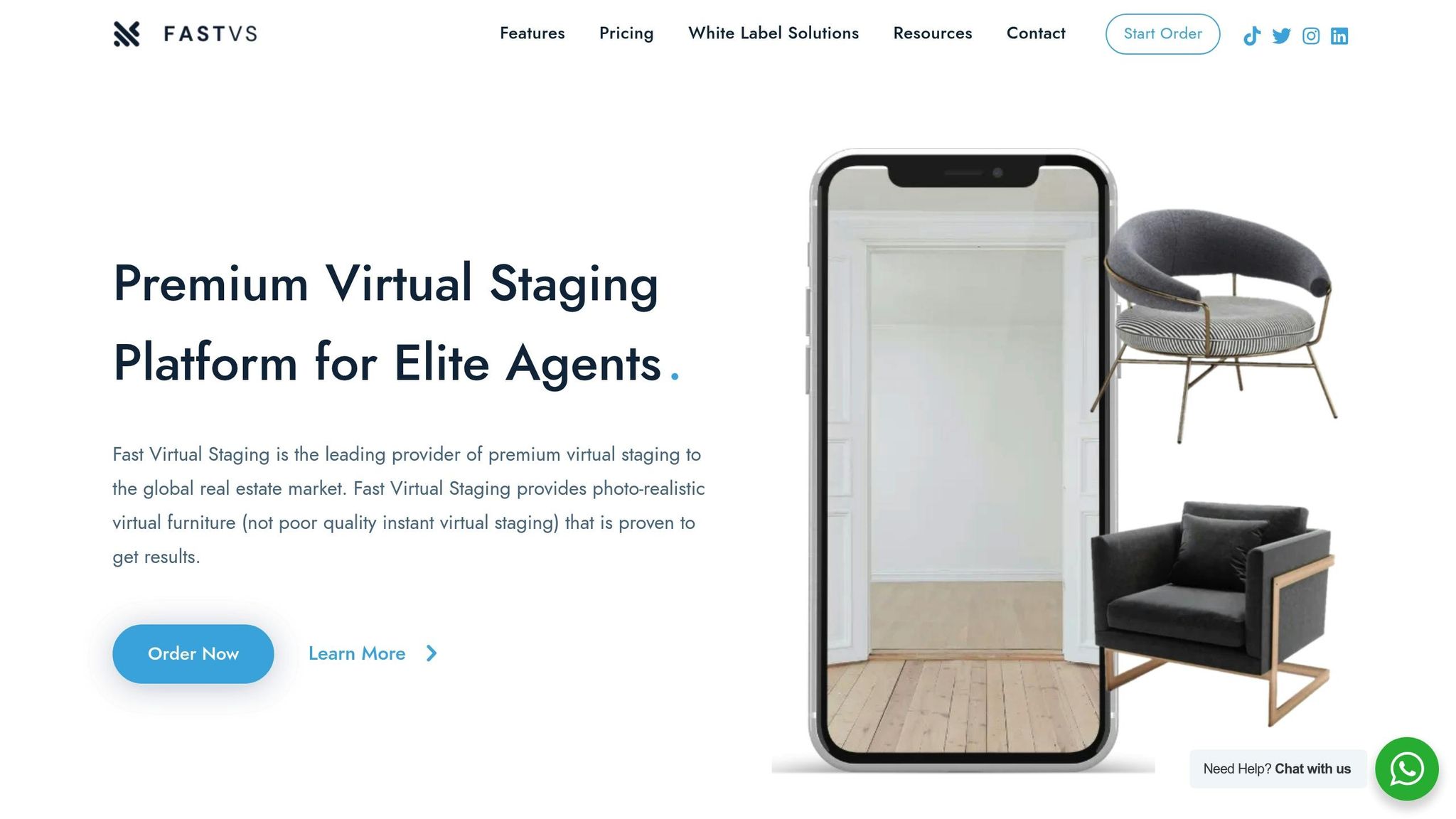
Pairing these strategies with a reliable virtual staging service can save time and enhance results. Fast Virtual Staging simplifies the process by offering tailored guidance and quick turnarounds, making it easier to adapt to market demands.
- Quick Turnaround: With a guaranteed 24-hour delivery, you can get your listings online fast – an important edge in competitive markets. This speed also allows for quick adjustments based on buyer feedback or market shifts.
- White-Label Options: For real estate photographers and agencies, Fast Virtual Staging offers white-label services, enabling you to provide staging under your own brand. This can elevate your offerings and strengthen your professional identity.
- Affordable Pricing: At just $20 per image, staging multiple rooms becomes budget-friendly, letting you maximize your property’s appeal without breaking the bank.
The service also includes a revision process, so you can fine-tune designs to ensure they meet buyer expectations. By combining smart staging strategies with a service like Fast Virtual Staging, you can create standout listings that draw attention and drive results.
Conclusion: Improve Your Listings with Virtual Staging
Virtual staging has become a powerful tool for boosting property appeal and accelerating sales. By digitally furnishing spaces, it does more than enhance appearances – it helps buyers picture their lives in a new home, creating an emotional connection right from the start.
The numbers speak for themselves. A staggering 97% of home buyers use the internet to search for properties, and most form an opinion about a listing in just 7–10 seconds after viewing it. This makes high-quality listing photos more important than ever. Virtual staging transforms empty or outdated rooms into inviting, beautifully designed spaces that grab attention and generate more interest online.
The benefits don’t stop there. Research shows that 85% of staged homes sell for 5% to 23% above their list price, and 82% of buyer’s agents agree that staging helps buyers relate to a property. These statistics highlight how virtual staging can drive tangible results, improving both the speed and profitability of sales.
Compared to traditional staging, virtual staging offers unmatched affordability, speed, and flexibility. For example, Fast Virtual Staging provides professionally staged images for just $20 each, with a guaranteed 24-hour turnaround. This allows you to stage multiple rooms at a fraction of the cost of physical staging. Plus, it’s easy to make design adjustments to cater to different buyer preferences, ensuring that each property is presented in the best possible light.
Whether you’re a real estate agent, photographer, or homeowner, virtual staging gives you the tools to create standout listings that attract more buyers and close deals faster. From understanding your market to staging key spaces and partnering with a reliable service, the strategies shared here prove that virtual staging is a smart, effective way to maximize the potential of any property.
FAQs
How do the costs and timelines of virtual staging compare to traditional home staging?
Virtual staging offers a budget-friendly and efficient solution compared to traditional methods. The cost generally ranges from $29 to $75 per photo, with a turnaround time of just 12 to 48 hours. On the other hand, traditional physical staging can set you back $1,500 to $5,000 per home and often requires 7 to 14 days to complete.
This makes virtual staging a smart choice for enhancing property listings quickly, without the steep costs or extended setup times of physical staging.
What should I consider when selecting a design style for virtual staging to attract local buyers?
When selecting a design style for virtual staging, it’s crucial to match it with the tastes and expectations of buyers in your area. Dive into local market trends to understand what’s popular in home decor and consider the demographics of potential buyers. This ensures your staging feels relevant and relatable.
Think about the neighborhood’s vibe, the property’s price bracket, and the lifestyle your target audience is likely looking for. For example, a sleek, modern design might catch the eye of young professionals in a city setting, while a warm, classic style could be more appealing to families in suburban neighborhoods. Adapting the design to suit your market can make the property feel more inviting and boost its overall appeal.
What if the initial virtual staging design doesn’t match buyer preferences or market trends?
Virtual staging makes it simple to tweak designs based on buyer feedback or shifting market trends. Need to change furniture styles, adjust colors, or rearrange layouts? All of this can be done digitally, saving time and avoiding the expense of physical updates.
This approach keeps your property visually appealing and competitive, ensuring it catches the attention of the right buyers and stays current in the market.