
Fast Virtual Staging is transforming how real estate developers market properties during pre-sales. By digitally furnishing empty spaces, this service creates realistic, visually appealing images that help buyers imagine homes as finished spaces. At just $20 per image with a fast 12-24 hour turnaround, developers can save money, reduce logistical challenges, and bring properties to market faster.
Key benefits include:
- Cost savings: Avoid expenses tied to physical staging (furniture rentals, setup, maintenance).
- Quick delivery: Receive staged images within 24 hours, speeding up marketing efforts.
- Flexibility: Showcase multiple design styles to appeal to different buyer demographics.
- Scalability: Stage multiple units efficiently for larger developments.
Virtual staging also improves buyer engagement by helping them visualize their future home, resulting in faster sales and higher interest. By adhering to real estate marketing standards, including transparency about staged images, developers can build trust while enhancing their listings. Fast Virtual Staging is an efficient, affordable solution for staying competitive in today’s fast-moving real estate market.
Easy low cost virtual staging for real estate photography
Key Benefits of Fast Virtual Staging for Developers
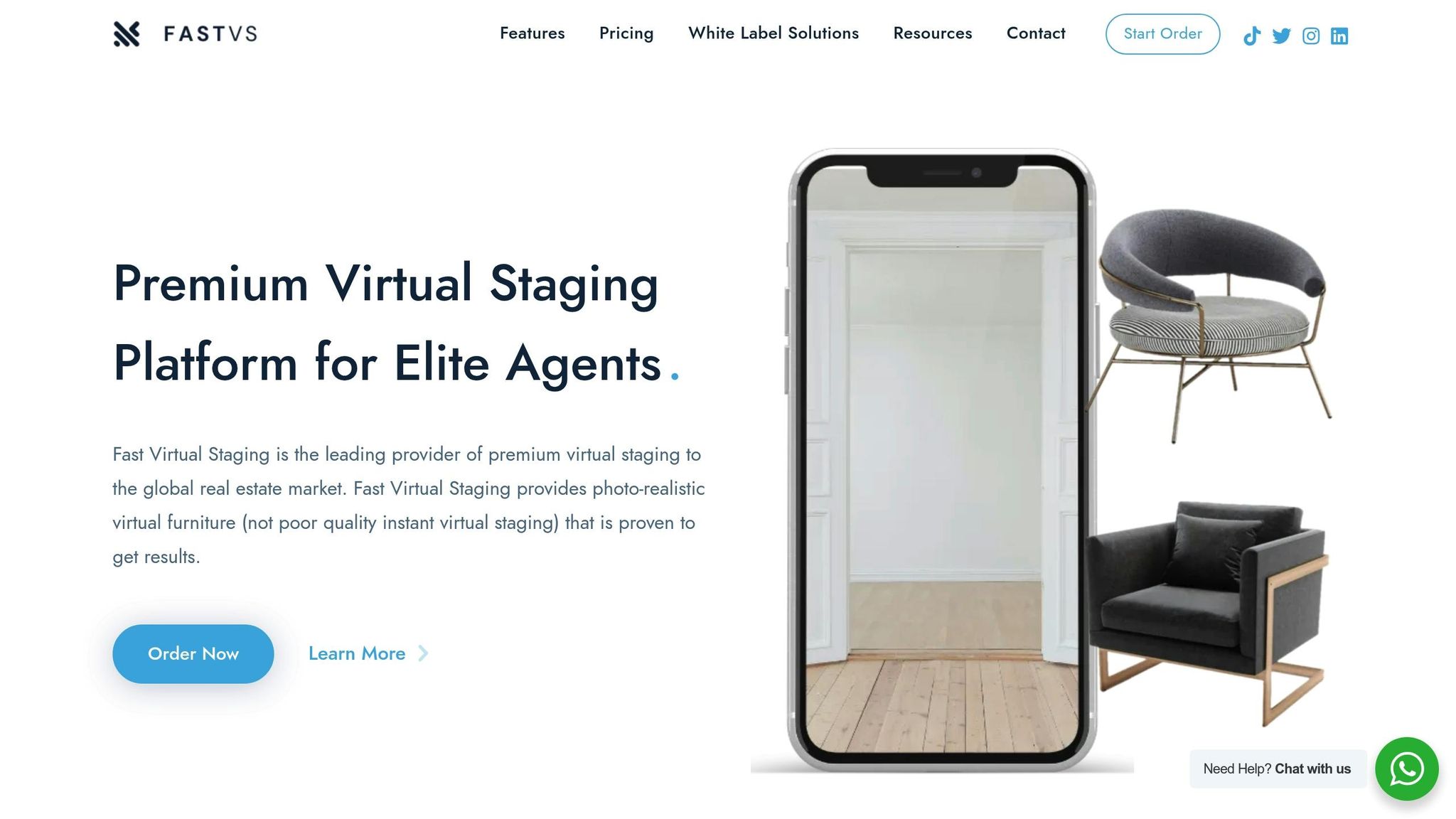
Real estate developers are under constant pressure to bring properties to market quickly while keeping expenses in check. Fast Virtual Staging tackles these challenges head-on, offering practical advantages that can directly boost a developer’s profitability.
A Budget-Friendly Alternative to Physical Staging
Fast Virtual Staging is a cost-efficient solution that eliminates the hefty expenses tied to traditional staging. Physical staging involves furniture rentals, professional setup, ongoing upkeep, and eventual removal – all of which can pile up quickly, especially across multiple properties. Plus, coordinating logistics like deliveries and on-site installations can be a headache.
With Fast Virtual Staging, developers can stage properties for just $20 per image. This streamlined pricing not only saves money but also reduces logistical hassles, allowing developers to focus their budgets on other key areas, such as marketing campaigns or construction upgrades.
Speeding Up Pre-Sales with Rapid Turnaround
In the fast-paced real estate world, time is money. Fast Virtual Staging delivers staged images within 24-48 hours of photography, enabling developers to list properties and kick off marketing efforts almost immediately. This quick turnaround significantly reduces the time between construction completion and market entry, cutting carrying costs and speeding up revenue generation.
Another advantage? Developers can easily update or refresh staged images to reflect shifting market trends or buyer preferences. This flexibility ensures listings and campaigns stay current, helping developers launch sales events and attract buyers with confidence. The result? Faster buyer commitments and quicker profits.
Flexible Design Options and Scalable Solutions
Beyond saving time and money, Fast Virtual Staging offers the flexibility to cater to a wide range of buyer preferences. Developers can showcase a single property in multiple design styles – whether it’s sleek and modern, cozy and traditional, or high-end luxury – without the need for multiple physical setups. This adaptability allows developers to target different demographics and market segments effectively.
Additionally, the service includes white-label solutions, enabling real estate photographers, marketing agencies, and sales teams to deliver high-quality staged images under their own branding. For large-scale developments, a single photo session can produce multiple staged versions, creating a robust library of marketing materials. This versatility not only appeals to diverse buyer tastes but also builds trust by presenting tailored living options that resonate with potential buyers.
Improving Buyer Engagement with Virtual Staging
Empty rooms can make it tough for buyers to imagine a house as their future home. When potential buyers walk through bare properties, they often struggle to picture how the space could feel inviting or functional. Virtual staging tackles this challenge by transforming empty spaces into beautifully designed interiors that spark emotional connections and help buyers feel more confident in their decisions. These visual enhancements can pave the way for quicker and more assured purchasing choices.
Helping Buyers Visualize Their Future Home
Staged photos go beyond showing empty rooms – they provide a glimpse into a lifestyle. Instead of blank walls, buyers see a cozy living room where they could relax with family or a stylish kitchen perfect for hosting friends. This ability to visualize transforms a property from a blank slate into a dream home.
Fast Virtual Staging makes it easy to create these compelling visuals for multiple units quickly. The staged images highlight each room’s potential, showing how the space can be used effectively. This is especially helpful during pre-sales, where buyers often rely solely on floor plans and renderings. By offering clear, attractive visuals, virtual staging not only inspires buyers but also speeds up their decision-making process.
Prompting Quicker, Confident Purchases
Staged properties often sell faster and attract more interest. When buyers can see themselves living in a well-designed space, they’re more likely to make confident decisions without hesitation. The emotional pull of a beautifully staged home can be a game-changer.
Fast Virtual Staging ensures consistency and professionalism in every image, thanks to dedicated account managers who oversee the process. High-quality visuals signal attention to detail, building trust with buyers who are making significant financial commitments. Plus, the easy revision process allows developers to tweak staging styles based on buyer feedback, ensuring the presentation stays aligned with market preferences.
Catering to U.S. Design Trends and Buyer Preferences
Understanding that tastes vary across the U.S., Fast Virtual Staging offers customizable design options to match different buyer demographics and regional styles. For example, in urban markets with younger, tech-savvy buyers, staging might feature open-concept layouts with sleek, modern designs and smart home integrations. On the other hand, suburban homes targeting families might showcase traditional layouts with a focus on comfort and practicality.
This flexibility allows developers to experiment with various styles to determine what resonates most with their audience. Whether it’s the light, breezy designs favored on the West Coast or the more formal, structured arrangements preferred on the East Coast, Fast Virtual Staging adapts to meet regional preferences, making every property feel like home to the right buyer.
sbb-itb-7eef225
Case Studies: Success with Fast Virtual Staging
Real-world examples from across the U.S. highlight just how impactful Fast Virtual Staging can be in pre-sales campaigns. Real estate developers have tapped into this approach to elevate their marketing efforts, achieving striking visual improvements and speeding up sales timelines. The results? A game-changer for showcasing properties.
Before-and-After Comparisons
The difference virtual staging makes is undeniable when you compare photos of empty rooms with their digitally furnished versions. Empty spaces often leave potential buyers uninspired, making it tough for them to picture how the area could work for their needs.
Virtual staging changes all that. By digitally adding furniture, rugs, and décor, these spaces are transformed into inviting, functional environments. Each room’s purpose becomes clear, and the property feels more like a home. Buyers can better understand the layout, how rooms connect, and how the space might fit their lives. This emotional connection can be the nudge they need to take the next step.
But the benefits don’t stop at aesthetics. These visual enhancements also deliver real business advantages.
Measurable Results from U.S. Pre-Sales Campaigns
Virtual staging doesn’t just make properties look good – it gets results. Developers consistently report faster sales and higher engagement with staged listings compared to those featuring empty rooms.
For starters, online listings with staged photos tend to attract significantly more views. Not only do these listings capture attention, but they also hold it, with longer viewing times that signal deeper buyer interest. Staged properties often command higher prices and draw in better-quality inquiries. Prospective buyers approach with clearer expectations and stronger intent, leading to a smoother path from inquiry to contract.
The benefits extend beyond digital engagement. Staged imagery boosts performance across both online and print marketing, helping developers reduce acquisition costs. And because virtual staging has such a quick turnaround, developers can launch campaigns faster, staying competitive in fast-moving markets.
Another major perk? Flexibility. Developers can tweak the staging style based on early market feedback – no need for new photo shoots or delays. This adaptability allows them to fine-tune their strategy and keep their campaigns on track.
Practical Considerations for U.S. Developers Using Fast Virtual Staging
Virtual staging becomes straightforward when developers follow a structured process, meet technical specifications, and adhere to industry regulations. These steps help ensure developers can fully leverage the benefits of virtual staging during pre-sales.
Streamlined Workflow for Orders and Revisions
Fast Virtual Staging offers an easy-to-use online platform where developers can upload photos, select a design style, and place their orders. A dedicated account manager is available to ensure smooth communication throughout the process.
The service promises a speedy 12-24 hour turnaround, allowing developers to quickly launch their marketing campaigns. For residential properties, a 24-hour delivery guarantee ensures developers can stay competitive in fast-moving pre-sales markets.
One standout feature is the straightforward revision process. If the initial staging doesn’t align with the developer’s vision or market feedback suggests changes, revisions can be requested to fine-tune the images. This flexibility is especially helpful for adapting marketing strategies based on early buyer reactions.
The workflow is designed to integrate seamlessly with existing marketing schedules. Developers can stage multiple units at once, receive all images within the promised timeframe, and immediately use them across their marketing channels. The pricing model is predictable, making it easier to budget for larger projects.
After placing an order, the next step is ensuring the technical requirements are met for optimal results.
Technical Requirements and Best Practices
To achieve the best results with virtual staging, developers need to start with high-quality source images. Using high-resolution, well-lit photos ensures the final renders look realistic and appealing. The platform supports standard image file formats, so photos from any professional photographer can easily be used.
Room dimensions should be submitted in feet and inches to ensure that the digitally added furniture looks proportional within the space. Wide-angle shots are particularly effective for virtual staging, as they capture more of the room and provide better context for furniture placement.
Photographing rooms from multiple angles offers more staging options and allows for tailored marketing materials aimed at different buyer groups. Empty, clean spaces work best for virtual staging, so scheduling photo shoots before construction debris or temporary fixtures are present saves time and enhances the final results.
Consistency in lighting across all photos is critical for maintaining a cohesive look when staging multiple rooms. Natural lighting is often the most flattering, so scheduling photo shoots during daylight hours can significantly improve the staged images.
Once the workflow and image quality are in place, developers also need to ensure compliance with U.S. real estate marketing standards.
Compliance with U.S. Real Estate Marketing Standards
Virtual staging is entirely legal and ethical as long as buyers are informed. According to the Federal Trade Commission, real estate advertisements must not be misleading, meaning that virtual staging must accurately represent the property’s condition without creating false impressions.
Transparency is key to building trust with buyers and avoiding legal complications. Staged photos must be clearly labeled as "virtually staged" or "digitally furnished" in all marketing materials. Most MLS systems require this transparency, though specific rules may differ depending on the region.
It’s important not to alter the structure, size, or condition of the property in the staging process. Virtual staging should focus on enhancing empty spaces with realistic furniture and décor, helping buyers imagine the space’s potential without misrepresenting what they’ll actually purchase.
Since state and local real estate laws vary, developers should confirm that their virtual staging practices comply with regional regulations. Some MLS systems have specific rules about watermarks, branding, or contact information on staged images. For instance, ARMLS Rule 8.23 prohibits including contact details or branding on any media, including staged photos.
Transparency pays off. According to the 2025 NAR Profile of Home Staging, 83% of buyer’s agents reported that staging helps buyers visualize the property as their future home. When done professionally and with clear disclosure, virtual staging enhances the home-buying experience, fostering confidence rather than confusion.
Conclusion: Why Fast Virtual Staging is the Top Choice for Developers
Fast Virtual Staging stands out as a go-to solution for developers looking to enhance pre-sales efforts across North America. With its competitive pricing of just $20 per image, guaranteed 24-hour delivery for residential orders, and photo-realistic results, it offers a practical and effective way to elevate property marketing.
The quick 12–24 hour turnaround ensures marketing campaigns can launch swiftly, capturing buyer interest even during the construction phase. Developers also benefit from personalized support through a dedicated account manager and a straightforward revision process, making it easier to cater to diverse buyer preferences and adapt to shifting trends.
The process is simple: upload high-resolution photos, and within a day, receive beautifully staged images that are ready for marketing. This streamlined approach, paired with predictable pricing, makes it easy for development teams to integrate into their workflows and manage budgets effectively. Proven success in U.S. pre-sales campaigns highlights how these advantages lead to quicker, more polished market entries.
Fast Virtual Staging enhances empty spaces with realistic furnishings while adhering to U.S. real estate standards, ensuring transparency and maintaining the integrity of the property.
In today’s competitive pre-sales environment, Fast Virtual Staging provides developers with a clear edge. It accelerates buyer interest, trims marketing expenses, and delivers tangible results – making it a smart, reliable choice for achieving pre-sales success.
FAQs
How does Fast Virtual Staging create realistic images that match current design trends?
Fast Virtual Staging combines cutting-edge technology with skilled designers to produce lifelike images that align with current interior design trends. From sleek modern minimalism to the cozy charm of rustic farmhouse, or the clean lines of Scandinavian style, these designs cater to a variety of popular tastes, including mid-century modern, coastal, and industrial aesthetics.
The result? Spaces that feel inviting and relatable, allowing potential buyers to see the true possibilities of a property. This tailored approach helps developers present homes in a way that connects with today’s buyers and enhances the property’s appeal.
What are the photo requirements for submitting images to Fast Virtual Staging for the best results?
To get the most out of Fast Virtual Staging, make sure your photos follow these simple yet effective guidelines:
- High resolution: Aim for images that are at least 2,000 pixels wide. This ensures the staging looks sharp and detailed.
- Proper lighting: Take photos in spaces with plenty of natural light or in well-lit conditions. Avoid dark corners or heavy shadows.
- Empty or minimally furnished rooms: Clear, uncluttered spaces provide the best canvas for virtual staging.
- Straight-on angles: Shoot from eye level and keep the camera straight to avoid any awkward tilts or distortions.
Stick to these tips, and you’ll set the stage – literally – for impressive virtual transformations!
What happens if the initial virtual staging doesn’t align with a developer’s vision or market feedback?
At Fast Virtual Staging, we know how crucial it is to nail every detail. If the first version doesn’t quite hit the mark or needs tweaks based on market insights, we’ve got you covered. Our revision process is simple and designed to ensure the final staging matches your vision and connects with your audience.
All you need to do is share clear feedback on what needs adjusting, and our designers will handle the rest swiftly. Your satisfaction comes first, and we’re dedicated to creating virtual staging that enhances your property’s appeal.