
Virtual staging transforms empty or outdated spaces into visually appealing rooms by digitally adding furniture, decor, and lighting. This cost-effective strategy helps homes sell faster and often above the asking price. Modern tools now include AI design recommendations, 360° views, and integration with platforms like Matterport. Popular styles include Modern Minimalism, Mid-Century Modern, Rustic Charm, Coastal Vibes, and Industrial Flair. Virtual furniture also highlights multifunctional, eco-friendly, and statement pieces, making spaces more inviting and functional. With prices starting at $20 per image, virtual staging is a smart way to attract buyers and boost property appeal.
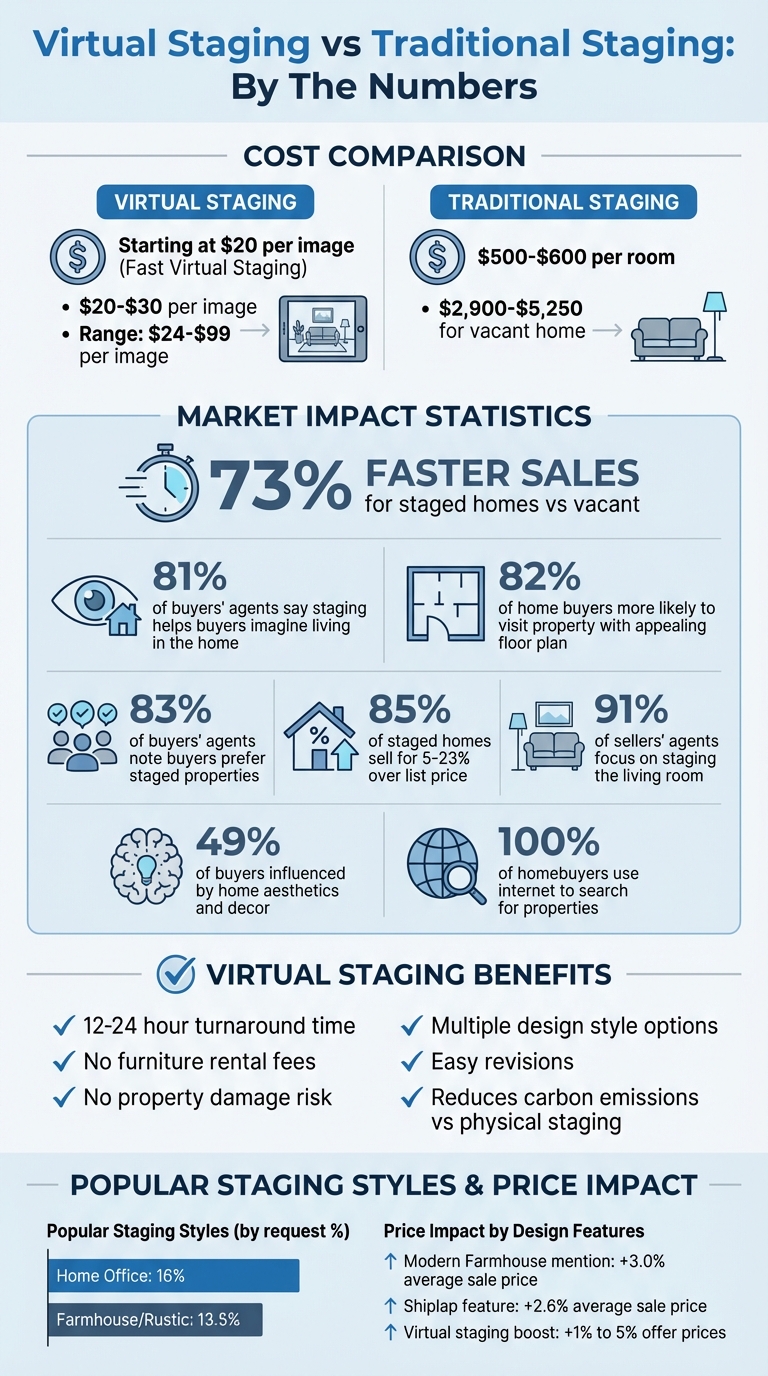
Virtual Staging Statistics: Cost Comparison and Market Impact
1. Modern Minimalism
Clean Lines and Low-Profile Furniture for Maximum Openness
Modern minimalism is all about cutting out the clutter and focusing on clean, functional design that makes spaces feel open and inviting. Low-profile furniture plays a key role here, as it keeps sightlines clear and lets natural light flow freely. As PhotoUp explains:
Low-profile furnishings tend to create a sense of openness and spaciousness.
Neutral tones paired with natural materials are the go-to for minimalist spaces, creating a calm, universally appealing backdrop. To avoid the space feeling too stark, introduce a pop of color with accessories like a vibrant throw pillow or an eye-catching area rug. A single bold accent can bring just the right amount of visual interest without overwhelming the simplicity.
Proportion is crucial in minimalist design. Furniture should match the room’s scale, leaving enough room for easy movement. For example, a coffee table should be about half the length of the sofa and either level with or slightly lower than the seat height. This balance keeps the room feeling cohesive and visually pleasing.
The numbers support this approach: 81% of buyers’ agents say staging helps prospective buyers imagine themselves living in the home. And with virtual staging costing only $20 to $30 per image – a fraction of the $500 to $600 per room for traditional staging – modern minimalism is an effective and budget-friendly way to highlight a property’s potential. Up next, see how Mid-Century Modern design takes these minimalist principles to the next level.
2. Mid-Century Modern
Tapered Legs, Organic Shapes, and Retro Elegance That Sells
Mid-century modern furniture has a timeless charm that continues to captivate today’s buyers. Its hallmark features – like tapered legs on sofas and credenzas, organic shapes, and clean horizontal lines – create a sleek yet inviting aesthetic that photographs beautifully for listings. This style’s enduring appeal makes it a natural fit for modern virtual staging, offering both versatility and sophistication.
What makes mid-century modern so effective in virtual staging? It’s the way it blends nostalgia with contemporary trends. Materials like unpainted wood, metals, and leather paired with warm, earthy tones create spaces that feel welcoming and relatable. For homes with original mid-century features – such as expansive windows or exposed beams – this style enhances those architectural details rather than overshadowing them. It’s all about creating harmony between the property’s character and its staging.
To elevate this design, consider adding bold accent colors. While the foundation remains neutral with natural tones, pops of color – like a lavender throw pillow or a lemon-yellow blanket – can bring energy and prevent the space from feeling too subdued. The trick is to maintain balance: let the furniture’s clean lines and organic forms take center stage while accessories inject personality and vibrancy.
There’s also a financial upside to this approach. Virtual staging, which costs around $24 per image, can boost offer prices by 1% to 5%. With 83% of real estate agents noting that buyers prefer staged properties, mid-century modern’s blend of simplicity and warmth offers a competitive advantage. Its minimalist use of materials ensures rooms feel open and airy, without losing their cozy appeal. This thoughtful staging approach can make all the difference in helping buyers imagine themselves at home.
3. Rustic Charm
Warm Woods, Earthy Tones, and Textured Layers That Feel Like Home
Rustic charm brings the cozy essence of rural living into modern homes, creating a style that resonates with many potential buyers. Often associated with farmhouse aesthetics, this approach emphasizes natural materials like unpainted wood, rough-sawn timber, metal, and leather, paired with soft, inviting textiles. According to 81% of buyers’ agents, staging a home in this style helps buyers imagine the property as their future home.
At the heart of rustic staging are earth tones and layered textures. Picture grays, beiges, warm browns, and sage greens working together to create a welcoming, grounded atmosphere. However, it’s not just about color – adding layers of different materials prevents the space from feeling one-dimensional. As Toussaint Derby, Lead Designer at Havenly, puts it:
To add depth and contrast to grounded earth tones, texture is essential – layered with materials like leather, rattan, and jute.
These layers not only enrich the design but also allow for standout focal pieces that catch the eye.
Dining spaces, for instance, can be transformed with a signature piece that embodies rustic charm. A Rustic Barrel Table with a rough-sawn top, for example, can anchor the room and set the tone for the space. For those on a budget, virtual staging offers a cost-effective solution, delivering similar visual appeal for as little as $24 to $99 per image.
Interestingly, farmhouse and rustic styles make up 13.5% of virtual staging requests. With 91% of sellers’ agents focusing on staging the living room, rustic charm’s mix of warmth and timeless appeal proves to be an effective strategy for making a home feel ready for the market. Virtual staging also highlights architectural features like exposed brick walls, wooden beams, or hardwood floors, while adding furniture that complements these natural elements.
4. Coastal and Beachy Vibes
Light-Toned Woods, Ocean Blues, and Light, Breathable Fabrics That Bring the Shore Indoors
Coastal staging offers a light and breezy alternative to the warmth of rustic designs. While it’s a natural fit for homes near water, this style can bring a calming, seaside retreat vibe to any property. Start with a base of crisp white and sandy beige, then add layers of soft blues, aqua, and seafoam to reflect the colors of the ocean. This combination creates a tranquil, inviting interior that feels open and refreshing.
To capture the coastal aesthetic, incorporate light-toned woods, wicker, and bamboo into furniture pieces. Pair these with slipcovered sofas in cotton or linen and natural fiber rugs to reinforce the airy feel. Unlike heavier, more traditional styles, coastal design prioritizes open spaces and natural light. Choose low-profile furniture to keep sightlines clear, especially if the home features water or nature views. Sheer curtains or bamboo blinds allow sunlight to stream in, while strategically placed mirrors can further brighten the space.
VSH Media emphasizes the importance of natural materials in achieving this look:
Choose natural materials that bring the outdoors inside and complement the coastal ambiance. Utilize furniture and decor made of light-toned wood, wicker, rattan, and bamboo.
For added charm, incorporate subtle nautical touches like driftwood coffee tables, decorative oars, or seashell accents. These details add character without overwhelming the aesthetic.
With 49% of buyers influenced by a home’s aesthetics and decor, coastal staging can create an emotional connection that resonates with potential buyers. Plus, virtual staging makes it easier than ever to achieve this look, with services ranging from $24 to $99 per image.
5. Industrial Flair
Raw Materials, Metal Accents, and Exposed Elements That Channel Urban Loft Living
Industrial staging takes inspiration from the rugged, urban vibe of city lofts, bringing that raw, edgy charm into property listings. This style thrives on materials like exposed metal pipes, unfinished wood, bare brick, concrete, and timber. The beauty lies in the imperfections – embracing weathered finishes and reclaimed materials that define this aesthetic.
PhotoUp describes it best:
Wear and tear is what best describes industrial decor. Roughed-up furniture that feels lived-in, plus salvaged and recycled materials, is classic industrial.
Furniture with a "lived-in" feel, crafted from salvaged and recycled materials, is at the heart of this style. It’s particularly well-suited for urban apartments, lofts, and condos where buyers look for contemporary designs with a touch of character.
Industrial flair often blends minimalist and retro elements, offering a bold urban alternative. For virtual staging, focus on furniture that combines contrasting materials – for instance, coffee tables with metal legs and stone tops or dining tables with iron frames and reclaimed wood surfaces. Keep furniture low-profile to preserve open sightlines, and arrange pieces to create well-defined conversation areas. This approach makes open-plan spaces feel intentional and inviting, rather than sparse or overwhelming.
The impact of industrial styling is more than just visual. According to 83% of buyers’ agents, staging helps potential buyers imagine themselves living in the property. For urban properties, this can translate into higher offer prices. Virtual staging services, ranging from $24 to $99 per image, make achieving this urban aesthetic both accessible and cost-effective.
To create a cohesive look, align virtual furniture with architectural details like exposed brick walls or original wooden beams. Also, ensure at least 2.5 to 3 feet of walkway space to keep the design practical and functional.
6. Multifunctional and Smart Furniture
Space-Saving Pieces That Adapt to Modern Living and Work-From-Home Needs
Multifunctional and smart furniture is reshaping how we think about space, especially in the age of remote work. With 16% of virtual staging requests now focused on home offices, these versatile pieces are a must-have for showcasing a home’s potential in today’s market. They combine style and practicality, making every square foot count.
Take, for instance, an ottoman placed at the center of a seating area. It’s not just a footrest – it can double as a coffee table or extra seating when guests come over. Similarly, counter-height bar stools tucked neatly under kitchen counters create a functional dining area without taking up unnecessary space.
Virtual staging brings these possibilities to life, helping buyers see how a room can serve multiple purposes. A spare bedroom, for example, can be digitally transformed into a nursery, guest room, or home office, appealing to a variety of buyer preferences. This kind of flexibility is a huge selling point, with 81% of buyers’ agents agreeing that staging helps buyers imagine the property as their future home.
To make the most of multifunctional furniture in virtual staging, it’s important to maintain clear walkways of at least 2.5 to 3 feet. Opt for low-profile furniture to keep smaller rooms feeling open and spacious. Area rugs are another clever tool – they can define distinct zones, like a workspace within a bedroom, without the need for physical dividers. And at a starting price of just $20 per image, virtual staging offers an affordable way to highlight a home’s adaptability.
sbb-itb-7eef225
7. Sustainable and Eco-Friendly Furniture
Natural Materials and Biophilic Elements That Appeal to Eco-Conscious Buyers
Virtual furniture staging doesn’t just make properties look stunning – it also helps reduce carbon emissions and waste compared to traditional physical staging. By incorporating thoughtful design choices, its environmental benefits can be taken even further.
Sustainable styling leans heavily on natural materials to resonate with eco-conscious buyers. Think light wood tones, rattan, wicker, and stone – all of which create a grounded, organic feel. Popular styles like Scandinavian and Modern Farmhouse highlight these materials beautifully. These design trends often feature unpainted wood and neutral palettes, which not only reflect sustainability but also attract buyers. For instance, homes with a "modern farmhouse" mention sell for an average of 3.0% more, while listings featuring "shiplap" (reclaimed wooden boards) see a 2.6% price boost.
“Virtual staging eliminates the need for transporting and assembling physical furniture, reducing carbon emissions and material waste. It’s a more sustainable way to showcase interior potential.” – ArchiVinci
Biophilic design is another way to make listings stand out. Adding virtual plants and greenery to spaces – yes, even kitchens and bathrooms – introduces life and energy. Since every homebuyer today uses the internet to search for properties, these eco-friendly touches can make a lasting first impression. Pairing low-profile furniture with natural textures keeps spaces feeling open and bright, allowing natural light to take center stage. These elements not only enhance the visual appeal but also prepare listings for the market in a cost-effective way.
Fast Virtual Staging offers sustainable design options for just $20 per image, making it easy to connect with environmentally conscious buyers.
8. Curved Furniture and Soft Geometry
Replacing Sharp Angles with Flowing Lines to Create Warmth and Visual Interest
Building on the idea of multifunctional designs, incorporating curved furniture is another way to transform a space. By swapping out sharp angles for soft, flowing lines, you can create a more inviting and comfortable atmosphere. This design choice fits particularly well with modern and mid-century modern styles, where organic shapes bring character to a room without making it feel cluttered.
"The soft, flowing lines are much more inviting than the stiff, boxy shapes from before. It just feels better." – Euphoria Interiors
Curved furniture doesn’t just look good – it also enhances the natural flow of a room. Placing curved pieces like sectional sofas, round coffee tables, or oval ottomans at the center of a layout can create cozy conversation areas. These arrangements encourage face-to-face interactions while maintaining a sense of balance. Pairing a curved sofa with a rectangular side table or a round dining table with straight-backed chairs can add just the right amount of contrast. In smaller spaces, low-profile curved furniture helps keep sightlines open, making the room feel more spacious.
For virtual staging, curved elements like console tables in entryways or rounded bookshelves in living rooms can add architectural interest without overwhelming the space. These subtle touches align perfectly with earlier design strategies, blending seamlessly into the overall aesthetic.
Fast Virtual Staging makes it easy to replace angular furniture with curved alternatives, giving any space a softer, more contemporary vibe.
9. Statement Pieces
Using Bold Furniture to Create an Unforgettable Focal Point
When it comes to virtual staging, statement pieces are a game-changer. These bold elements serve as the centerpiece of a room, immediately grabbing attention and setting the tone for the space. Think of a grand piano, an eye-catching piece of artwork, or a dramatic chandelier – they not only anchor the room but also create a lasting impression. And in virtual staging, where first impressions matter more than ever, this strategy can make a property stand out. In fact, 81% of buyers’ agents say staging helps potential buyers picture themselves living in the home.
The key is to match the statement piece to the room’s size. For instance, a spacious living room might call for a large sectional sofa or an ornate chandelier, while a smaller bedroom could benefit from a bold headboard or a striking piece of art hung at around 57 inches from the floor. When done right, the statement piece feels intentional and enhances the space without overpowering it.
"Art can be the focal point of a room, or you can use it to draw attention away from other less-than-ideal features of the space." – Shital Gohil, Co-Founder and COO, Styldod
Beyond the piece itself, how you arrange the room matters. Position seating to naturally face the focal point, whether it’s a fireplace, a large window, or a standout piece of furniture. In spaces where the view takes center stage, opt for low-profile furniture to keep sightlines clear.
With tools like Fast Virtual Staging, it’s easier than ever to incorporate bold, impactful pieces that turn empty rooms into inviting, buyer-ready spaces. Next, we’ll dive into how zoning and flexible floor plans can enhance a property’s flow and functionality.
10. Zoning and Flexible Floor Plans
Creating Defined Spaces with Virtual Furniture Placement
Open-concept designs are all the rage, but without clear boundaries, they can feel disorganized. Virtual furniture placement is an effective way to create distinct zones within a single room. Whether it’s marking off a dining area, a cozy living space, or a home office nook, this approach helps bring order to open layouts. For instance, area rugs can act as visual anchors. Place a large rug under a dining table, ensuring all the chair legs rest on it, to signal "dining area." Meanwhile, a separate rug under a sofa and armchairs naturally defines a conversation zone.
One trick to keep in mind: avoid pushing furniture against the walls. Floating a sofa about 2.5 to 3 feet away from the wall creates a more inviting and dynamic layout. For seating arrangements in conversation areas, aim for about 8 feet of space between pieces – this keeps the setup close enough for easy chats without the need to raise voices. These thoughtful arrangements not only improve the room’s flow but also align with what buyers are looking for.
Here’s why it matters: 82% of home buyers are more likely to visit a property when they find its floor plan appealing, and 81% of buyers’ agents say staging helps clients visualize living in the space. Fast Virtual Staging offers a budget-friendly solution with services starting at just $20 per image and a turnaround time of 12-24 hours. Compare that to traditional staging costs, which can range from $2,900 to $5,250 for a vacant home, and the savings are clear.
From a well-placed corner desk for remote work to a charming reading nook in an underutilized spot, virtual zoning highlights a property’s flexibility and makes it stand out in a crowded market.
Virtual Staging AI: Transform Empty Homes in Minutes!
Conclusion
Virtual staging has proven to be a game-changer in real estate, offering a cost-effective and efficient way to transform empty spaces into inviting, market-ready homes. Instead of spending thousands of dollars or waiting weeks for traditional staging, virtual staging creates the same emotional connection for buyers – without the hassle of moving furniture, paying rental fees, or risking property damage. The numbers back it up: staged homes sell about 73% faster than vacant ones, and 81% of buyers’ agents agree that staging helps potential buyers visualize themselves living in the space.
The versatility of virtual staging is another major advantage. From sleek modern designs to coastal-inspired looks, it allows sellers to tailor spaces to appeal to a wide range of buyers. Whether it’s defining areas in an open floor plan, showcasing a cozy bedroom, or emphasizing a functional home office, virtual staging highlights each room’s purpose and enhances its perceived value. It’s no surprise that 85% of staged homes sell for 5% to 23% over the list price, making it a smart investment for sellers.
Fast Virtual Staging makes this process incredibly accessible, with prices starting at just $20 per image and a quick 12–24 hour turnaround. Their service includes high-quality digital renders, easy revisions, and the ability to experiment with multiple design styles – all without lifting a single piece of furniture.
"An empty space doesn’t give an accurate representation of a home, using virtual staging allows the homebuyer to see themselves in the home." – HAUS Media Group
This quote captures the essence of virtual staging’s impact. To get the best results, start with professional photography, focus on key rooms like the living room, primary bedroom, and kitchen, and always disclose that the images are virtually staged to maintain transparency. The payoff? More online clicks, increased showings, and faster sales in today’s competitive real estate market. With smart virtual staging, every room can tell a story that resonates with buyers.
FAQs
How does virtual staging compare to traditional staging in terms of cost and results?
Virtual staging offers a cost-effective alternative to traditional staging, delivering impressive results without the hefty price tag. Traditional staging can quickly become expensive, involving fees for hiring a stager, renting furniture, transportation, and labor – expenses that can easily climb into the hundreds or even thousands of dollars per property. In contrast, virtual staging typically charges a flat fee per image, often around $20 per photo, and skips the need for storage or moving costs entirely.
When it comes to outcomes, both methods aim to boost buyer interest, but virtual staging stands out for its speed and flexibility. Digital staging can be completed within hours, producing photorealistic, tailored designs that allow buyers to envision a property’s potential. Traditional staging, however, can take days to arrange and is often limited by the available furniture inventory. With virtual staging, you save time and money while still achieving the visual appeal needed to attract buyers and close deals faster.
What virtual furniture styles are best for appealing to potential home buyers?
When it comes to virtual furniture styles that attract buyers, neutral and adaptable designs are the top choice. These styles help potential buyers imagine themselves living in the space while keeping the focus on the home’s features. Clean lines, modern aesthetics, and neutral tones are ideal for showcasing the architecture without overpowering it.
Some popular styles include:
- Modern and Contemporary: Perfect for a sleek, minimalist appeal.
- Traditional and Transitional: Offering a timeless look with a touch of modern flair.
- Farmhouse and Scandinavian: Bringing cozy, welcoming vibes to the table.
- Luxury: Adding a polished, aspirational feel to the space.
These styles strike a perfect balance between comfort and sophistication, turning empty rooms into inviting, market-ready spaces that appeal to a broad audience.
How does virtual staging enhance a home’s architectural features?
Virtual staging works wonders in showcasing a home’s standout architectural details. By selecting furniture that’s scaled to fit the space and keeping the style simple, features like crown molding, exposed brick, vaulted ceilings, or expansive windows naturally take center stage. Neutral color palettes and clean, understated designs further help to highlight these elements without distraction.
Carefully placed furniture ensures the room feels open and well-proportioned, making features like fireplaces, sweeping views, or built-in bookshelves the stars of the show. Smart layouts also guide the eye through the space, creating a sense of flow and usability. This thoughtful approach turns empty rooms into warm, appealing spaces that make the property shine.