
Empty rooms don’t sell homes – well-staged spaces do. Virtual furniture helps buyers imagine living in a space, making listings more appealing and faster to sell. Staged homes sell 73% to 88% faster and can boost sale prices by 1%–5% or more. But picking the wrong furniture style can turn buyers away.
The key? Match virtual furniture to your target audience and property type. Here’s how:
- Know your buyers: Young professionals prefer modern designs, while families lean toward cozy, functional setups.
- Match the style to the property: Modern lofts suit sleek furniture; suburban homes benefit from transitional or classic styles.
- Focus on popular styles: Modern, transitional, Scandinavian, farmhouse, and coastal styles dominate virtual staging requests.
- Consistency matters: Use a unified color palette and textures across all rooms for a polished look.
Virtual staging is affordable (about $20 per image) and highly effective. Just ensure transparency by disclosing staged images. With the right approach, you can turn any listing into a buyer’s dream home.
Know Your Buyers and Property Type
Research Your Buyer Demographics
The first step in selecting virtual furniture is knowing your audience. Different buyer groups have distinct preferences, and understanding these can guide your staging decisions.
For instance, young professionals often lean toward sleek, modern designs. They appreciate functional home office setups that cater to remote work and urban lifestyles. Families, on the other hand, are drawn to warm, inviting spaces with practical features like ample storage and adaptable dining areas. Retirees typically prefer traditional, cozy designs with soft colors and accessible layouts. If you’re targeting affluent buyers interested in luxury properties, think high-end materials, dramatic lighting, and refined finishes that exude elegance.
"When you understand who your potential buyers are, you can automatically pick designs and aesthetics that appeal the most to them." – Shital Gohil, Co-Founder and COO, Styldod
Take a close look at your local market. For example, a property in a bustling urban area might attract young professionals who favor minimalist decor, while a suburban four-bedroom home is likely to appeal to families seeking comfort and practicality.
Use this understanding of buyer preferences to complement your property’s architectural style, creating a cohesive and appealing staging approach.
Match Furniture to Property Types
Your property’s design should guide your choice of virtual furniture. A modern loft with exposed beams and concrete floors pairs well with industrial or contemporary furniture – think metal accents and clean lines. In contrast, homes with intricate molding and traditional details are better suited to classic, upholstered pieces with soft curves and rich wood finishes. Coastal properties shine with decor that evokes a relaxed, beachside vibe.
The property’s size and layout also play a role. Urban apartments benefit from low-profile furniture that maximizes space, while larger estates can handle more substantial, upscale pieces. Homes with large windows and plenty of natural light are ideal for Scandinavian styles, which emphasize light colors and natural materials to enhance the airy feel.
Lastly, consider the property’s price point when choosing furniture. High-end listings call for luxurious materials and polished finishes that reflect the expectations of affluent buyers. Mid-range properties work well with transitional styles, blending modern and traditional elements for broad appeal.
Common Virtual Furniture Styles
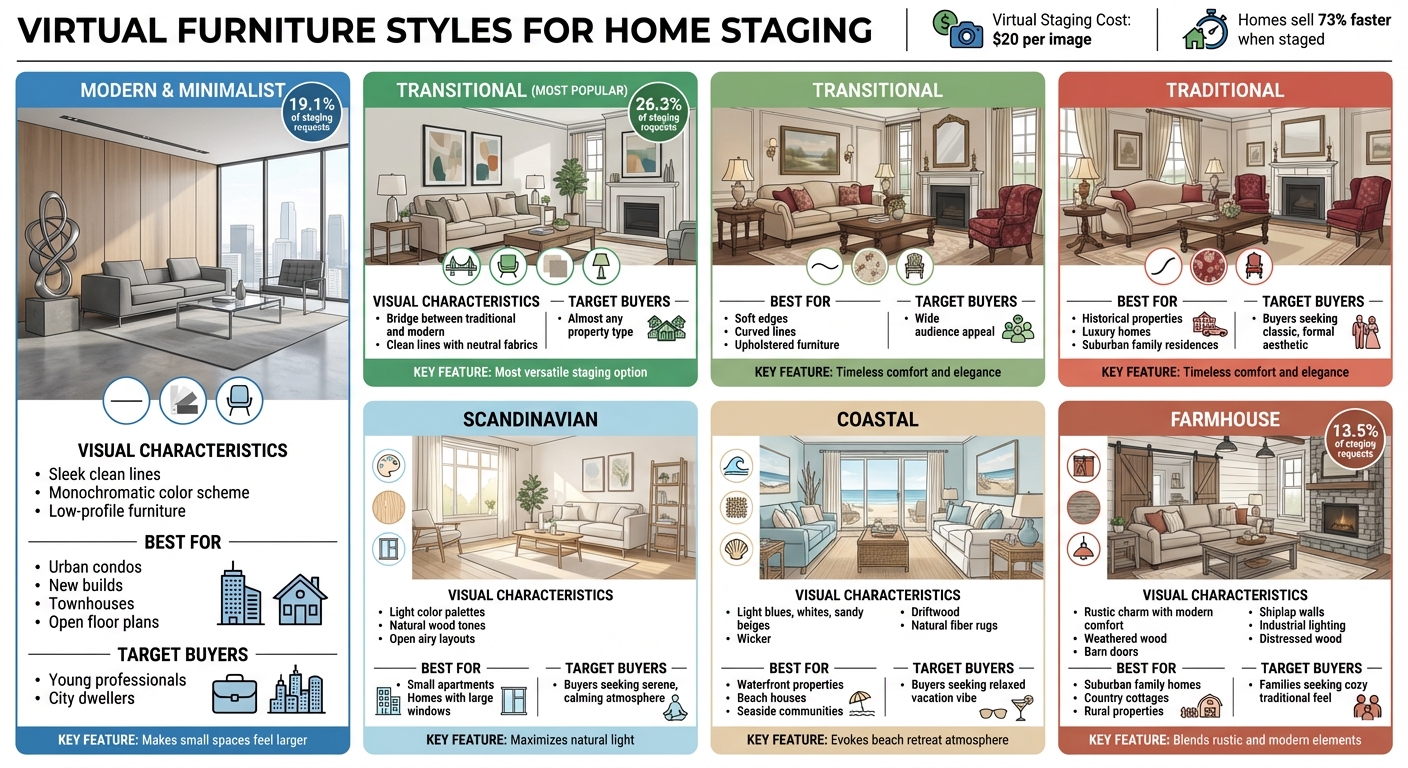
Virtual Furniture Styles Guide: Matching Design to Property Type and Buyer Demographics
When planning virtual staging, it’s essential to align furniture styles with buyer preferences and the property’s unique characteristics. Here’s a look at some of the most popular styles to consider.
Modern and Minimalist
Modern style is all about sleek, clean lines and a monochromatic color scheme. Picture low-profile furniture made from raw materials like unpainted wood, metal, leather, and glass. Minimalist style goes a step further, stripping away anything unnecessary to highlight functionality and simplicity. Think neutral colors, uncluttered spaces, and an open, airy feel. Modern style is a great choice for urban condos, new builds, and townhouses, especially those with open floor plans. It resonates with young professionals and city dwellers who prefer a polished, streamlined look. Minimalist furniture, on the other hand, works wonders in smaller spaces, making them feel larger and more inviting. Both styles shine in homes with contemporary architecture and clean, structural designs.
Traditional and Transitional
Traditional style leans into timeless comfort with its soft edges, curved lines, and upholstered furniture. Expect details like floral or striped patterns and a warm palette featuring deep reds and browns. This style fits perfectly with historical properties, luxury homes, and suburban family residences, appealing to buyers who appreciate a classic, formal aesthetic.
Transitional style bridges the gap between traditional and modern. It updates classic furniture designs with cleaner lines and neutral fabrics, creating a welcoming yet polished look. Interestingly, transitional style tops the popularity charts for virtual staging, accounting for 26.3% of requests, while modern follows at 19.1%. Its versatility makes it a go-to option for almost any property type, especially when aiming to attract a broad audience.
Scandinavian, Coastal, and Farmhouse
Scandinavian style is all about simplicity and practicality. Light color palettes, natural wood tones, and open, airy layouts define this look. It’s perfect for small apartments or homes with large windows, where maximizing natural light is key. The result? A serene and calming atmosphere.
Coastal style captures the essence of a beach retreat. Think light blues, whites, and sandy beiges paired with materials like wicker, driftwood, and natural fiber rugs. This style is a natural fit for waterfront properties, beach houses, or homes in seaside communities, evoking a laid-back, vacation vibe.
Farmhouse style blends rustic charm with modern comfort. Picture weathered wood, barn doors, shiplap walls, and industrial lighting. With 13.5% of staging requests, farmhouse style is particularly appealing to families and buyers drawn to a cozy, traditional feel. It’s a favorite for suburban family homes, country cottages, and rural properties.
Build a Consistent Design Theme
After settling on a furniture style, the next step is ensuring everything in your space works together seamlessly. A well-thought-out design theme brings together furniture, colors, patterns, and textures to create a unified look throughout your listing.
"A cohesive design theme ties together all the elements of a room, including the furniture style, colors, patterns, and textures, unifying the space." – Shital Gohil, Co-Founder and COO, Styldod
This sense of consistency helps rooms feel connected and gives your design a polished, intentional look. The key is to focus on blending colors, textures, and spatial elements to create harmony.
Coordinate Colors and Textures
Your color palette should not only reflect the furniture style you’ve chosen but also create balance across your entire listing. For modern designs, neutral tones work beautifully, while rustic styles shine with earthy shades like browns and greens.
Think about the mood you want to evoke. Warm colors – reds, oranges, yellows – can make a space feel cozy and welcoming, perfect for traditional or farmhouse aesthetics. Cooler tones like blues and greens, on the other hand, bring a sense of calm and can even make smaller areas feel more spacious. Textures are equally important: sleek materials like metal and glass pair well with modern furniture, while natural fibers like rattan or distressed wood add charm to rustic or coastal styles.
Keep Rooms Consistent
Every room in the home should feel like it belongs to the same story, even if their functions differ. For instance, if your living room features a transitional design with neutral upholstery and clean-lined furniture, carry those same tones and shapes into nearby spaces like the dining room or bedroom.
Using coordinated furniture sets can simplify this process, ensuring that pieces naturally complement one another. Consistent lighting is another critical detail – maintain uniform brightness, direction, and color temperature across all photos to make the space feel cohesive and realistic. Avoid letting too many opinions influence the design, as this can lead to a mismatched look that distracts buyers. By pairing consistent furniture and lighting choices, you’ll create a home that feels thoughtfully designed from every angle.
sbb-itb-7eef225
Apply and Adjust Your Furniture Style
Bring your design ideas to life using virtual staging. This step builds on the coordinated design theme you’ve already established. To get the results you’re aiming for, focus on high-quality photography and clear communication with your virtual staging service. These elements are key to ensuring the final product aligns with your vision.
Work with Virtual Staging Services
Before snapping any photos, make sure the space is clean, clutter-free, and well-lit. Open the curtains to let in natural light, and aim to take photos during the "golden hour" (between 6–9 a.m. or 4–7 p.m.) for the most flattering lighting. Avoid direct sunlight – it can create harsh shadows that detract from the overall look.
Services like Fast Virtual Staging can transform your photos by adding realistic digital furniture. They offer a 24-hour turnaround for residential properties, charging $20 per image. To get started, submit your photos along with details about the room type and preferred style (Modern, Transitional, Scandinavian, etc.). Including reference photos can help ensure the design matches your vision. The service also provides hassle-free revisions and a dedicated account manager to assist you throughout the process.
When staging virtually, pay close attention to furniture placement. Avoid blocking doorways or windows, and maintain clear pathways – ideally leaving 2.5 to 3 feet of clearance. Buyer preferences can guide your priorities: stage the living room first (39% of buyers consider it the most important), followed by the primary bedroom (36%) and the kitchen (30%).
Once your staging is complete, shift your focus to refining the finer details.
Review and Improve Your Design
With your staged images ready, it’s time to evaluate and make adjustments. Check for realism – does the furniture scale match the room? Are lighting and shadows consistent with the room’s natural light? For example, a coffee table should be about half the length of the sofa, and rugs should extend beneath the main furniture pieces for a cohesive look.
Consider your target audience when reviewing the design. Urban buyers often lean toward sleek, minimalist aesthetics, while families may prefer warm, functional spaces. Tailor the visuals to resonate with your audience. If something feels off, don’t hesitate to use the revision options to tweak furniture placement, colors, or styles until everything feels just right.
Transparency is crucial when using virtual staging. Add a watermark or caption to disclose that the images have been virtually enhanced. For even more clarity, consider using before-and-after sliders on your listing website so potential buyers can see both the empty and staged versions. This approach not only builds trust but also highlights the home’s potential. And it works – staged homes sell about 73% faster than vacant ones.
Conclusion
From understanding your buyers to crafting a cohesive design, every step in this strategy can make your listing shine. Choosing the right virtual furniture style can transform a bare space into a warm and inviting home. Start by researching your target audience – sleek, modern designs often appeal to young professionals, while families may gravitate toward traditional or transitional styles. Also, consider the property’s architecture: clean-lined furniture works well in contemporary spaces, while ornate homes benefit from classic pieces.
Consistency is key. Use coordinated colors and textures throughout all rooms to maintain a unified look. Focus on staging the most impactful areas, such as the living room, primary bedroom, and kitchen. Arrange furniture to draw attention to focal points, and make sure pathways remain open with at least 2.5 to 3 feet of clearance.
Virtual staging is also incredibly cost-effective – about 97% less expensive than traditional staging. It’s a budget-friendly way to make your listings stand out. Transparency is crucial, though. Clearly disclose virtual staging by using watermarks or interactive tools like before-and-after sliders to build trust with buyers.
FAQs
How do I choose virtual furniture styles that appeal to my target buyers?
To choose virtual furniture styles that connect with your target buyers, start by understanding their preferences. Think about factors such as age, lifestyle, and budget. For instance, young professionals might gravitate toward sleek, modern designs, while families may favor cozier, more traditional styles. It’s also important to align the furniture style with the property’s architecture – modern homes often suit minimalist or Scandinavian décor, whereas classic homes typically shine with traditional furnishings.
Maintain a cohesive look throughout the home by sticking to a single design theme and using complementary colors, textures, and furniture sizes. Neutral tones with subtle accent colors tend to appeal to a broader audience. Make sure the furniture fits the room’s dimensions – oversized pieces can make a space feel cramped. Thoughtful additions, like a small home office setup or stylish accents, can add warmth and make the space more inviting.
Before committing to a final design, share a sample room layout with trusted colleagues or agents to gather feedback. This step ensures your virtual staging meets buyer expectations and helps your listing stand out in the competitive U.S. real estate market.
What virtual furniture styles work best for different types of properties?
Choosing the right virtual furniture style can make a big difference in how your property listing stands out. When the furniture complements the home’s architecture and appeals to your target buyers, it creates a stronger connection. Here are some popular styles to consider:
- Modern Minimalist: Think clean lines, neutral palettes, and low-profile furniture. This style works especially well for urban condos, townhomes, and lofts, giving them a sleek, contemporary feel.
- Traditional: Warm tones, timeless designs, and rich wood finishes define this style. It’s a great fit for single-family homes in well-established neighborhoods, offering a classic and inviting look.
- Transitional: This style blends the simplicity of modern design with the comfort of traditional elements. It’s a versatile choice, perfect for suburban homes aiming for a balanced and approachable aesthetic.
- Luxury: Featuring upscale furnishings, marble accents, and bold statement pieces, this style is tailored for high-end estates and premium listings that aim to impress.
- Scandinavian: With light, airy designs and natural materials, this style is ideal for smaller apartments or starter homes, bringing a cozy yet modern vibe.
Matching the furniture style to the property type ensures a cohesive and inviting look, making it easier for potential buyers to picture themselves in the space.
How can I ensure consistency in virtual staging across all rooms in a property?
To keep virtual staging consistent, start with high-quality photos. Use images with uniform settings, like 4K resolution and natural lighting, so every room has a cohesive look. Make sure to measure each room precisely in feet and inches, noting important details like windows and doors. This ensures furniture is scaled correctly and fits the space naturally.
Choose a neutral design style that suits the property and appeals to your target audience. Stick to matching furniture and décor, ideally from the same collection, to maintain consistency in colors and materials. When arranging furniture, aim for balanced layouts with clear walkways and well-aligned focal points to create a sense of flow between rooms.
Before finalizing, compare all staged images side by side. Look for any inconsistencies in lighting, shadows, or design style, and make adjustments as needed. This step ensures the property feels cohesive and visually inviting to potential buyers.