
Virtual staging can double your property listing views by transforming empty or outdated spaces into visually appealing, furnished rooms. It’s cost-effective, quick, and proven to generate more buyer interest. Here’s why it works:
- Stronger Visual Appeal: 90% of buyers struggle to visualize empty spaces. Virtual staging bridges this gap by adding realistic furniture and décor.
- Boosted Engagement: Staged listings get 40% more views and 31% more inquiries than non-staged ones.
- Faster Sales: Staged homes sell 73% faster and often at higher prices.
- Cost-Effective: At $25–$75 per photo, virtual staging is far cheaper than physical staging, which can cost $2,000–$5,000+.
With 97% of buyers starting their home search online, high-quality photos are critical. Virtual staging helps your listings stand out, attract more clicks, and convert online interest into in-person showings and offers. Let’s explore how it works and why it’s a game-changer for real estate.
How To Virtually Stage Your Listing for Real Estate Agents
How Virtual Staging Increases Listing Views
Virtual staging has a unique ability to transform how buyers perceive a property, creating emotional connections that make online listings more engaging and memorable. It’s a game-changer for drawing attention and sparking interest in potential buyers.
Why Visual Appeal Matters to Buyers
When browsing online, homebuyers make split-second decisions based on what they see. The reality? Only about 10% of buyers can imagine the potential of an empty space. Virtual staging bridges this gap by adding stylish, inviting décor to vacant rooms, turning them into warm, livable spaces.
The magic lies in the details. High-quality virtual staging incorporates realistic elements like shadows, reflections, and textures, all of which help buyers emotionally connect with a home. It emphasizes a property’s best features, makes smaller rooms feel more spacious, and appeals to a wide range of lifestyle preferences.
What’s more, virtual staging can be tailored to specific buyer demographics. For instance, a spare room can be staged as a nursery for families or transformed into a sleek home office for remote workers. This customization creates a powerful connection by aligning with buyers’ aspirations, making the property feel like it was designed just for them.
These visual enhancements don’t just capture attention – they deliver measurable results.
Research-Based Results of Virtual Staging
The numbers speak for themselves: virtually staged listings get 40% more views than their non-staged counterparts. This increased visibility puts properties in front of more potential buyers, giving them a competitive edge in a crowded market.
But it’s not just about more views. Virtual staging also holds buyers’ attention longer. On average, buyers spend 20% more time looking at virtually staged photos. This extended engagement often leads to a deeper interest in the property and a greater likelihood of scheduling a tour.
Inquiries also see a boost. Virtually staged listings generate 31% more inquiries, showing that enhanced visuals don’t just attract clicks – they inspire action. Plus, 40% of buyers are more inclined to visit a home in person after seeing it staged online. This seamless transition from online browsing to in-person visits makes virtual staging a crucial tool for real estate professionals.
The benefits extend beyond engagement. 83% of buyer’s agents say staging helps buyers visualize a property as their future home, and 49% believe virtual staging is just as important as including photos in a listing. These insights highlight how staging helps buyers emotionally invest in a property.
Virtual staging also speeds up the selling process. According to Coldwell Banker’s 2023 data, virtually staged homes sell in an average of 24 days compared to 90 days for vacant properties – a 73% reduction. Similarly, the Real Estate Staging Association’s 2024 study found staged homes spend 23 days on the market versus 184 days for vacant ones.
Price impact is another key advantage. 29% of agents reported that staging led to offers 1% to 10% higher, while 17% of buyers’ agents noted a 1% to 5% price increase. Faster sales and higher offers make virtual staging a smart investment for sellers looking to maximize returns.
Finally, consider buyer behavior: 73% of shoppers skip listings with photos that look “flat or hard to visualize”. Real estate platforms like Zillow favor high-quality, engaging images in their algorithms, and staged photos consistently outperform empty-room shots in click-through tests.
With over 90% of buyers starting their search online, and 97% ranking photos as the most important part of a listing, virtual staging delivers the visual impact needed to stand out. It’s the difference between blending in and capturing attention in those critical first seconds.
These results highlight how virtual staging can dramatically improve engagement, setting the stage for even more strategies to increase listing views.
What Makes High-Quality Virtual Staging Work
Creating high-quality virtual staging hinges on three key elements: professional photography, thoughtful design, and realistic execution. Mastering these aspects can make all the difference in capturing buyers’ attention and sparking interest.
Why Professional Photography Matters
The backbone of successful virtual staging isn’t the furniture or décor – it’s the photograph itself. Without a sharp, well-lit image as the starting point, even the most advanced staging techniques can fall flat.
"High-quality images of homes are the core of virtual staging. The images you click need to be sharp and well-lit. They need to highlight the home’s best features. If a photograph is well prepared, it makes the staging process easier." – Shital Gohil, Co-Founder and Chief Operating Officer, Styldod
To achieve this, use a 24MP DSLR or mirrorless camera and take full advantage of natural light. Combining this with HDR techniques ensures you capture bright, inviting photos. Poor-quality images – whether blurry or pixelated – can erode trust and turn buyers away before they even consider the property.
A wide-angle lens with a focal length of 14mm–24mm can showcase an entire room without creating the distortion that comes with ultra-wide lenses. Preparing the space is equally important: clear out clutter, clean windows and floors, and emphasize architectural highlights. Aim to shoot in landscape mode and from multiple angles to truly showcase the room’s potential.
Once you’ve got a high-quality base image, the next step is tailoring the design to resonate with your target buyers.
Matching Design Styles to Buyers
Generic staging often falls short because it doesn’t connect emotionally with buyers. Successful virtual staging, on the other hand, aligns with the lifestyle and preferences of your intended audience, turning casual browsers into serious contenders.
"When it comes to home staging interior design, the right style can make all the difference in how a property is perceived by potential buyers." – Shital Gohil, Co-Founder and Chief Operating Officer, Styldod
Understanding your target buyer is crucial when selecting a design style. For instance, an urban loft aimed at young professionals might call for an industrial look with exposed brick and metal accents. Meanwhile, a family-focused suburban home would benefit from the warmth and charm of farmhouse-inspired décor.
Here’s a quick guide to pairing design styles with buyer preferences:
| Design Style | Key Features | Best Suited For |
|---|---|---|
| Modern Minimalism | Clean lines, neutral tones, sleek furniture | Open floor plans, lofts; buyers seeking calm sophistication |
| Mid-Century Modern | Bold geometric prints, walnut furniture, pops of color | Ranch homes, bungalows; buyers wanting personality and vintage charm |
| Scandinavian Comfort | Light natural materials, soft textures, calming tones | Smaller homes, apartments; buyers craving warmth and light |
| Industrial Chic | Exposed brick, metal accents, reclaimed wood | Urban lofts, warehouses; young professionals, creative buyers |
| Farmhouse Charm | Distressed furniture, shiplap walls, vintage accents | Rural properties, family homes; buyers drawn to country comfort |
Each room should reflect the interests of your target demographic. For example, a spare bedroom could be staged as a nursery for families, a home office for remote workers, or even a fitness space for health-conscious buyers. The key is to align the staging with both the property’s architecture and current design trends, ensuring it resonates with your audience.
Once the style is nailed down, the next step is ensuring the staging feels natural and believable.
Creating Realistic Staging: Lighting, Size, and Furniture
The difference between professional virtual staging and something that feels “off” lies in realism. Buyers can quickly spot digital elements that don’t look natural, and even minor inconsistencies can hurt their trust in the property.
Lighting is a crucial factor. Any staged furniture or décor must match the light conditions of the original photo. For instance, if sunlight streams in from one side of the room, the virtual elements need to reflect that same light source.
Furniture size is another important consideration. Oversized pieces that wouldn’t fit through a doorway or dining tables that block walkways can create unrealistic expectations. Accurate room measurements ensure that the staged furniture feels proportional and practical.
Finally, thoughtful décor placement enhances the flow of the space. Accessories should guide the eye naturally and highlight standout features like large windows or built-in shelving. By paying attention to these details, you create a seamless and believable virtual staging experience that keeps buyers engaged.
How to Double Listing Views with Virtual Staging
Now that you know what makes virtual staging effective, let’s put those principles into action. Doubling your listing views comes down to three smart strategies: appealing to the right buyers, expanding your marketing reach, and highlighting your property’s best features.
Match Staging to Your Target Buyers
The secret to effective staging is tailoring it to your audience. 93% of top-performing companies segment their database by buyer type. Generic staging might look nice, but staging that resonates with specific buyers is what drives results.
Start by building detailed buyer personas. Think about demographics like age, income, and location, but also consider psychographics – lifestyle choices, values, and aspirations. For example, a modern downtown condo aimed at young professionals might feature sleek furniture, minimalist designs, and tech-friendly touches. On the other hand, a family home in the suburbs could benefit from cozy, functional décor that emphasizes comfort.
Staging that reflects current design trends can generate 87% more listing views and 48% more inquiries compared to outdated or unstyled images. Here are some popular styles that are getting attention:
- Biophilic Design: Add natural elements like plants and organic textures. This approach can increase sale prices by up to 15% and speed up rentals by 30%. A Toronto penthouse staged with biophilic elements saw a 52% rise in online inquiries in just one week.
- Warm Minimalism: Focus on simplicity with soft curves and textured accents. A mid-century home in California, staged in this style, sold 12 days faster than average.
- Japandi Style: This blend of Japanese minimalism and Scandinavian functionality appeals to buyers looking for calm, wellness-oriented spaces. A compact city condo staged in Japandi style received 18% more listing views and multiple offers within 72 hours.
It’s also important to adapt staging to the local market. A Vancouver loft might shine with Japandi and biophilic elements, while a Texas ranch could benefit from rustic, transitional styling. Aligning staging with both the property type and regional preferences is key.
Use Staged Images Across All Marketing Platforms
Once your staging is tailored to your buyers, make sure it’s visible wherever they’re searching. Since 100% of buyers use the internet during their home search, your staged images need to be everywhere.
Your MLS listing is often the first place buyers encounter your property, so use your best staged photos prominently. Listings with AI staging see a 72% increase in online traffic and 44% more qualified inquiries.
Social media is another powerful tool. Platforms like Instagram, Facebook, and Pinterest are perfect for showcasing staged photos and videos. Short clips, such as time-lapse videos or Instagram Stories, can keep your content fresh and engaging.
Email marketing also becomes more effective with staged visuals. Including before-and-after photos in your campaigns helps buyers imagine a property’s potential, encouraging more inquiries.
Don’t forget your property website. Highlight staged images alongside virtual tours and 3D walkthroughs. 72% of buyers say 3D tours give them a better feel for a home, while 67% wish more listings included them. These immersive tools keep viewers engaged and can even help improve your site’s SEO.
It’s crucial to remain transparent by labeling virtually staged images clearly. This not only complies with MLS guidelines but also builds trust with buyers.
Show Off Property Features with Staging
Finally, staging should emphasize the best aspects of your property. It can even turn potential weaknesses into selling points. 82% of buyers say staging helps them imagine a home’s potential.
For smaller properties, focus on creating a sense of spaciousness. Use appropriately sized furniture and maintain clear sight lines to make rooms feel larger. Avoid bulky pieces that can make spaces look cramped.
Draw attention to standout features like natural light, architectural details, or scenic views. For example, a cozy reading nook by a large window or a dining setup that frames an outdoor vista can highlight these elements.
Every space should have a clear purpose. Help buyers envision how they might use the home by staging a spare bedroom as a home office, a nursery, or even a fitness room. The most commonly staged rooms are bedrooms (93%), living rooms (84%), dining rooms (60%), and kitchens (49%). Don’t overlook areas like home offices and outdoor lounges, which can add extra appeal.
Here’s a real-world example: In 2025, Austin Mielczarek used virtual staging for just four rooms in a property that had been sitting on the market for over six months. Within six days of relisting, the property had 12 showings and 3 offers. Similarly, Bob Hucker’s virtually staged listing received around 1,800 views on Zillow in just a few days – far more than comparable listings – and sold for $5,000 over the asking price.
"By digitally staging my homes that I have listed for sale, my amount of exposure and traffic has increased significantly. Every person that I show the digitally staged pictures to, all say the same thing, ‘those are amazing!!! You can’t even tell that isn’t real furniture.’" – Levi Rose, VALOR REAL ESTATE LLC
Consistency across all staged images is vital. A cohesive presentation not only reinforces professionalism but also encourages buyers to take the next step – scheduling a showing or making an offer.
sbb-itb-7eef225
Virtual Staging vs Physical Staging: Cost and Benefits
When weighing the choice between virtual and physical staging, the numbers tell a clear story. Virtual staging can cut staging costs by as much as 97% compared to traditional methods, making it an appealing option for real estate professionals aiming to stretch their marketing budget while still creating eye-catching listings.
Cost and Time Comparison
Virtual staging offers a massive reduction in costs. Traditional staging for an average property typically runs between $2,500 and $5,000+ for a three-month listing, with costs in high-demand areas like New York or San Francisco often exceeding $5,000 per month. In contrast, virtual staging costs range from $14 to $195 per photo.
| Staging Method | Cost Range | Time Required | Key Cost Factors |
|---|---|---|---|
| Traditional Staging | $1,000-$10,000+ | 1-2 weeks setup | Consultation ($300-$600), furniture rental ($500-$1,500/month), delivery/installation ($1,000-$2,000+) |
| Virtual Staging | $14-$195 per photo | 24-48 hours | Per photo fee only, no extra costs |
| AI Virtual Staging | $0.24-$2.67 per photo | Under 30 seconds | Subscription-based pricing, instant results |
For example, in June 2025, staging an empty 3-bedroom house traditionally might cost around $3,500 for two months, while virtual staging for 6-8 high-quality images would cost roughly $1,200. That’s a significant cost difference, freeing up resources for other marketing activities.
Time savings are equally striking. Traditional staging setup requires 3-7 days at minimum, while virtual staging delivers results within 24-48 hours. AI-powered virtual staging takes this even further, producing transformations in under 30 seconds.
For agents juggling multiple listings, this speed advantage is a game-changer. As VirtualStaging.com highlights:
"One of the benefits of virtual staging is that it allows for a faster turnaround time, as images of the virtually staged property can be produced in under a day. This enables you to list your property for sale quickly".
When Virtual Staging Shines
Beyond saving time and money, virtual staging is particularly effective in specific real estate scenarios. It’s a standout choice for online marketing, where 100% of buyers now use the internet in their home search.
Empty properties benefit the most. Many buyers struggle to imagine how vacant spaces could look when furnished, as visualizing spatial layouts and three-dimensional objects isn’t easy for everyone. Virtual staging bridges this gap, helping potential buyers see the property’s full potential.
The real power of virtual staging lies in its flexibility. It allows agents to tailor listings for different buyer preferences. Want to appeal to a modern aesthetic? Prefer a cozy, rustic vibe? Virtual staging lets you experiment with styles without incurring extra costs or logistical headaches. This adaptability makes it easier to test what resonates with buyers and adjust accordingly.
It’s also ideal for agents managing multiple listings. Virtual staging ensures consistent quality across properties while saving time and money, reinforcing an agent’s brand identity.
Market conditions also play a role. In June 2025, Payton Stiewe of Engel & Völkers San Francisco shared her experience:
"The turnaround is fast, the cost is a fraction of traditional staging costs, and in this market, it’s a smart, strategic move".
Virtual staging is particularly useful for properties requiring quick updates. If feedback points to a need for a different style, virtual staging allows for rapid changes – sometimes in seconds with AI tools. Traditional staging, by contrast, involves physically rearranging furniture, which is both time-consuming and expensive.
The impact of virtual staging is undeniable. Data shows that listings using virtual staging experience a 72% boost in online traffic and a 44% increase in qualified inquiries. Additionally, these properties spend 73% less time on the market and can achieve up to 22% higher selling or rental prices.
Finally, transparency is key. Always disclose when images are virtually staged to maintain trust and adhere to industry guidelines.
Why Choose Fast Virtual Staging for Your Listings
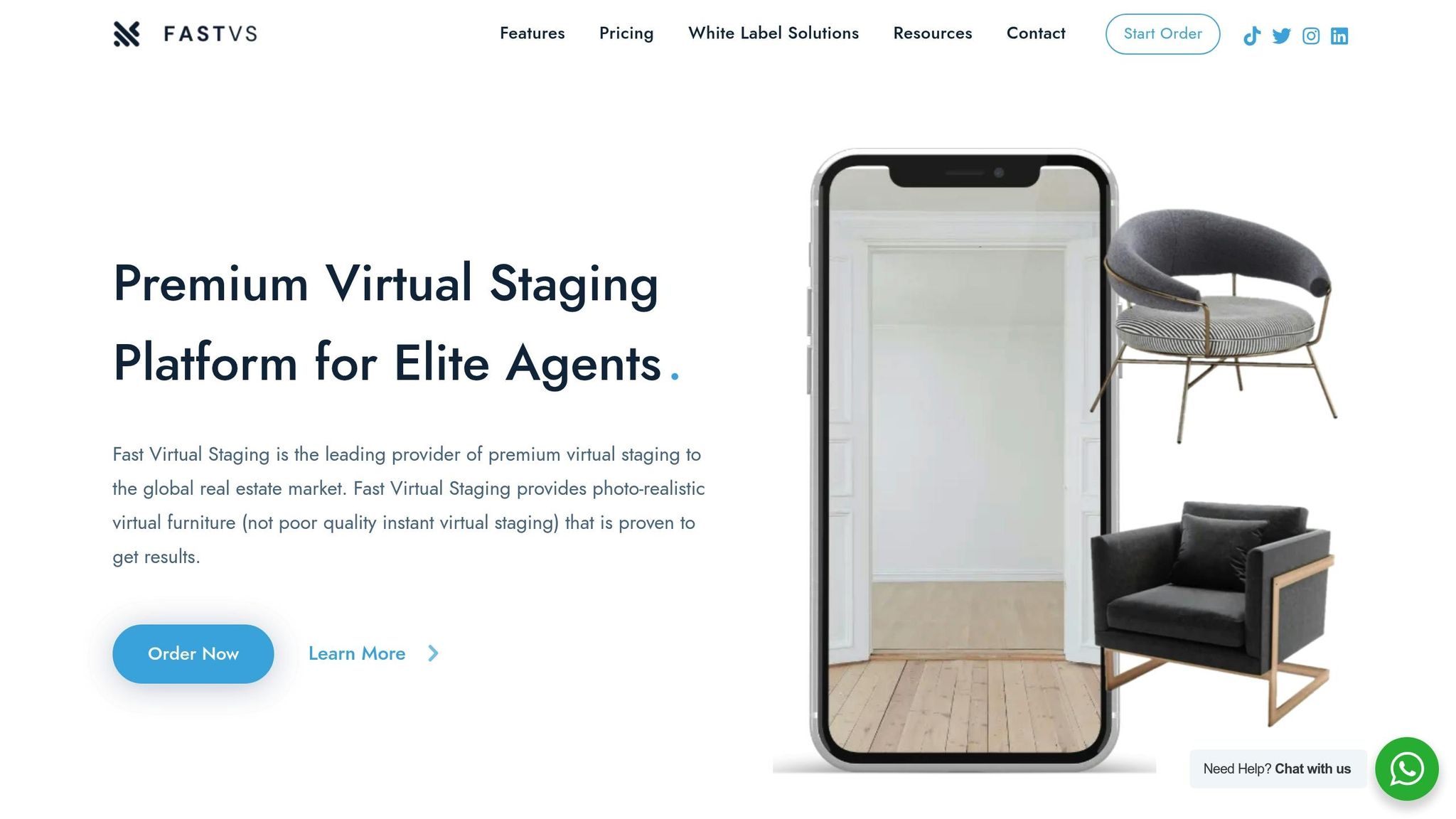
Fast Virtual Staging sets itself apart in the world of virtual staging by combining photo-realistic virtual furniture with a hassle-free process. If you’re looking to double your listing views, high-quality virtual staging can transform a basic space into a professionally designed property that grabs buyers’ attention. Here’s what makes Fast Virtual Staging a standout choice.
Features and Benefits
Fast Virtual Staging specializes in creating photo-realistic furniture that delivers results. Their team of skilled 3D artists produces digital furniture that rivals real-world designs, adhering to high interior design standards.
"Fast Virtual Staging provides photo-realistic virtual furniture (not poor quality instant virtual staging) that is proven to get results." – Fast Virtual Staging
With a variety of design options – ranging from Scandinavian and French Country to Modern and beyond – you can customize each space to appeal to your target buyers. The service works seamlessly for both residential and commercial properties, including interiors and exteriors. Plus, their 24-hour delivery guarantee for residential orders ensures you can market your listings quickly without compromising on quality.
Streamlined Process for Real Estate Professionals
Fast Virtual Staging simplifies the staging process with an intuitive online ordering system and personalized support. Each client is assigned an account manager who understands their specific needs, making communication smooth and efficient.
Real estate agent Jack Dangerfield from Ray White shared his positive experience:
"Adding virtual furniture to my property photographs always generates increased interest in my listings. I can choose my own style of furniture and turn-around times are super-fast for the quality." – Jack Dangerfield, Ray White
For real estate photographers and agencies, the white-label options – with discounted pricing – allow you to offer virtual staging services under your own brand. This not only ensures consistent quality but also enhances your service offerings. Fast Virtual Staging combines affordability with a streamlined process, making it an excellent choice for professionals looking to elevate their listings.
Competitive Pricing with High Returns
At just $20 per image, Fast Virtual Staging offers a cost-effective alternative to traditional staging, cutting expenses by 80–95%. Despite the lower costs, the impact is undeniable – virtually staged homes often sell for 6–10% more, with some studies reporting premiums as high as 17%. The return on investment (ROI) can range from 500% to an incredible 3,650%.
The service also accelerates the sales process. With a 12–24 hour turnaround, properties hit the market faster. Staged homes typically sell in an average of 23 days, compared to 184 days for vacant properties – a reduction of up to 73% in days on market. This affordability, paired with the speed and visual appeal of virtual staging, makes Fast Virtual Staging a powerful tool for real estate professionals.
For agents juggling multiple listings, the per-image pricing model provides budget flexibility without sacrificing quality, ensuring your entire portfolio benefits from polished, professional staging.
Conclusion: Improve Your Listings with Virtual Staging
Virtual staging has proven to be a game-changer for real estate listings, increasing engagement by up to 40% and speeding up sales by a remarkable 73%. It’s a simple yet powerful way to make properties stand out in a competitive market.
Starting at just $20 per image, Fast Virtual Staging delivers a budget-friendly solution that enhances property appeal and draws in more potential buyers.
"The benefits of virtual staging are simple: it saves money, saves time, and helps your home look its absolute best online." – Redfin
One of the standout features of Fast Virtual Staging is its speed. With a 24-hour delivery promise and a hassle-free process, you can transform empty or outdated spaces into inviting, professionally staged rooms that help buyers picture themselves living there. This polished presentation often results in quicker offers and better sales outcomes.
Virtual staging combines affordability, flexibility, and stunning visuals. From photo-realistic designs to tailored options and dedicated support, it’s the modern way to elevate your property portfolio and capture buyer interest.
FAQs
How does virtual staging help potential buyers feel connected to a property?
Virtual staging works wonders by turning bare or outdated spaces into warm, visually inviting environments. By adding stylish furniture and decor, it helps potential buyers imagine what it would feel like to live there, making the property feel more approachable and relatable.
This emotional connection can play a big role in grabbing buyers’ attention. People are naturally drawn to spaces that feel comfortable and welcoming. When the design is tailored to match the preferences of the target audience, it can make the property even more appealing, giving it an edge in a crowded market.
What makes virtual staging more cost-effective and time-efficient than traditional staging?
Virtual staging provides a quicker and more budget-friendly option compared to traditional physical staging. Instead of spending thousands of dollars and waiting days – or even weeks – for physical furniture to be arranged and removed, virtual staging can be completed in just 24 to 48 hours at a fraction of the cost, typically just a few hundred dollars.
This streamlined approach enables real estate professionals to present properties with eye-catching, high-quality images without the hassle or expense of using actual furniture and decor. It’s an efficient way to create impressive listings that draw in potential buyers without breaking the bank.
How can I make sure virtual staging highlights a property’s potential without being misleading?
When using virtual staging to highlight a property’s potential, it’s crucial to maintain transparency. Always make it clear that the images have been digitally staged. Choose furniture and decor that feel realistic and align with the property’s actual size, layout, and condition. Avoid making changes to structural features such as walls, windows, or flooring, as this could lead to false expectations. Keeping things honest not only enhances the property’s appeal but also builds trust with potential buyers.