
Here’s why it works:
- Staged homes sell 9 days faster and for $40,000 more on average.
- Tailored furniture creates an emotional connection, helping buyers picture themselves living in the space.
- Virtual staging is a cost-effective alternative, cutting expenses by 97% while boosting views by 30% and sales speed by 40%.
What different buyers look for:
- Young Professionals: Modern, space-saving, multi-functional pieces.
- Families: Durable, kid-friendly, and easy-to-clean furniture.
- Empty Nesters: Comfortable, accessible, and timeless designs.
- Luxury Buyers: High-end, custom, and premium materials.
Match furniture to the property type:
- City Apartments: Compact, multi-functional furniture like wall-mounted desks or expandable tables.
- Suburban Homes: Durable, family-friendly options like performance fabrics and medium-tone sofas.
- Luxury Homes: Bespoke designs, smart technology, and premium finishes.
Virtual staging tips:
- Tailor designs to the target audience.
- Use services like Fast Virtual Staging for quick, cost-effective results starting at $20 per image.
Quick Comparison Table:
| Buyer Group | Key Furniture Needs | Materials/Features |
|---|---|---|
| Young Professionals | Space-efficient, stylish | Modular pieces, tech-friendly designs |
| Families | Durable, safe, easy-to-clean | Performance fabrics, washable covers |
| Empty Nesters | Comfortable, classic | Ergonomic designs, neutral tones |
| Luxury Buyers | High-quality, custom | Premium leather, velvet, unique pieces |
Matching furniture to buyer preferences isn’t just staging – it’s a strategy to sell homes faster and for more money.
Discover Mid-Century Modern Charm: A Quick Guide to Virtual Staging
Common Buyer Groups and Their Furniture Needs
Understanding what different buyers want can help guide furniture choices to match their preferences.
Young Professionals: Sleek and Space-Saving
Young professionals often lean toward styles like Modern Minimalist and Urban Modern, which combine practicality with clean, stylish designs. With limited urban living spaces, they prioritize multi-functional modular furniture to make the most of their homes. Wall-mounted shelves and hanging organizers are popular for making use of vertical space.
"Modern minimalism focuses primarily on functionality and simplicity… Modern minimalism aspires (in the chillest possible way) for calm, uncluttered spaces and quality over quantity."
Families: Durable and Kid-Friendly
Families need furniture that can handle daily wear and tear while being safe for children. Some standout options include the Burrow Nomad Collection block sofa, which held up well during a year of testing with two young children.
Performance fabrics are a game-changer for family homes. For example, the Apt2B Tuxedo two-piece sleeper sectional resists pet hair and stays comfortable even with active kids. Spill-prone households might prefer the Sixpenny Devyn L-shaped sectional, featuring machine-washable slipcovers.
"Kid- and pet-friendly sofas are available in a stunning variety of textures and colors. These durable options – like luxurious velvets and woven blends – combine style and practicality, making your home beautiful while being family and pet-friendly." – Wanda S. Horton, Interior Designer and Owner, Wanda S. Horton Interior Design
Empty Nesters: Relaxation and Ease
For empty nesters, comfort and functionality take center stage as they adapt to a new phase of life. Interior Designer Jennifer Taylor notes, "Comfortable and functional furniture is of the utmost importance". Many opt for neutral colors to create timeless, sophisticated spaces.
Lighting also plays a big role. Empty nesters often use dimmable ceiling lights and layered lamps to adjust brightness, making it easier on aging eyes.
Luxury Market: Exclusive and High-Quality
High-end buyers look for furniture that blends superior craftsmanship with distinctive style. For example, the Article Abisko sofa in plush pacific blue velvet offers both durability and sophistication.
Performance fabrics are also popular in luxury spaces. The Albany Park Kova Pit, with its premium velvet upholstery, maintains a refined look while staying functional. These choices reflect the high standards of this market.
| Buyer Group | Key Furniture Priorities | Recommended Materials |
|---|---|---|
| Young Professionals | Space efficiency, modern style | Modular pieces, multi-functional furniture |
| Families | Durability, safety, easy cleaning | Performance fabrics, leather, microfiber |
| Empty Nesters | Comfort, accessibility, classic style | Ergonomic designs, neutral fabrics |
| Luxury Market | Unique design, premium materials | Custom pieces, high-end velvets, premium leather |
Matching Furniture to Property Types
City Apartments: Smart Space-Saving Solutions
Living in the city often means dealing with limited space, so furniture needs to be both functional and compact. Multi-purpose pieces can turn small areas into practical, flexible living spaces. For example, the West Elm Industrial Storage Pop-Up Coffee Table ($699.00) doubles as a workspace and storage unit, making it ideal for urban apartments.
Wall-mounted furniture is another great way to save floor space. The ARTETHYS Wall Mounted Desk with LED Light ($89.99) creates a functional workspace without taking up precious room. In dining areas, expandable options like the Box Frame Drop Leaf Expandable Table from West Elm ($699.00) are perfect for hosting guests while staying compact when not in use.
When moving from city apartments to suburban homes, priorities shift to durability and accommodating family needs.
Suburban Houses: Practical and Family-Friendly
In suburban homes, furniture is all about comfort and durability. Families benefit from pieces that can handle everyday life while maintaining a tidy appearance. Designer Lina Galvão, Co-founder of Curated Nest Interiors, highlights the practicality of bench cushions, which offer a clean look even in homes filled with kids’ toys and clutter. She shares:
"I love the bench cushions because it never looks messy. My kids aren’t super tidy yet: There’s going to be LEGOs, blankets, and dolls everywhere. To at least have the furniture feel clean and tidy is really nice."
Medium-tone sofas made with performance fabrics are a smart choice for family spaces, as they resist stains and mildew while blending well with various decor styles. Designer Emily Henderson also recommends these fabrics for their ability to hide wear and tear.
Luxury and Vacation Homes: Sophistication and Style
For luxury properties, furniture should reflect elegance and personal taste. Custom designs and bespoke pieces are ideal for creating a high-end look. These homes often feature furniture with clean lines, innovative materials, and advanced technology, such as smart integration for lighting, climate control, and entertainment systems.
| Property Type | Key Furniture Features | Recommended Options |
|---|---|---|
| City Apartments | Space-saving, multi-functional pieces | Wall-mounted furniture, expandable tables, storage solutions |
| Suburban Houses | Durable and family-friendly designs | Performance fabrics, bench cushions, medium-tone sofas |
| Luxury Homes | High-end craftsmanship and technology | Custom furniture, smart integration, seamless indoor-outdoor flow |
sbb-itb-7eef225
Virtual Staging Tools and Techniques
Virtual staging has transformed how real estate professionals present homes, making it easier to match furniture styles to buyer preferences while keeping costs low. Data shows that staged homes sell 88% faster and for 20% more than their non-staged counterparts, while virtual staging costs 97% less than traditional methods.
Why Choose Virtual Staging
With 90% of buyers searching for homes online, a polished digital presentation is now essential. Bob Hucker’s experience highlights the power of virtual staging:
"I signed an offer Wednesday night, about $5,000 over the listing price. Zillow shows about 1,800 views of my listing from Sunday through Wednesday and about 200 total for ‘similar listings.’ I think the virtual staging accounts for a lot of that."
Virtual staging makes it simple to adjust furniture styles to fit different buyer groups without the hassle or expense of physical staging. Services like Fast Virtual Staging make these benefits accessible and effective for real estate listings.
Fast Virtual Staging Services
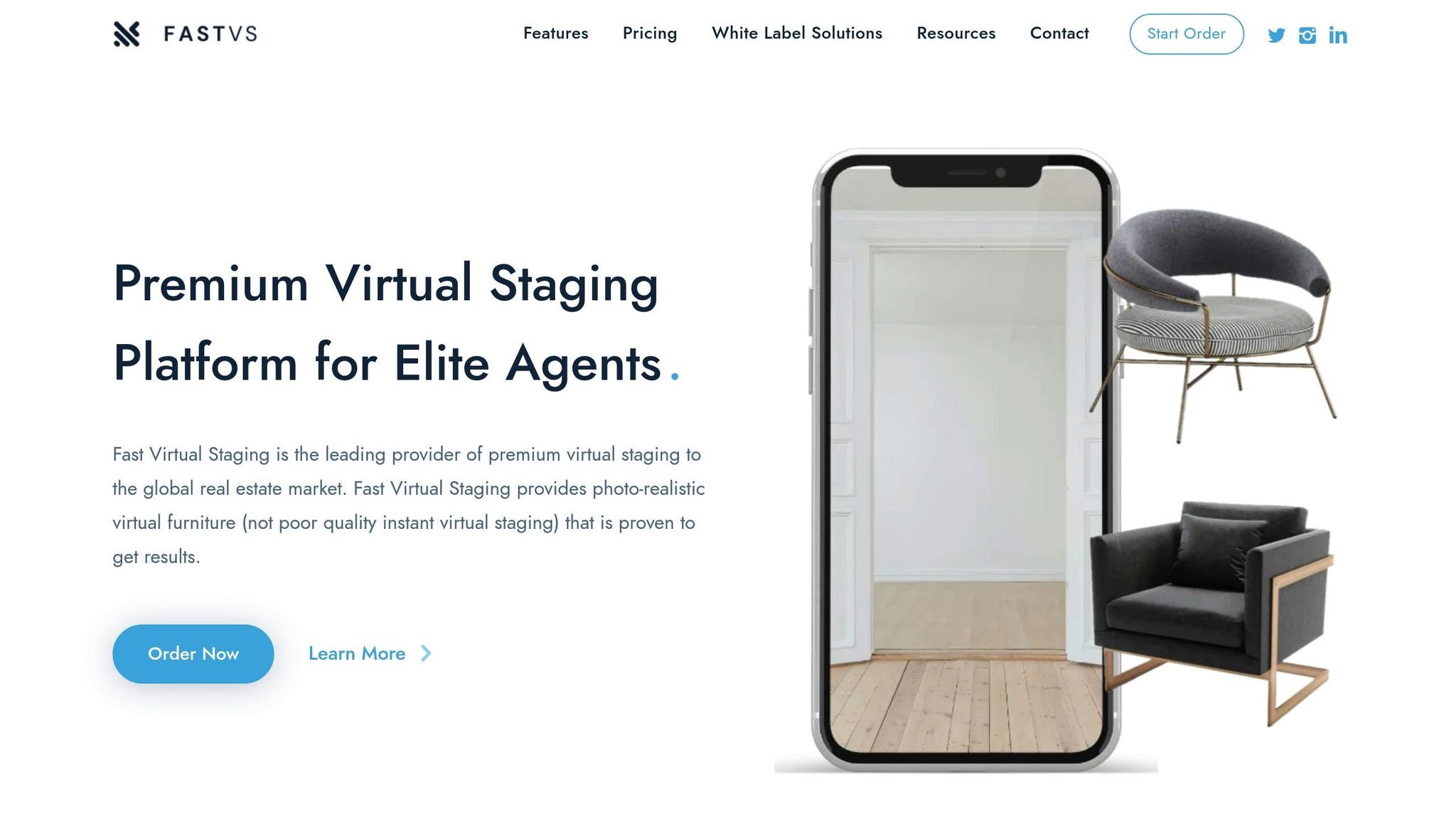
Fast Virtual Staging offers a cost-effective way to customize property photos with photo-realistic renders starting at $20 per image. Their platform includes a variety of design styles – like Scandinavian, French Country, and Modern – helping agents appeal to different buyer preferences.
Jack Dangerfield from Ray White shares his experience:
"Adding virtual furniture to my property photographs always generates increased interest in my listings. I can choose my own style of furniture and turn‑around times are super‑fast for the quality."
The service ensures 24-hour delivery for residential staging projects.
Best Practices for Digital Staging
To make the most of virtual staging, it’s important to tailor designs to the target audience and the property itself. The table below outlines strategies for different buyer groups:
| Buyer Group | Design Approach | Key Elements |
|---|---|---|
| Young Professionals | Modern, Minimalist | Smart furniture, clean lines, tech-friendly spaces |
| Families | Practical, Warm | Durable materials, multi-functional pieces, kid-friendly layouts |
| Empty Nesters | Sophisticated, Accessible | Comfortable seating, elegant touches, easy navigation |
| Luxury Buyers | High-end, Custom | Premium materials, unique pieces, statement designs |
Research indicates that 81% of buyers and renters can better imagine a property as their future home when it’s staged. Additionally, well-staged photos can boost the final sale price by 5–10%.
For the best results, match furniture styles to the property’s design and the buyer’s preferences. Use warm colors to create inviting spaces for families and cooler tones for professionals who favor minimalist aesthetics. Always ensure virtual furniture is properly scaled and positioned to maintain authenticity and highlight the space’s full potential.
Measuring Results and Making Improvements
Analyzing Sales Data and Reviews
The furniture market is projected to hit $765 billion in 2024. To stay competitive, a data-driven approach is essential. Research indicates that the typical furniture shopper has a median household income of $50,000 to $75,000 and falls within the 50-54 age range. This data provides a foundation for targeting specific buyer groups effectively.
To gauge the success of your staging efforts, focus on these key performance indicators:
| Metric | What to Analyze | Why It Matters |
|---|---|---|
| Sales Growth | Month-over-month and year-over-year changes | Helps identify which furniture selections are driving sales. |
| Average Transaction Value | Purchase amounts across demographics | Sheds light on price sensitivity and spending habits. |
| Conversion Rate | Ratio of listing views to offers | Measures how well staging influences buyer decisions. |
| Time on Market | Days from listing to sale | Indicates how staging impacts the speed of sales. |
"Sales analysis is crucial for understanding your business’s performance, identifying trends, and making informed decisions that drive growth."
These metrics provide actionable insights to fine-tune staging strategies and align them with buyer preferences.
Keeping Up with Design Trends
Tracking trends alongside data analysis helps you stay aligned with emerging buyer tastes. In 2023, U.S. consumers spent an average of $619 on furniture, highlighting the growing demand for home goods as remote work becomes a long-term norm.
Noah Schwarz, VP of Product Design at MillerKnoll, emphasizes:
"Chasing trend cycles is something I discourage. I find it seldom produces good design and often contributes to the problematic fast-fashion mentality emerging in the furniture industry: a practice which is bad for the planet and ultimately a poor investment for the consumer."
For 2024, here are some noteworthy trends:
- Biomorphic Modernism: Features natural shapes and eco-friendly materials, appealing to environmentally conscious buyers.
- Smart Furniture Integration: Includes built-in charging and connectivity options, catering to tech-savvy professionals.
- Vintage Revival: Offers unique, character-rich pieces that attract luxury buyers and empty nesters.
Katherine Finder, Chief Merchandising Officer at Anthropologie Home, adds:
"It’s all about the mix and creating spaces that are welcoming and comfortable."
While staying informed on trends is important, balancing them with timeless design principles ensures broader appeal. The home décor segment alone reached $35.4 billion in revenue for 2024, underscoring the strong demand for well-designed, staged properties.
Conclusion
Matching furniture styles to specific buyer demographics works best with a strategy based on data. For instance, properties with virtual staging sell 17% faster and often receive offers 5–10% higher than those left vacant.
The key is creating designs that resonate with your target audience. Think sleek, tech-friendly layouts for young professionals, practical and safe setups for families, cozy and accessible spaces for empty nesters, and custom, high-end pieces for luxury buyers. This tailored approach highlights the value of customizing your staging efforts.
Fast Virtual Staging (https://fastvirtualstaging.com) offers virtual staging services at just $20 per image, cutting costs by up to 97%.