
When buying a home, people aren’t just looking for square footage – they’re imagining their future. Virtual staging helps by digitally furnishing empty spaces, making them look livable and inviting. It’s faster and cheaper than traditional staging, with costs ranging from $24 to $200 per photo compared to $1,500 to $7,200 for physical staging. Plus, virtually staged homes sell 73% faster and attract 40% more online views.
Here’s why it works:
- Emotional Connection: Staging helps buyers picture themselves living in the space.
- Visualization Made Easy: It removes the guesswork of imagining furniture placement.
- Higher Offers: Staged homes often sell for 1%–5% more, sometimes up to 20%.
- First Impressions Matter: High-quality images set the tone for how buyers perceive the property.
Virtual staging is an affordable, effective tool for creating emotional appeal and boosting a home’s marketability.
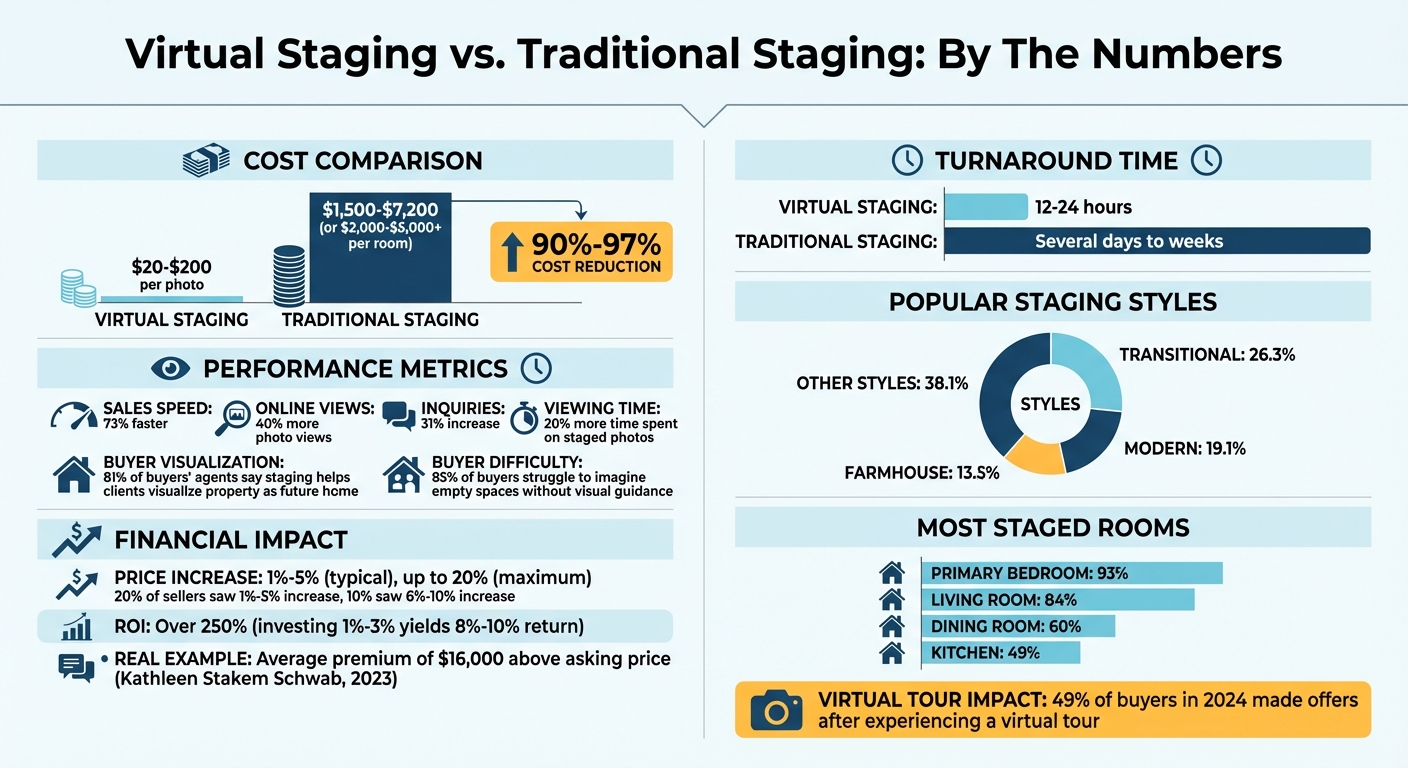
Virtual Staging Statistics: Cost Savings, Sales Speed, and ROI Comparison
Why Virtual Staging Sells Homes Faster (and for More Money!) | Benefits for Home Sellers
How Virtual Staging Creates Emotional Connections
Buying a home is rarely just about logic – it’s deeply emotional. Virtual staging taps into this by using psychology to help buyers see and feel the potential of a property, even when the furniture is entirely digital.
Emotional Impact and Visualization Made Easy
An empty house often pushes buyers to focus on practical details, but virtual staging changes that. By filling spaces with warm, inviting furnishings, it creates an emotional pull, helping potential buyers picture their lives in the home.
Studies reveal that buyers form their first impressions of a property within seconds of seeing a listing. These critical moments often determine whether they’ll book a showing or move on to the next option.
For those who struggle to imagine how an empty house could become their home, virtual staging offers a clear visual reference. It eases doubts and builds confidence in the property’s potential. This immediate visual impact plays a vital role in fostering a stronger emotional connection.
Reflecting Lifestyles and Aspirations
Virtual staging goes beyond decorating – it tells a story. By tailoring spaces to reflect specific lifestyles, it resonates with buyers on a personal level. For example, a nursery with a crib and rocking chair appeals to young families. A stylish home office speaks to remote workers. A luxurious bedroom with upscale linens attracts empty nesters searching for their perfect retreat.
This thoughtful alignment between staging and a buyer’s aspirations creates a psychological connection. When buyers see a space that mirrors their dreams, the emotional bond intensifies.
Statistics back this up. Transitional design is currently the most popular choice for virtual staging, accounting for 26.3% of requests. Modern styles follow at 19.1%, with Farmhouse at 13.5%. These designs strike a balance – they’re neutral enough to appeal broadly yet distinctive enough to spark imagination. The goal is to craft an inviting, tasteful look that encourages buyers to picture their own lives unfolding in the space.
How Virtual Staging Simplifies Decision-Making
Empty rooms can leave buyers guessing – trying to imagine how furniture might fit or what each space could be. Virtual staging takes away that uncertainty by offering a polished, finished look that helps buyers see the potential without the mental gymnastics.
Highlighting Room Size, Purpose, and Layout
Take a bedroom, for instance. In photos, it might seem too small, but with virtual staging, it’s easy to show that it can comfortably fit a king-sized bed. Julian Porcino, a real estate agent and stager at White + Wood + Woven, explains:
"I use pieces that allow buyers spatial recognition – showcasing a bedroom that looks small but actually nicely fits a king bed, for example – while still letting them envision the room with their own personal touch".
Virtual staging not only helps buyers grasp the dimensions of a space but also defines its purpose. A strategically placed desk and bookshelf clearly suggest a home office, while a crib and rocking chair instantly signal a nursery. This kind of visual clarity removes the guesswork, making it easier for buyers to see how the home could align with their lifestyle.
In fact, 81% of buyers’ agents say staging helps clients visualize a property as their future home. By offering this visual guidance, staged rooms allow buyers to focus on how much they like the space, rather than trying to figure out how it could work for them.
This enhanced visualization creates a smoother, more intuitive experience when browsing property listings.
Simplifying Property Listings
Beyond clarifying individual rooms, virtual staging also improves the overall presentation of a property. Listings with cluttered or empty spaces can feel chaotic or confusing. Buyers may struggle to understand the flow of the home as they flip through photos. Virtual staging solves this by presenting a clean, move-in-ready vision that’s easy to understand at a glance.
Christa Kenin, a real estate agent at Douglas Elliman, underscores this:
"The key is for rooms to clearly convey their purpose. A dining room should not look like a playroom; remove any unrelated items. Without furniture, buyers may be confused about a room’s use".
Anchoring Bias in Digitally Staged Homes
First impressions matter – especially in real estate. This is where anchoring bias comes into play. Anchoring bias occurs when an initial impression sets the tone for all future judgments. In real estate, high-quality virtual staging plays a pivotal role in establishing that first anchor, shaping how buyers perceive a property’s value even before stepping inside.
Empty rooms often set the wrong tone. They can suggest that the seller is eager to offload the property, which might lead to lower offers. Plus, without furniture, minor flaws are more noticeable, which can further diminish the property’s appeal. Virtual staging flips this script. Instead of presenting a blank slate, it offers a vision of an ideal lifestyle, anchoring buyers’ expectations to a polished, move-in-ready home rather than an empty, uninspiring space. With photo-realistic staging, first impressions are elevated, creating a strong foundation for how buyers view the property.
Creating First Impressions with Photo-Realistic Renders
In today’s market, digital listings are often the first interaction buyers have with a property. In fact, 49% of buyers in 2024 made offers after experiencing a virtual tour. That initial scroll through listing photos sets the stage for everything else, making photo-realistic renders a key element in creating a positive anchor.
Professional digital staging sends a clear message: this property is cared for and high-quality. Listings with expertly staged images see 40% more photo views and a 31% increase in inquiries. Buyers also spend 20% more time viewing staged photos compared to empty spaces.
Ellen Sykes, a broker at Coldwell Banker Warburg, highlights the value of staging:
"Investing in making the home look its best can enhance its value, sometimes by as much as 20% when compared to unstaged properties".
However, the quality of the renders is crucial. Low-quality or overly artificial staging – what some describe as "video game" style – can have the opposite effect, eroding trust and setting a negative anchor. High-quality, realistic staging not only enhances perceived value but also builds confidence in potential buyers.
Increasing Offers and Perceived Value
Digital staging doesn’t just make a property look good – it also shifts how buyers perceive its worth.
When buyers see a beautifully staged living room or an inviting primary bedroom, they aren’t just envisioning furniture placement. They’re imagining a lifestyle, a sense of belonging, and a home that feels worth the asking price – or even more. This emotional connection directly impacts offers and perceived value.
Staged homes consistently outperform their vacant counterparts, selling for 5% to 20% more and 73% faster. According to sellers’ agents, 20% reported that staging increased offer prices by 1% to 5%, while 10% saw increases between 6% and 10%.
The financial payoff is undeniable. Investing 1%–3% of the asking price in staging often yields returns of 8%–10%, delivering an ROI of over 250%. Services like Fast Virtual Staging make this even more accessible, offering high-quality digital staging at just $20 per image – far less than the $6,000 to $10,000 cost of traditional physical staging.
sbb-itb-7eef225
Drawing Attention to Key Property Features
Virtual staging does more than just fill empty rooms – it shines a spotlight on a property’s best features. By strategically placing virtual furniture, it highlights architectural details, corrects room perceptions, and guides the viewer’s eye to the elements that make the property stand out.
Emphasizing Property Strengths
With virtual staging, a property’s strengths take center stage. Instead of leaving buyers to imagine the potential of a blank space, thoughtfully arranged digital furniture draws attention to standout features like fireplaces, large windows, high ceilings, and unique architectural details.
Take, for instance, arranging seating to face floor-to-ceiling windows – this not only highlights the abundance of natural light but also frames outdoor views. A cozy reading chair by a bay window transforms it into an inviting nook, while a dining table placed under a statement chandelier emphasizes the room’s height. Decorus Home Staging explains it best:
"It’s about creating a visual hierarchy in the space, where the positives become the star of the show, and the negatives are relegated to the background".
Realtor Matt Burtini echoes this sentiment:
"Staging eliminates distractions and directs attention to these key elements, making the home more appealing".
A real-world example drives this point home: In April 2025, Brass and Batten Design virtually staged a modern condo that had been sitting on the market without much interest. By using sleek furniture and warm accents to highlight the open layout, the property attracted multiple offers within days and sold above the asking price. This demonstrates how virtual staging can guide buyers’ focus and create a compelling narrative for the space.
Using Furniture Placement to Guide the Eye
The placement of furniture acts as a visual roadmap, helping potential buyers navigate and understand the flow of a property. It defines specific zones, clarifies each room’s purpose, and creates clear pathways between spaces.
For example, a desk in an alcove transforms an awkward corner into a functional home office. A sectional sofa in an open-concept layout delineates the living area, while a bench at the foot of a bed adds depth and a touch of luxury to a primary bedroom.
Scale plays a critical role here. Oversized furniture can make a room feel cramped, while undersized pieces might leave buyers questioning the space’s usability. Virtual staging ensures the furniture is proportionate, preserving the room’s actual dimensions and maintaining its spacious feel.
Lighting also plays a key part in guiding the buyer’s perception. Layering ambient, task, and accent lighting enhances architectural details and creates a warm, inviting atmosphere, especially in rooms with limited natural light. Mirrors strategically placed opposite windows amplify light and make spaces feel larger.
How Fast Virtual Staging Improves Emotional Appeal
Fast Virtual Staging transforms empty properties into inviting, visually appealing spaces with photo-realistic renders, tailored interior styles, and a quick 12–24 hour turnaround. This service tackles a common real estate hurdle: around 85% of potential buyers have difficulty imagining how to furnish or use an empty space without visual guidance.
Key Features of Fast Virtual Staging
Fast Virtual Staging delivers photo-realistic 3D renders, featuring digital furniture that looks indistinguishable from the real thing. Buyers can select from a variety of customizable interior styles, such as Modern, Transitional, Farmhouse, Mid-Century Modern, and Luxury, ensuring the staging complements the property’s design and appeals to buyer preferences.
The 12-24 hour turnaround is a game-changer, allowing real estate professionals to make the most of a property’s critical first impression. Seth Greenwell, Senior Manager at ShowingTime+, highlights the impact of this technology:
"Virtual staging is like a magic wand in which buyers can walk through that vacant space and see no furniture, but they can pull up their phone and see virtually staged rooms with a virtual reference point… There’s a lot of power in that".
For agents juggling multiple listings, white-label options ensure consistent branding across marketing materials, while a dedicated account manager oversees projects for a seamless experience. Together, these tools provide an efficient and cost-effective alternative to traditional staging.
Pricing and Revision Process
Fast Virtual Staging is priced at $20 USD per image, offering 90%–97% savings compared to traditional staging, which can cost between $2,000 and $5,000 or more per room.
The service also includes a flexible revision process, enabling clients to request changes until the final render aligns perfectly with their vision. This ensures the staged images resonate with the target audience, without extra fees or complicated approval steps.
Results from Fast Virtual Staging Projects
The benefits of Fast Virtual Staging are evident in real-world outcomes. In 2023, Kathleen Stakem Schwab from Re/Max Distinctive sold every virtually staged property above the asking price, with an average premium of $16,000. This approach not only added value but also shifted buyer perceptions early in the process. Similarly, Kathy Murray from Ebby Halliday Realtors transformed empty spaces into "dream homes" on mobile screens, driving buyer engagement. Murray explains:
"Virtual staging allows potential clients to see the space in a positive light from the very beginning. Most people’s first showing is a 5 or 6-inch screen called their phone!"
These results mirror broader industry trends: 81% of buyers find it easier to envision a property as their future home when it’s staged, and virtually staged properties can sell up to 73% faster than their non-staged counterparts.
Practical Techniques for Buyer Psychology
Understanding buyer psychology takes virtual staging beyond just pretty pictures – it turns it into a powerful tool for selling homes. The trick lies in aligning the emotional tone of your staging with the dreams and needs of your target buyers. By tailoring the presentation to match their preferences, you can amplify the impact of virtual staging.
Matching Styles to Target Buyers
Before diving into design choices, it’s crucial to pinpoint who your likely buyer is. A young professional looking at a sleek city condo has very different tastes compared to a family eyeing a suburban home. For instance, transitional style leads the pack at 26.3% popularity because it blends traditional and modern elements, appealing to a wide range of buyers. On the other hand, modern staging (19.1%) is a better fit for urban professionals, while farmhouse style (13.5%) tends to attract families in suburban settings.
The home’s architecture also plays a big role. Imagine putting ultramodern furniture in a cozy Cape Cod – it just doesn’t feel right. To create a stronger emotional connection, stage each room based on its likely use. A spare room could become a nursery for a family or a home office for a young professional. These thoughtful touches make the space feel more personal and inviting.
Labeling Photos to Build Trust
Being upfront about virtual staging is essential for building trust and avoiding any legal hiccups. Always label photos as "virtually staged" by adding watermarks or captions directly on the image. In many MLS regions, this disclosure is a requirement. For added transparency, include both the original and staged versions of photos in your gallery. This side-by-side approach helps avoid the disappointment 58% of buyers feel when a home doesn’t match its photos in person.
Shital Gohil, Co-Founder and COO of Styldod, emphasizes the importance of honesty here:
"Virtual staging is completely legal and ethical as long as it is disclosed to buyers. It is intended to help buyers visualize a property’s potential, not mislead them".
By being transparent, you not only build trust but also boost buyer engagement by showcasing the home’s versatility.
Offering Multiple Design Options
Providing multiple staging options for the same room can significantly widen your property’s appeal. For example, a living room could be staged in both Modern Organic and Traditional styles to see which resonates more with local buyers. This strategy is especially effective for multipurpose spaces – showing a spare room as both a home office and a nursery can attract a broader audience.
Focus on staging the "Big Four" rooms to maximize impact: the primary bedroom (93% staged), living room (84%), dining room (60%), and kitchen (49%). With virtual staging costing around $20 per image, targeting these key areas ensures you get the most emotional engagement and return on your investment.
Conclusion
Virtual staging succeeds because it taps into the way buyers naturally make decisions. With 81% of buyers’ agents agreeing that staging helps clients imagine a property as their future home, it’s clear that emotion plays a central role in real estate transactions. By turning empty spaces into inviting, aspirational rooms, virtual staging helps buyers picture their lives in a home.
The numbers speak for themselves. Homes with virtual staging sell about 73% faster, attract 40% more views, generate 31% more inquiries, and can even boost offer prices by 1% to 5%. These results stem from leveraging psychological principles like visualization, emotional resonance, and anchoring bias to make properties more appealing.
To get the most out of virtual staging, focus on key areas of the home that buyers care about most. Tailor the design to match the lifestyle of your target audience, and always be transparent by labeling staged photos and including original images. This approach builds trust while enhancing the overall appeal of your listing.
Fast Virtual Staging simplifies the process, offering high-quality services at $20 per image with a quick 12–24 hour turnaround. Features like hassle-free revisions, a dedicated account manager, and options for both residential and commercial properties make it easy to create stunning, customized designs. They even provide white-label solutions for photographers and marketplaces, ensuring flexibility and professionalism.
Virtual staging doesn’t just make listings look good – it creates an emotional connection that turns casual viewers into serious buyers. By using these strategies thoughtfully, you can design listings that not only highlight a property’s potential but also inspire buyers to take the next step. It’s a powerful tool for making homes stand out and dreams come to life.
FAQs
How does virtual staging help buyers feel emotionally connected to a home?
Virtual staging helps buyers picture themselves living in a home by turning bare spaces into cozy, welcoming environments. With thoughtfully chosen layouts, colors, and furniture, it breathes life into empty rooms, making them feel personal and inviting.
By tapping into psychological principles like visualization and emotional appeal, virtual staging makes properties more relatable. It helps buyers see the possibilities of a space and imagine how it could fit seamlessly into their lives – even when there’s no actual furniture in sight.
What are the cost and time advantages of virtual staging over traditional staging?
Virtual staging offers a smart, budget-friendly alternative to traditional home staging. While traditional staging can set you back anywhere from $500 to several thousand dollars per property, virtual staging typically costs only a fraction of that – sometimes saving up to 97%. Plus, you can skip the added expenses of renting, transporting, and arranging real furniture.
When it comes to speed, virtual staging is hard to beat. A digitally staged image can often be ready in just a few hours or by the next day, whereas traditional staging might take several days or even weeks to plan and execute. This combination of affordability and quick turnaround makes virtual staging a practical option for sellers aiming to spruce up their property listings without breaking the bank or wasting valuable time.
How does virtual staging increase a home’s value and help it sell faster?
Virtual staging can significantly boost a home’s appeal by helping buyers picture themselves living there. This emotional connection often translates into higher offers. According to research, homes with virtual staging can sell for 6%–10% more than vacant properties. In fact, 82% of real estate agents believe staging makes it easier for buyers to envision the space as their own, which encourages competitive bidding.
Not only does virtual staging influence price, but it also speeds up the selling process. Listings with virtual staging sell up to 73% faster than empty ones. By showcasing a warm and polished look online, these homes grab attention quickly, spend less time on the market, and often secure offers closer to the asking price.