
Virtual staging is a cost-effective way to make properties more appealing by digitally adding furniture and decor to photos. It helps buyers visualize a home’s potential without expensive renovations or physical staging. With 100% of homebuyers searching online, high-quality visuals are critical for attracting attention. Homes with professional photos sell up to 50% faster and for $116,076 more on average. Virtual staging costs around $10–$50 per photo, compared to $2,000–$2,400 per month for physical staging, making it a budget-friendly option for sellers.
Key Takeaways:
- Why it works: Buyers rely on listing photos to decide whether to view a property.
- How it works: High-quality photos are digitally enhanced with furniture and decor tailored to target buyers.
- Benefits: Faster sales, more views, and higher perceived property value.
- Cost comparison: Virtual staging is up to 96% cheaper than physical staging.
- Customization: Designs can match buyer preferences based on location, season, or property type.
Virtual staging transforms empty or outdated spaces into attractive listings, helping sellers stand out in today’s competitive market.
How to Virtually Stage any Property | Ultimate Guide to Stunning Virtual Home Staging
How Virtual Staging Works: Step-by-Step Process
Virtual staging turns empty or outdated rooms into inviting spaces using a simple digital process. By following a few key steps, you can enhance your property photos and create visuals that grab the attention of potential buyers.
Taking High-Quality Photos
The success of virtual staging starts with crisp, well-lit photos. Use a high-resolution DSLR or mirrorless camera (24+ megapixels) to capture sharp details. A wide-angle lens, ideally with a focal length between 14mm and 24mm, helps showcase the entire room without distorting its proportions.
Before snapping photos, clear the room of all furniture and clutter. A clean, empty space with spotless walls, floors, and windows provides the perfect base for digital staging. Natural light is your best friend, but supplement it with artificial lighting if necessary to minimize shadows. Using High Dynamic Range (HDR) settings can also help balance lighting in rooms with uneven brightness. The goal is to highlight the property’s best features while providing an accurate sense of its size and layout.
Once you’ve captured high-quality images, the next step is to digitally transform them with furniture and decor.
Adding Digital Furniture and Decor
Virtual staging software allows you to add furniture, artwork, and decor directly into your photos. Professional tools ensure that these elements look natural by carefully blending textures, lighting, and shadows with the original image. The software also calculates room dimensions to scale furnishings correctly, creating a balanced and realistic design. Colors and styles are coordinated to complement the space, making the room feel cohesive and polished.
Customizing Designs for Target Buyers
One of the biggest advantages of virtual staging is the ability to tailor designs to attract specific buyers. By customizing the decor, you can create spaces that resonate with different demographics and preferences.
For example, a sleek, modern look might appeal to urban condo buyers, while a cozy, family-friendly design could be perfect for a suburban home. Coastal properties often benefit from light, airy textures, while mountain homes shine with warm, earthy materials. This flexibility allows you to present your property in a way that aligns with the lifestyle and tastes of your ideal buyer.
Best Practices for Effective Virtual Staging
Building on the step-by-step process discussed earlier, these best practices can help refine virtual staging to captivate and engage potential buyers. The goal? To highlight a property’s best features in a way that resonates with a wide audience.
Using Neutral and Flexible Design Styles
When it comes to virtual staging, neutral color schemes are your best friend. Shades like soft grays, warm whites, and beige create a calm, inviting backdrop that appeals to a broad range of buyers. These timeless tones make it easier for people to imagine their own furniture and decor in the space, without being distracted by bold or highly personal design choices.
Furniture styles also play a big role. Stick to classic designs like mid-century modern, transitional, or contemporary pieces. Avoid overly trendy colors – like millennial pink or ultra-violet – that might not resonate with everyone. Subtle patterns, such as simple geometric rugs or textured throw pillows, can add visual interest without overwhelming the space.
Think of virtual staging as creating a blank canvas. The idea is to make the home feel move-in ready, while still leaving room for buyers to envision their personal style. This approach ensures the property feels welcoming to the widest audience possible.
Showcasing Property Features
Virtual staging should work to enhance the property’s standout features, not overshadow them. Strategic furniture placement can help draw attention to details like hardwood floors, crown molding, or built-in shelving.
For homes with large windows or stunning views, arrange seating to face outward and emphasize the natural light. Avoid placing tall furniture that could obstruct sightlines or hide architectural highlights.
In open floor plans, use furniture to define distinct areas while maintaining a sense of flow. For example, area rugs can separate living and dining spaces, or a strategically placed sofa can create a natural boundary. This helps buyers visualize how to make the most of large, open areas.
Keep architectural elements like exposed brick walls, unique ceilings, or built-ins as focal points by minimizing clutter nearby. If the kitchen features an island or breakfast bar, stage it with simple accents like a bowl of fresh fruit or a coffee maker. Avoid overcrowding countertops, as it can make the space feel cramped.
Beyond these basics, adapting your staging to fit seasonal and regional preferences can make a big difference.
Adjusting Designs for Seasons and Regions
Virtual staging should reflect the unique preferences of different regions across the United States. For example:
- Southwestern markets like Phoenix or Albuquerque often favor warm earth tones, natural textures, and decor inspired by desert landscapes.
- Pacific Northwest properties in cities like Seattle or Portland benefit from cozy, layered staging with rich woods and soft textiles that evoke a hygge aesthetic.
- Coastal homes, whether in California or the Carolinas, shine with light, breezy touches like whitewashed furniture, nautical accents, and blue-and-white palettes.
- Mountain or rural properties feel more inviting with rustic elements, natural materials, and furniture that suggests a retreat-like vibe.
Seasonal staging also plays a role. In the fall and winter, introduce warm throw blankets, deeper colors, and soft lighting to create a cozy atmosphere. For spring and summer, opt for lighter fabrics, fresh accents, and greenery to make the home feel airy and vibrant.
Lastly, consider the property’s price point. For luxury homes, higher-end furniture and sophisticated decor can elevate the space, while starter homes benefit from practical, approachable designs that feel welcoming to first-time buyers.
The key is tailoring the staging to fit the local market and buyer demographics. A sleek downtown loft in Chicago will need a very different approach than a family-oriented home in suburban Atlanta, even if they’re in the same price bracket. Understanding these nuances can make all the difference in helping buyers connect with the property.
sbb-itb-7eef225
Virtual Staging vs. Physical Staging: Side-by-Side Comparison
Virtual and physical staging each bring unique benefits to real estate marketing. Deciding which one works best depends on your property, goals, and budget. Staged homes are proven to sell faster – 73% faster on average – and can command 5–10% higher prices. In some cases, properties sell up to 87% faster compared to unstaged listings. Below is a straightforward comparison of the two approaches.
Comparison Table: Virtual vs. Physical Staging
Here’s how virtual staging and physical staging measure up across key factors:
| Factor | Virtual Staging | Physical Staging |
|---|---|---|
| Cost | $10–$50 per photo; up to 96% cheaper than traditional staging | $2,000–$2,400 per month for a 2,000 sq ft property |
| Setup Time | A few hours to 2 days once photos are ready; often under 24 hours | Days or weeks for furniture delivery and setup |
| Flexibility | Easily adjust designs, colors, or furniture digitally with no extra cost | Changing styles requires replacing physical items, adding to costs |
| Maintenance | No maintenance needed after photos are staged | Requires ongoing cleaning and upkeep |
| Buyer Experience | Offers a visual representation; buyers must imagine the space’s potential | Provides an immersive, in-person experience with real furniture |
| Logistics | Needs high-quality photos and skilled digital editing | Involves coordination with rental companies, decorators, and movers |
| Risk Factors | Potential for buyer dissatisfaction if staging doesn’t match reality | Risk of damage or theft to furniture and decor |
Virtual staging, starting at around $16 per image, is ideal for sellers with tight budgets or limited time who still want to create visually appealing listings. On the other hand, physical staging excels at creating emotional connections, especially for local buyers attending in-person showings. It’s worth noting that 82% of buyer’s agents say staging helps buyers envision themselves living in the home.
With 80% of home sales beginning online, virtual staging can make your listing pop in a crowded market. Some sellers find the best results by combining both methods – using physical staging for key living spaces and virtual staging for secondary areas like bedrooms, offices, or bonus rooms. This hybrid approach balances the emotional appeal of physical staging with the cost-effectiveness and flexibility of virtual staging. By weighing the pros and cons, you can select the strategy that best supports your selling goals.
Selecting a Virtual Staging Service
Choosing the right virtual staging service can make all the difference in your property marketing efforts. Virtual staging is a proven way to enhance a property’s appeal and draw in potential buyers, so finding a provider that delivers top-notch results is key to your success.
Key Features to Look For
When comparing virtual staging options, focus on features that elevate your listings and simplify your workflow. High-quality, realistic images should be a priority – look for providers who can produce photo-realistic renders where the digital furniture blends seamlessly with the property photos.
Offering a variety of interior design styles is another important factor. From sleek, modern aesthetics to cozy, traditional looks, having diverse options allows you to tailor the staging to your target buyer’s preferences. Speed is also crucial in the fast-paced real estate market. Providers offering a 12–24-hour turnaround can help you stay on schedule, especially when preparing for open houses or weekend showings.
Flexible revision policies are a must. The best services include revisions in their pricing, so you can fine-tune details like furniture placement, colors, or styles without extra costs. Reliable customer support is equally important when working under tight deadlines. A dedicated account manager can be a game-changer, offering personalized guidance and ensuring your staging aligns with local market trends.
For real estate professionals, white-label options are a valuable feature. These allow photographers and agencies to offer staging services under their own brand, helping them expand their offerings while maintaining their professional identity. Providers like Fast Virtual Staging excel in delivering these features, ensuring consistent, high-quality results.
Fast Virtual Staging Services and Benefits
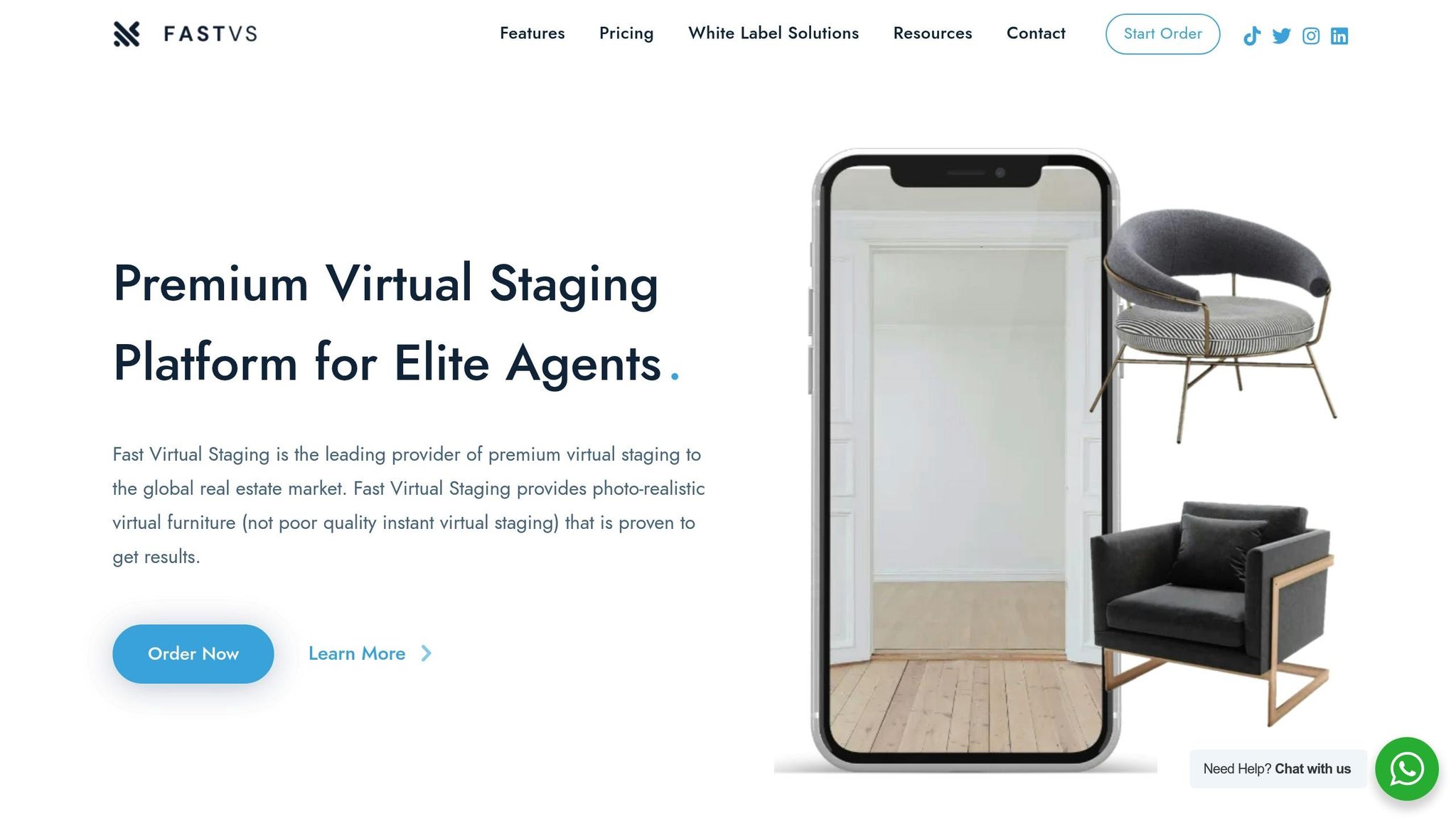
Fast Virtual Staging is tailored to meet the needs of real estate professionals, offering everything you need for effective property marketing. Their pricing is straightforward at $20 per image, no matter the project size.
With a 12–24-hour turnaround and hassle-free revisions, you can count on them to deliver exactly what you envision. Their guaranteed 24-hour delivery for residential orders ensures your marketing plans stay on track.
A dedicated account manager adds another layer of convenience. They get to know your preferences and style requirements, making future orders faster and more consistent. This personalized support ensures that every project meets your standards.
For professionals looking to enhance their service offerings, Fast Virtual Staging also provides white-label solutions. This feature allows you to present staging services under your own brand, complete with discounted pricing for partners. It’s a great way to create an additional revenue stream while maintaining your brand identity.
How to Place Your First Order
Getting started with Fast Virtual Staging is quick and straightforward. Here’s how it works:
- Visit their website and select the virtual staging service option.
- Upload your property photos directly through their platform.
- Choose your preferred interior design style from the available options.
- Provide any specific instructions, such as furniture types or color preferences.
- Review and confirm your order details, including the number of images and delivery timeline.
- Track your order progress through their system.
When selecting design styles, think about your target audience. For instance, young professionals might prefer sleek, minimalist interiors, while families may lean toward warm, traditional designs. Your dedicated account manager can offer advice based on local market trends to help you make the best choice.
Once completed, your staged images will be delivered in high-resolution formats, ready for use in MLS listings, social media campaigns, and print materials. These polished visuals will fit seamlessly into your marketing efforts, helping you showcase your property in the best possible light.
Conclusion: Sell Properties Faster with Virtual Staging
Virtual staging has transformed the way properties are marketed, providing an affordable and efficient alternative to traditional staging. Instead of spending thousands on physical staging, sellers can digitally redesign empty spaces for as little as $20 per image.
With a quick turnaround time of just 12 to 24 hours, virtual staging allows sellers to test different design styles and make adjustments with ease. In no time, empty rooms can be transformed into inviting, fully furnished spaces that attract potential buyers.
What makes virtual staging even more appealing is its ability to create lifelike images that help buyers imagine themselves living in the home. In today’s competitive real estate market, where online listings often make the first impression, this can be a game-changer.
Fast Virtual Staging simplifies the process, offering fast service and realistic results. Visit our website to see how virtual staging can help you sell properties faster while keeping your marketing budget in check.
FAQs
What are the key differences between virtual staging and physical staging, and how do they impact the home-buying experience?
When it comes to showcasing a property, both virtual staging and physical staging offer distinct advantages, depending on your goals and resources. Physical staging lets potential buyers walk through a home and experience the space firsthand. They can see how furniture fits, feel the textures, and connect emotionally with the environment. However, this approach can quickly add up in costs and requires significant time to arrange and maintain.
Virtual staging, by contrast, is a more budget-friendly and versatile solution, especially for online listings. With virtual staging, you can digitally furnish empty rooms or refresh outdated interiors, helping buyers imagine the home’s possibilities – without the need for costly furniture rentals or renovations. While it doesn’t offer the hands-on experience of physical staging, it excels at making properties stand out in online photos, which is a huge advantage in today’s real estate market where first impressions often happen online.
For many sellers, virtual staging is a smart way to generate interest and attract buyers, particularly when physical staging isn’t feasible or financially practical.
What are the best virtual staging styles for different regions or property types in the US?
The best virtual staging styles in the U.S. often hinge on the property’s location and its overall vibe. For instance, Farmhouse and Contemporary designs are popular choices for residential homes, offering a warm and inviting look. On the other hand, Mid-Century Modern and Scandinavian styles are perfect for giving luxury properties that extra touch of sophistication.
In coastal areas, light and breezy aesthetics tend to dominate, reflecting the relaxed, seaside atmosphere. Meanwhile, urban properties often gravitate toward Modern or Industrial themes, complementing the sleek architecture and fast-paced city lifestyle.
Matching the design to the region and the property’s unique features doesn’t just boost its visual charm – it also draws in the right buyers, helping properties sell faster.
What should I consider when choosing a virtual staging service?
When choosing a virtual staging service, focus on providers with a standout portfolio that showcases their skill and the quality of their designs. Opt for companies that provide flexible options, high-resolution visuals, and a broad selection of furniture and decor styles to match various property types and cater to diverse buyer tastes.
Equally important is selecting a service with a solid track record for dependability and professionalism. Providers that excel in creating lifelike, visually engaging designs can make a property more appealing, giving it an edge in the highly competitive U.S. real estate market.