
Virtual staging digitally enhances property photos with furniture and décor to help buyers and tenants visualize spaces without physical staging. It’s cost-effective, fast, and customizable, making it a vital tool for marketing commercial spaces like offices, retail, and warehouses. Here’s why it matters:
- Cost Savings: Virtual staging costs significantly less than physical staging, with prices as low as $24 per image.
- Faster Turnaround: Images can be ready in 24-48 hours, speeding up marketing efforts.
- Custom Designs: Tailored layouts for different industries (e.g., office setups, retail displays, or warehouse workflows).
- Modern Tools: Features like 3D tours and digital twins offer flexibility for showcasing multiple configurations.
| Feature | Traditional Staging | Virtual Staging |
|---|---|---|
| Cost | High upfront costs | Pay per image ($20-$100) |
| Setup Time | Days to weeks | 24-48 hours |
| Customization | Limited by physical inventory | Unlimited design options |
| Space Requirements | Physical storage needed | No storage required |
Virtual staging is reshaping real estate marketing by offering affordable, fast, and visually appealing solutions that drive engagement and sales.
Benefits of Interactive Virtual Staging
Advantages of Virtual Staging in Commercial Real Estate
Virtual staging is changing the way commercial real estate is marketed, offering practical benefits that make it a popular choice for property owners and managers.
Lower Costs Compared to Traditional Staging
Physical staging can be expensive, especially for large commercial spaces. Virtual staging, on the other hand, uses a pay-per-photo pricing model, making it a much more budget-friendly option. For instance, companies like Fast Virtual Staging charge as little as $24 per image.
Faster Marketing Turnaround
Because virtual staging is entirely digital, it eliminates the delays associated with physical staging. This allows properties to be marketed more quickly. A great example is Kitt, which staged 15,000 square feet in just one week using Matterport‘s tools. This speed gives property managers the ability to act quickly in competitive markets.
Tailored Designs for Different Audiences
Virtual staging makes it easy to highlight a property’s potential for various industries. Whether it’s an office, a retail space, or a warehouse, marketers can create customized designs to appeal to specific audiences. This flexibility allows for multiple layouts to be presented, helping properties stand out to a wider range of potential clients.
| Aspect | Traditional Staging | Virtual Staging |
|---|---|---|
| Cost | High upfront investment | Pay per image |
| Setup & Flexibility | Days to weeks, single design | 24-48 hours, multiple designs |
| Customization | Limited by physical inventory | Unlimited design options |
| Space Requirements | Physical storage needed | No storage required |
Research shows that potential buyers spend 60% of their time looking at property photos when browsing listings. Virtual staging takes advantage of this by providing visually appealing and tailored images, making it a powerful tool for marketing commercial spaces effectively.
Uses of Virtual Staging in Commercial Spaces
Virtual staging offers a practical way to reimagine commercial properties, tailoring visuals to suit different industries and needs.
Office and Corporate Spaces
For office spaces, virtual staging helps display various setups, such as open-plan designs or private offices, catering to modern workplace demands. For instance, Kitt virtually staged 15,000 square feet in just one week, showcasing how quickly spaces can be marketed. This approach not only saves money but also speeds up the process of attracting potential tenants or buyers.
Retail, Hospitality, and Mixed-Use Properties
Retail spaces benefit greatly from virtual staging by presenting diverse store layouts, product displays, and customer flow strategies. In hospitality and mixed-use properties, it highlights room aesthetics, shared spaces, and flexible business setups. These visuals make properties stand out while cutting down on staging costs and time.
| Property Type | Applications | Benefits |
|---|---|---|
| Retail | Display store layouts, product placement | Highlight customer flow |
| Hospitality | Showcase room styles, shared areas | Present different themes |
| Mixed-Use | Demonstrate flexible configurations | Appeal to varied tenants |
Industrial and Warehouse Spaces
Virtual staging also proves useful for industrial spaces, helping visualize manufacturing setups, warehouse layouts, and operational workflows. This approach allows potential tenants to see how the space could meet their needs – without the expense of physical staging.
Examples of configurations include:
- Manufacturing floor plans
- Storage and shelving systems
- Loading dock setups
- Integrated office areas
To start, high-quality property photos are taken, and designs are selected to match the specific requirements of the space. This ensures the visuals are both functional and appealing to the target audience.
sbb-itb-7eef225
Virtual Staging Process for Commercial Properties
Virtual staging for commercial properties turns empty spaces into visually appealing presentations. This process involves several key steps, each requiring precision and expertise to create effective marketing visuals.
Taking High-Quality Property Photos
The foundation of virtual staging lies in high-quality photos. Proper lighting, wide angles, and clear, unobstructed views are essential. Combining natural daylight with artificial lighting ensures the photos are sharp and detailed. Once these images are ready, the focus shifts to choosing designs that align with the target audience’s preferences.
Selecting Furniture and Design Styles
Furniture and décor choices depend on the property’s purpose and audience. For example:
- Modern office spaces benefit from ergonomic furniture and collaborative layouts.
- Retail properties prioritize customer flow and attractive display setups.
- Industrial spaces focus on showcasing storage and operational efficiency.
The right design style highlights the property’s unique features and appeals to potential buyers or tenants.
Rendering and Finalizing Images
Once designs are chosen, the rendering stage transforms raw photos into polished, market-ready visuals. Companies like Fast Virtual Staging can deliver these renders in as little as 24 hours, which is ideal for tight marketing timelines.
The rendering process includes:
- Ensuring realism and accurate proportions
- Checking lighting consistency across the images
- Reviewing furniture placement and scale for balance
- Making client-requested adjustments
Revisions are often part of the service, allowing clients to fine-tune the visuals. This meticulous approach ensures the final images are photorealistic and effectively showcase the property’s potential, making a strong impact on marketing campaigns.
Best Practices for Virtual Staging in Commercial Real Estate
To make virtual staging effective, it’s important to balance visual appeal with ethical standards.
Ensuring Realism and Proportion
Getting the proportions right is key. Professional virtual staging focuses on these critical aspects:
- Precise measurements of the space
- Correctly scaled furniture
- Consistent lighting, shadows, and reflections
- Proper alignment for perspective
Once the visuals look natural, the designs can be adapted to suit specific industry needs.
Customizing Designs for Industries and Audiences
Different industries have different expectations when it comes to design. For example, tech startups often lean toward modern, open layouts, while law firms typically prefer more formal, structured spaces.
Here’s how virtual staging can be tailored to meet the needs of various commercial spaces:
| Industry Type | Design Focus | Key Elements |
|---|---|---|
| Tech Startups | Contemporary | Open layouts, collaborative areas |
| Professional Services | Formal | Private offices, meeting rooms |
| Retail | Customer-centric | Display areas, traffic flow |
| Industrial | Practical | Equipment zones, workflow setups |
Ethical and Legal Considerations
Being transparent is a must when using virtual staging in marketing. Listings should clearly identify staged images to maintain trust.
Key steps for ethical virtual staging:
- Clearly label all virtually staged photos
- Include original, unstaged images alongside staged ones
- Avoid altering photos to hide structural flaws
- Use furniture and décor that could realistically fit the space
"It is crucial to disclose the use of virtual staging in marketing materials to maintain transparency and avoid misleading potential buyers or tenants."
Research shows that 60% of potential buyers focus on property photos when browsing listings.
Working with Professional Virtual Staging Services
Teaming up with professional virtual staging services ensures your property visuals meet industry standards and effectively highlight the property’s potential. Picking the right partner is key to success in commercial real estate.
Fast Virtual Staging
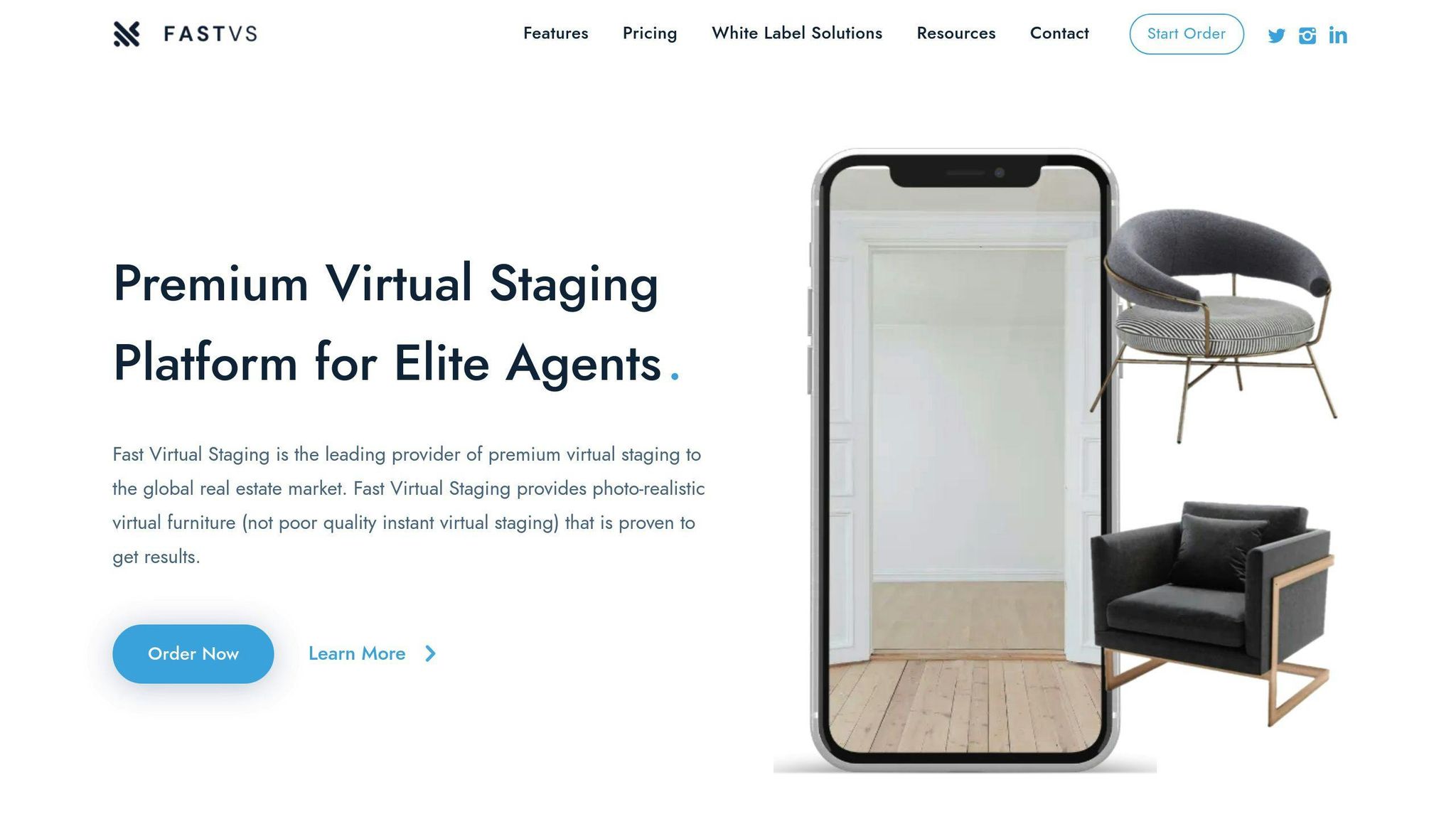
Fast Virtual Staging focuses on creating photo-realistic visuals tailored for commercial spaces. Here’s what they offer:
- Quick Turnaround: Get your visuals ready in 24 hours for fast marketing.
- Dedicated Support: An account manager ensures smooth communication.
- Simple Revisions: A hassle-free process to make changes if needed.
- White-Label Solutions: Perfect for real estate photographers and marketplaces.
They provide high-quality results at competitive prices, making them a good fit for projects of any size. While their tailored solutions are appealing, it’s important to weigh several factors when choosing a virtual staging provider.
Choosing a Virtual Staging Partner
When evaluating virtual staging services, prioritize these factors:
| Selection Criteria | What to Look For |
|---|---|
| Portfolio Quality | Realistic renders, accurate scaling, experience with commercial properties |
| Turnaround Time | Standard 24-48 hour delivery, with rush options if needed |
| Pricing Structure | Transparent per-image pricing, bulk discounts, clear revision policies |
| Design Flexibility | A variety of styles and industry-specific designs |
| Support Services | Dedicated account managers, reliable communication channels |
Top providers offer a seamless experience, from start to finish. Review their portfolio to ensure consistent quality across various commercial settings, like offices, retail spaces, and industrial properties. Providers with a strong track record in commercial real estate visualization and comprehensive support are ideal.
"Quality remains paramount; high-end virtual staging can significantly enhance a property’s appeal, while subpar staging may detract from it."
Cost Considerations:
Virtual staging costs typically range from $20-30 per image for basic services to $100 or more for premium designs. Staged properties tend to sell 87% faster and for 17% more than those left unstaged.
Conclusion and Key Points
Why Virtual Staging Matters
Virtual staging has reshaped how commercial real estate is marketed, offering a modern alternative to traditional staging. Eye-catching visuals are essential for attracting buyers online, making virtual staging a smart choice for real estate professionals.
Here’s a quick look at how virtual staging stands out:
| Advantage | Impact |
|---|---|
| Cost Savings | Cuts costs by up to 90% compared to physical staging |
| Speed and Flexibility | Delivers results in just 24 hours with various design options |
| Buyer Engagement | Improves online listing appeal with better visuals |
With these benefits, it’s clear that virtual staging can play a key role in enhancing marketing strategies for commercial properties.
How to Get Started
If you’re ready to incorporate virtual staging into your marketing efforts, here are some steps to consider:
Integrating Technology and Planning Smartly Kitt’s ability to stage 15,000 square feet quickly shows how virtual staging can streamline marketing timelines. Focus on creating realistic visuals that meet buyer expectations, especially with trends like hybrid workspaces in mind. When choosing a virtual staging provider, look for:
- Photo-realistic quality that mirrors real-life spaces
- Expertise in commercial design to match industry needs
- Fast delivery to keep up with market demands
- Strong communication to ensure smooth collaboration
"Quality remains paramount; high-end virtual staging can significantly enhance a property’s appeal, while subpar staging may detract from it."
In today’s competitive market, using virtual staging effectively can make your listings stand out, sell faster, and maximize returns. It’s a powerful tool to stay ahead and deliver great results.