
Virtual staging is changing how properties are sold in competitive markets like New York and Los Angeles. It uses digital tools to transform empty spaces into visually appealing, furnished environments that make buyers feel at home. Here’s why it’s gaining traction:
- Cost-Effective: Starting at $20 per image, virtual staging is far cheaper than physical staging.
- Customizable Designs: Tailor styles to match buyer preferences, from sleek modern to cozy family-friendly.
- Quick Turnaround: Images can be ready in 24–48 hours, speeding up the listing process.
- Increased Buyer Interest: Well-staged photos lead to faster sales and higher offers.
Virtual staging isn’t just a trend; it’s becoming an essential tool for real estate agents and sellers to stand out in crowded urban markets.
How To Virtually Stage Your Listing for Real Estate Agents
Benefits of Virtual Staging for Property Sales
Virtual staging has become a game-changer in bustling real estate markets like New York and Los Angeles. By leveraging digital design, it showcases a property’s potential without the logistical challenges of traditional staging. This modern approach can significantly influence sales outcomes in highly competitive urban markets.
Bringing Spaces to Life
Virtual staging transforms empty rooms into inviting, furnished spaces that feel real and relatable. By doing so, it helps buyers picture how they might use the space, making the property feel more like a home. This visual appeal makes property listings stand out and leaves a lasting impression.
A Budget-Friendly Option
Compared to traditional staging, virtual staging is much easier on the wallet. Companies like Fast Virtual Staging offer services starting at just $20 per image, allowing sellers to upgrade their property photos without breaking the bank. Plus, it gives sellers the freedom to try out different designs without committing to expensive changes.
Designs That Speak to Every Buyer
One of virtual staging’s greatest strengths is its adaptability. It can cater to a wide range of buyer preferences, making it possible to design spaces that resonate with different demographics. For instance, sleek, modern designs might appeal to young professionals, while classic, cozy interiors could attract families. This flexibility ensures that properties can connect with the right audience.
How Virtual Staging Works: Process and Tools
Virtual staging offers a practical solution for agents and sellers navigating competitive markets like New York and Los Angeles. Here’s how it all comes together.
Virtual Staging Process: Step by Step
It all starts with capturing high-quality photos of the property. These images should use natural lighting and wide-angle perspectives to clearly showcase walls, floors, and ceilings. The better the photos, the more seamlessly the staged elements will blend in.
Once the photos are ready, clients upload them to the staging platform and specify their desired design style. Whether it’s sleek modern minimalism for a Manhattan loft or cozy coastal decor for a Los Angeles beach house, clients can tailor the look to match the property’s vibe.
Next, professional designers step in to digitally add 3D furniture and decor elements. They carefully ensure proper proportions, lighting, and perspective to create photorealistic results. Clients then review the initial drafts and can request changes to furniture, color schemes, or other details. Typically, the polished final images are ready within 24–48 hours.
This straightforward process ensures a fast and flexible way to present properties in their best light.
Fast Virtual Staging Features
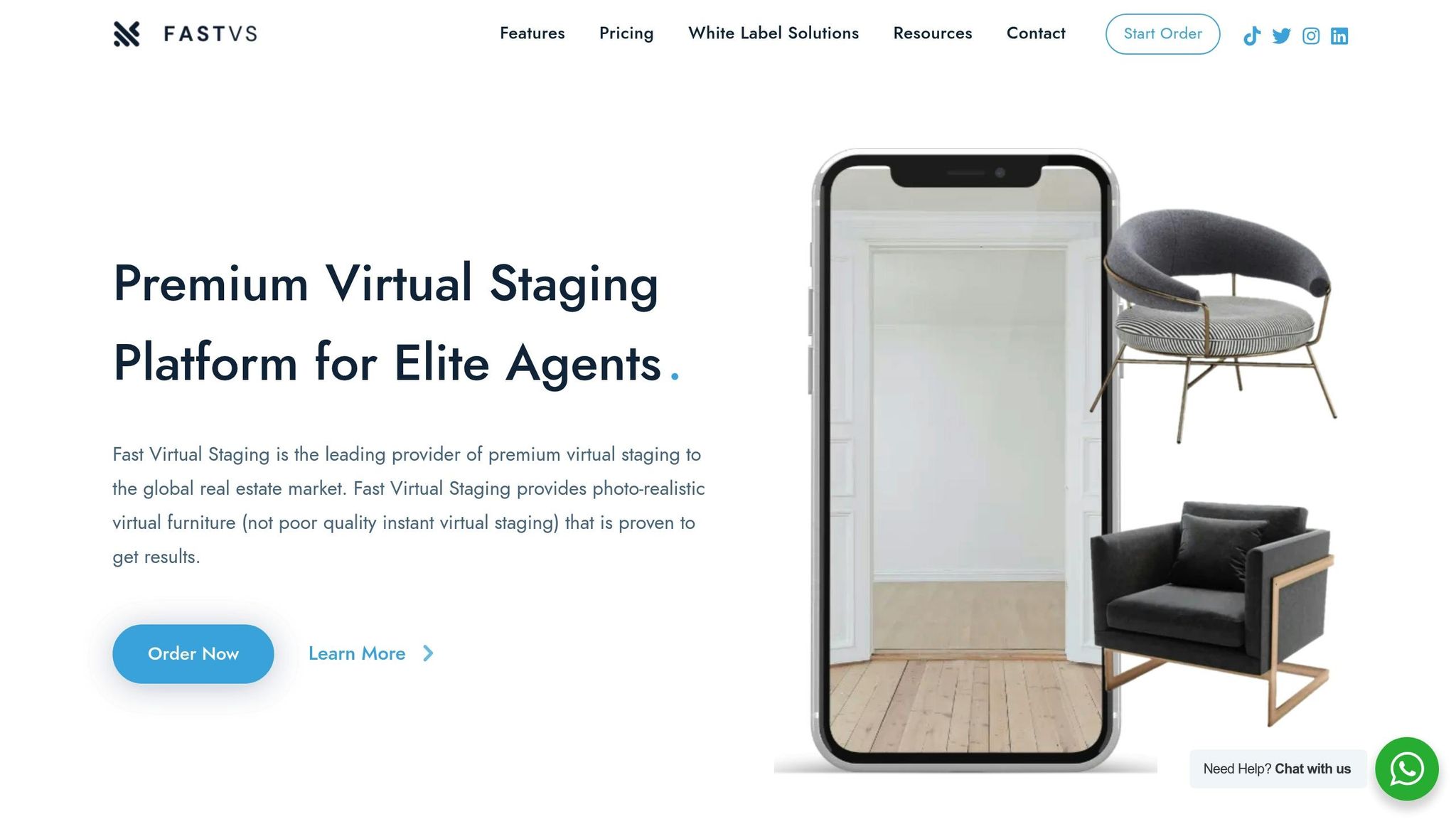
Fast Virtual Staging makes the process even simpler for time-pressed real estate professionals. With prices starting at just $20 per image, the service offers photo-realistic renders that cater to both residential and commercial properties.
For those in fast-paced markets like New York and Los Angeles, the 24-hour delivery guarantee for residential orders is a game-changer. Agents can quickly list properties without delay. Each client is assigned a dedicated account manager who understands their specific needs and market trends, ensuring a personalized experience. Plus, hassle-free revisions mean clients can fine-tune images without added stress. The entire process, from uploading photos to receiving final renders, is handled online – no need for endless back-and-forth emails or calls.
White-Label Services for Professionals
Fast Virtual Staging also offers white-label solutions, ideal for real estate photographers and agencies. This allows businesses to provide virtual staging services under their own brand without investing in expensive technology or hiring specialized staff. White-label partners benefit from discounted pricing, making it easy to include virtual staging in their service packages.
For real estate agencies, white-label staging ensures brand consistency across all listings while offering sellers a complete visual marketing package. It’s a win-win for professionals looking to elevate their services without overextending their resources.
sbb-itb-7eef225
Case Studies: Virtual Staging Results
Case studies provide a clear picture of how virtual staging can elevate a property’s appeal and influence its performance in the market. These real-world examples highlight how it enhances buyer interest and positively impacts sales outcomes.
Before and After: Property Transformations
Take a Manhattan loft in SoHo, for instance. Initially, it was a stark, empty space with exposed brick walls and industrial windows. Through virtual staging, it was transformed into a modern, welcoming home. Thoughtfully selected furniture and improved lighting turned the bare loft into an aspirational urban retreat, complete with a cozy living area, a stylish dining space, and a serene bedroom. This makeover resonated with buyers looking for a chic city lifestyle.
In another example, a Los Angeles condo underwent a virtual redesign inspired by coastal living. The addition of light wood finishes, soft blue accents, and contemporary furnishings brought warmth and character to the previously plain unit. By reimagining the space to reflect Southern California’s laid-back lifestyle, potential buyers could easily picture themselves living there, balancing functionality with a touch of aspiration.
Sales Data: Measurable Results
Staged properties consistently sell faster and often at higher prices. Virtual staging plays a key role by creating visually appealing images that grab attention and help buyers imagine the possibilities of a space.
Beyond its visual appeal, virtual staging is a cost-effective alternative to traditional staging. It not only speeds up transactions but also frees up real estate professionals to focus on other listings, maximizing their efficiency.
These case studies highlight the measurable benefits of virtual staging, proving its value as a strategic tool for both sellers and agents, especially in competitive urban markets. Its ability to deliver tangible results makes it an increasingly popular choice in the real estate industry.
The Future of Virtual Staging in Real Estate
Virtual staging is no longer a niche service – it’s become a game-changing tool in real estate marketing. By solving common challenges for sellers and agents while keeping pace with shifting buyer expectations, virtual staging is shaping the future of the industry.
Why Virtual Staging Is on the Rise
The growing reliance on digital tools in real estate has made virtual staging more important than ever. Today’s buyers often make decisions based on online listings, meaning high-quality visuals are essential to capture attention and spark interest.
Affordability is another factor driving its popularity. Services like Fast Virtual Staging offer agents a budget-friendly option, charging just $20 per image with quick turnaround times. This allows agents to enhance multiple listings without the logistical headaches of traditional staging.
Virtual staging also offers unmatched flexibility. For example, an empty downtown Los Angeles condo can be styled with sleek, modern furniture to attract young professionals. Later, the same space can be redesigned with a cozy, family-friendly layout to appeal to a different audience – all using the same set of photos.
In competitive markets like New York and Los Angeles, where every detail matters, virtual staging gives listings a much-needed edge. Buyers scrolling through endless options are more likely to pause on a well-staged, visually appealing property.
Advancements in rendering technology have taken virtual staging to the next level. These tools now produce images so realistic they rival traditional photography, allowing agents to list properties quickly without waiting for physical staging.
Next Steps for Sellers and Agents
As competition in urban markets intensifies, incorporating virtual staging into your marketing strategy isn’t just a bonus – it’s a necessity. Real estate professionals should treat it as a standard tool, focusing on areas that make the biggest impact, like living rooms, master bedrooms, and kitchens.
Start by prioritizing properties that stand to gain the most from enhanced visuals. Homes that have been sitting on the market or those in highly competitive segments are prime candidates for virtual staging.
For a seamless experience, consider partnering with virtual staging providers through white-label arrangements. This lets you offer the service to your clients while maintaining your own branding.
Finally, track the results. Monitor metrics like time on market, showing requests, and online engagement to see how staged listings perform compared to unstaged ones. This data will not only justify the investment but also help fine-tune your approach.
Agents who embrace virtual staging now will be better equipped to thrive in the evolving digital real estate landscape. As buyer expectations continue to shift and competition grows, virtual staging is quickly becoming as essential as professional photography for successful real estate marketing.
FAQs
How does virtual staging compare to traditional home staging in terms of cost and efficiency?
Virtual staging offers a much more budget-friendly and time-saving alternative to traditional home staging. For instance, virtual staging typically costs between $16 and $100 per image, whereas traditional staging can set you back anywhere from $7,000 to $30,000, depending on the size and complexity of the property.
Speed is another standout benefit of virtual staging. While traditional staging can take weeks to organize, execute, and complete, virtual staging projects are often wrapped up within just a few days. This quick turnaround makes it especially appealing in fast-paced urban markets, where saving both time and money is crucial for sellers and buyers alike.
Why is virtual staging so effective for attracting buyers in competitive markets like New York and Los Angeles?
Virtual staging works wonders in competitive real estate markets like New York and Los Angeles by turning empty or outdated spaces into visually appealing, move-in-ready homes. It gives potential buyers a clear picture of how the property could look once furnished, helping them form an emotional connection with the space.
In bustling urban markets, where first impressions make all the difference, virtual staging lets sellers present a property’s best features without the cost or effort of traditional staging. It also emphasizes how adaptable a space can be, allowing buyers to imagine how it could fit their personal needs and lifestyle. This clarity often results in quicker sales and more compelling offers.
How can real estate agents use virtual staging to match buyer preferences and make a property more appealing?
To get the most out of virtual staging, real estate agents should tailor designs to match the preferences of their target audience. For instance, sleek modern or minimalist styles might catch the eye of younger buyers, while traditional or farmhouse-inspired designs could attract families or those looking for a warm, inviting vibe.
The goal is to emphasize the property’s standout features – think spacious layouts, abundant natural light, or distinctive architectural elements – while ensuring the staging feels realistic and approachable. Using high-quality images is essential to present the space in its best light. Additionally, gathering feedback from colleagues or potential buyers can provide valuable insights to fine-tune the final presentation.