
Virtual staging has become a must-have for real estate in 2025. Why? Buyers now expect visually engaging online listings, and virtual staging delivers – quickly and affordably. It digitally transforms empty properties into fully furnished spaces, helping buyers picture themselves at home without needing a physical visit.
Here’s what’s trending this year:
- AI-Powered Personalization: Faster staging with tailored designs for specific buyer preferences.
- 3D Virtual Tours: Immersive, interactive property walkthroughs that hold buyer attention longer.
- On-Demand Customization: Instant design options with quick turnarounds (12–24 hours).
- Neutral Design Styles: Clean, simple looks that appeal to a broad audience.
Virtual staging also beats physical staging in cost, speed, and flexibility. For just $20 per image, agents can showcase multiple design styles, update based on feedback, and track buyer engagement through data analytics.
With tools like Fast Virtual Staging, real estate professionals can create polished, tailored listings that resonate with today’s digital-first buyers. Whether targeting first-time buyers or luxury clients, virtual staging is the smarter way to market properties in 2025.
2025 Design and Home Staging Trends
Top Virtual Staging Trends in 2025
Virtual staging continues to evolve, becoming an essential tool for over half of real estate professionals today. Staying ahead of emerging trends is key to leveraging its full potential. Here are the top trends shaping virtual staging in 2025.
AI-Powered Personalization
Artificial intelligence is transforming virtual staging by making it faster and more adaptable. With AI, real estate professionals can stage properties beautifully and efficiently, completing tasks in minutes that used to take hours. This speed allows for quick adjustments based on client feedback, ensuring that listings meet expectations without delays.
3D Virtual Tours
Interactive 3D tours have become the new norm. These tours let potential buyers explore staged homes from their devices, offering a realistic sense of depth and layout. The immersive nature of these experiences keeps buyers engaged with listings longer, often leading to increased interest and quicker sales.
On-Demand Design Customization
Today’s buyers expect instant results and a variety of design options. On-demand customization tools allow them to see spaces with different furniture styles, color schemes, and layouts almost immediately. Many staging services now promise a turnaround time of just 12–24 hours for residential projects, giving agents the flexibility to try multiple design concepts and respond quickly to market trends.
Minimalist and Neutral Design Preferences
Simple, uncluttered designs with neutral color schemes remain a favorite. This approach creates a welcoming atmosphere while highlighting the home’s architecture and natural light. By offering a blank slate, minimalist staging makes it easier for buyers to imagine their own style in the space, appealing to a wide range of preferences.
Digital Tools and Techniques for Virtual Staging
Virtual staging has become a game-changer in real estate, offering professionals the ability to create visually stunning and engaging property presentations. By leveraging advanced digital tools, agents can deliver the high-quality visuals that modern buyers expect, while tailoring their approach to each listing. Let’s dive into the key technologies driving these capabilities.
3D Rendering Software
At the heart of professional virtual staging lies 3D rendering software. These tools create lifelike images by seamlessly integrating digital furniture and decor into real property photos. They replicate natural lighting, shadows, and reflections, making the virtual elements look as though they belong in the space. With features like advanced texture mapping, even the smallest details – such as the grain of wood or the weave of fabric – are rendered with precision, ensuring the final images are both realistic and visually appealing.
Augmented Reality Integration
Augmented reality (AR) takes virtual staging to the next level by allowing buyers to interact with digital designs in real time. Through mobile apps or smart devices, AR overlays virtual furniture and decor into the buyer’s actual environment. This immersive experience helps buyers visualize how a space could look and feel with specific design choices.
For real estate professionals, AR offers practical advantages. It eliminates the need for physical staging by enabling on-site interaction with 3D models, making it easier to refine designs based on buyer feedback. AR also bridges geographical gaps, allowing remote collaboration between agents, designers, and clients. Whether discussing layouts or tweaking decor styles, this technology enables real-time adjustments and provides valuable insights into how staging aligns with a property’s unique features.
Fast Virtual Staging Features
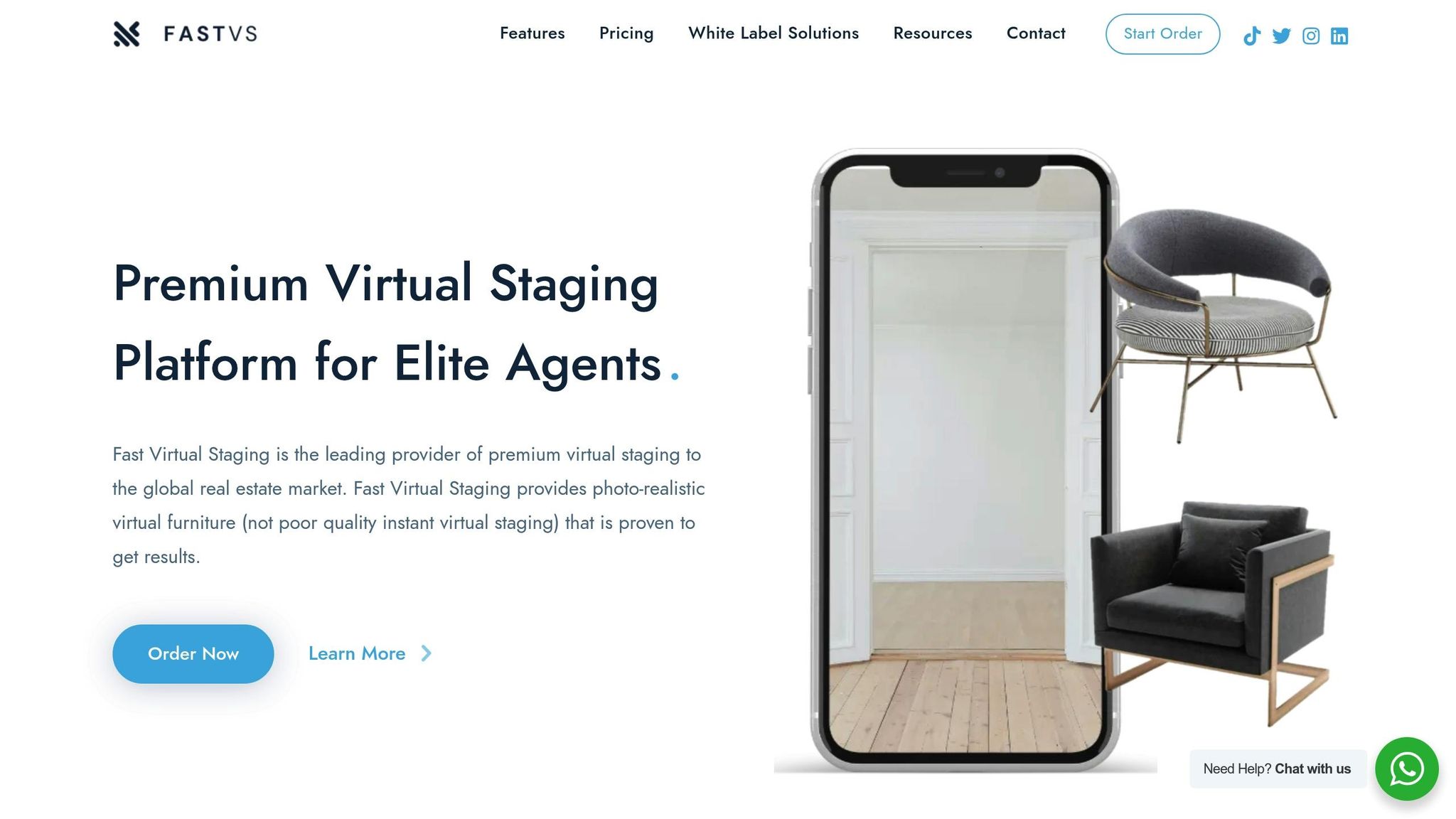
When it comes to speed and customization, Fast Virtual Staging stands out. This platform delivers photo-realistic virtual furniture renders tailored to both residential and commercial properties. With a quick 12–24-hour turnaround, properties can be staged almost immediately. Residential orders even come with a guaranteed 24-hour delivery, ensuring agents can meet tight deadlines.
Customization is a key feature of this service. Real estate professionals can choose from a variety of design themes to match target demographics and local market trends. Whether it’s sleek, modern designs for city apartments or classic styles for suburban homes, the platform provides options to suit every need.
Fast Virtual Staging also supports white-label solutions, allowing photographers and real estate marketplaces to offer staging services under their own brand while benefiting from the platform’s technology. A dedicated account manager and revision options ensure client satisfaction, while the streamlined online ordering process – complete with photo uploads, design selection, and progress tracking – makes the workflow hassle-free. At just $20 per image, this service offers an affordable alternative to traditional staging, making it accessible for a wide range of professionals.
sbb-itb-7eef225
How to Match Listings with Buyer Expectations
Understanding buyer preferences is key to excelling in real estate. Virtual staging offers a way to create tailored presentations that connect with specific buyer groups, highlight a property’s potential, and refine strategies using data. These methods make staging more efficient and ensure listings meet buyer demands.
Personalization for Target Demographics
Different buyers have unique tastes when it comes to home design and lifestyle. For instance:
- First-time buyers lean toward modern, space-saving designs that make the most of smaller areas.
- Luxury clients expect high-end furniture, luxurious textures, and carefully chosen art that exudes exclusivity.
- Growing families appreciate practical layouts with child-friendly features and smart storage solutions.
- Empty nesters often prefer simpler, low-maintenance spaces focused on comfort and accessibility.
By tailoring staging to these preferences, you can make a stronger impression on your target audience. Offering diverse design options alongside these personalized approaches can further captivate potential buyers.
Showcasing Multiple Design Options
Providing various staging styles for a single property can significantly boost buyer interest. For example, a living room could be staged in contemporary, traditional, or minimalist styles, giving buyers a chance to visualize the space in ways that match their tastes. Similarly, a master bedroom might be presented as a cozy retreat, a sleek modern space, or even a functional home office.
It’s essential to choose styles that align with local trends and the property’s price range. Platforms like Fast Virtual Staging make this approach easy and cost-effective. At just $20 per image with a quick turnaround of 12 to 24 hours, real estate professionals can experiment with different staging styles to see which resonates most with buyers.
Using Analytics for Better Results
Relying on data can make your staging efforts more effective and lead to faster sales. Modern virtual staging tools provide insights into buyer behavior, helping you refine your approach. Key metrics include:
- Viewing time analytics, which reveal which staged images hold buyers’ attention the longest.
- Click-through rates, indicating which designs inspire buyers to take action.
- Demographic engagement data, showing which styles appeal to specific age groups or buyer segments.
Testing various staging themes on comparable properties can also help determine which designs generate more interest and showings. This data-driven feedback allows for informed adjustments to meet buyer expectations.
Fast Virtual Staging offers additional support with a dedicated account manager who can analyze performance data and recommend design tweaks. Plus, their revision options make it easy to update images based on early buyer feedback, ensuring your listings stay aligned with market trends and buyer preferences for maximum impact.
Virtual Staging vs. Physical Staging
As digital tools reshape the real estate industry, comparing virtual staging to traditional physical staging highlights why many professionals now lean toward virtual solutions.
Physical staging involves renting furniture, hiring designers, and coordinating deliveries – tasks that are not only time-consuming but also require ongoing maintenance. On the other hand, virtual staging uses digital technology to add furniture and decor to property photos, creating realistic images in a fraction of the time.
Cost is a major distinction between the two. Physical staging often comes with a hefty price tag due to furniture rentals and design services, while virtual staging offers a far more budget-friendly alternative.
Another standout feature of virtual staging is its flexibility. Digital tools allow agents to experiment with various design styles and update the look based on feedback, without being limited by physical furniture. Plus, virtual staging can deliver results in just 12–24 hours, enabling properties to hit the market much faster than traditional staging.
Environmental considerations are also becoming more relevant for buyers and agents alike. Virtual staging eliminates the need for transporting and storing furniture, significantly reducing its environmental footprint compared to the logistical demands of physical staging.
Revisions are another area where virtual staging excels. Digital adjustments can be made quickly and inexpensively based on buyer feedback or market trends. In contrast, changes to physical setups require additional time, effort, and cost. For agents managing multiple properties, the ability to scale virtual staging efficiently across listings is a game-changer.
Here’s a quick breakdown of how the two approaches compare:
Comparison Table: Key Features
| Feature | Virtual Staging | Physical Staging |
|---|---|---|
| Cost | Around $20 per image | Higher due to rental and design fees |
| Turnaround Time | 12–24 hours | Several business days |
| Customization | Multiple digital design options | Limited by available furniture |
| Environmental Impact | Minimal – no transport or waste | Requires transportation and logistics |
| Revisions | Quick digital updates | Physical adjustments take time |
| Location Coverage | Accessible anywhere with internet | Dependent on local providers |
| Maintenance | None | Requires ongoing cleaning and upkeep |
| Buyer Engagement | Dynamic visuals with various styles | Offers an in-person experience |
These comparisons highlight why virtual staging is becoming the go-to choice for modern real estate professionals. It’s faster, more cost-effective, and adaptable, all while addressing the growing demand for eco-friendly practices.
The Future of Virtual Staging in Real Estate
Virtual staging is rapidly evolving, and staying ahead of the curve in 2025 means embracing cutting-edge techniques. Today’s buyers expect more than static images – they want immersive, personalized experiences that help them envision their future homes. With advancements in digital tools and tailored staging methods, the way real estate professionals engage buyers is becoming more refined and effective.
AI-driven personalization and 3D virtual tours are now setting the standard in the industry. These technologies, combined with previously discussed AR integrations, allow agents to showcase multiple design styles instantly. This shift not only boosts efficiency but also eliminates the need for costly traditional staging, providing a smarter, more dynamic approach to presenting properties.
Key Takeaways for Real Estate Professionals
To remain competitive, adapting to modern staging strategies is no longer optional – it’s essential. Techniques like rapid staging, offering diverse design options, and making data-driven adjustments can give your listings an edge while keeping expenses manageable.
Analytics play a big role here. By tracking which virtually staged images or designs attract the most attention, you can fine-tune your approach to better connect with your audience. For example, understanding local market preferences can make a huge difference. While younger buyers might lean toward sleek, minimalist designs with smart tech features, families may prefer warm, functional layouts that prioritize comfort and practicality.
How Fast Virtual Staging Helps
Fast Virtual Staging is designed to meet these evolving market demands with a streamlined, efficient process. It’s a tool that offers quick, cost-effective staging solutions tailored to today’s competitive real estate environment.
The platform’s customizable design options make it easy to cater to any buyer demographic or property type. Whether you’re staging a trendy urban condo for young professionals or a spacious suburban home for a growing family, you can choose styles that resonate with your target audience.
What’s more, hassle-free revisions let you adapt your staging based on buyer feedback or changing market trends without starting from scratch. This flexibility is invaluable for properties with broad appeal or in markets where preferences can shift quickly.
Additional features – like a dedicated account manager and white-label options – ensure consistency across all your listings. These tools allow real estate photographers and marketplaces to maintain their brand identity while delivering high-quality, tailored staging. In the fast-moving real estate market of 2025, having this level of adaptability and efficiency is crucial for success.
FAQs
How is AI transforming virtual staging to meet buyer expectations in 2025?
AI is reshaping the world of virtual staging in 2025, offering designs that are not only incredibly realistic but also tailored to match the unique preferences of individual buyers. By tapping into data like buyer behavior, popular regional styles, and trending design aesthetics, AI creates staging that resonates with specific audiences on a personal level.
This kind of customization makes it easier for potential buyers to picture themselves living in the space, forging a stronger emotional connection to the property. The result? Listings that grab attention, spark more interest, and often sell faster – giving sellers a noticeable edge in a competitive market.
What makes 3D virtual tours better than traditional real estate listing methods?
3D virtual tours provide a dynamic and immersive way for potential buyers to explore properties, offering a much richer experience than static photos or videos. They let buyers move through a home at their own pace, giving them a realistic feel for the space and layout – all without stepping foot on the property.
These tours are a huge time-saver for both buyers and agents. Buyers can narrow down their options more efficiently, while agents can avoid scheduling unnecessary showings. Plus, the interactive nature of 3D tours grabs attention online, helping listings stand out from the crowd and potentially speeding up the sales process. With more buyers leaning toward tech-driven solutions, 3D virtual tours have become an essential tool for showcasing homes in a way that resonates with today’s market.
How can real estate professionals use data analytics to make virtual staging more effective?
Real estate professionals can tap into data analytics to make virtual staging more effective by uncovering trends and understanding buyer preferences. By diving into data on what buyers are searching for, current market demand, and how users engage with listings, they can craft virtual spaces that truly connect with their audience and spark interest.
With the help of AI-powered tools, agents can identify which design elements, layouts, and features grab the most attention. This insight allows them to fine-tune staging strategies to meet buyer expectations, making property listings more appealing and potentially speeding up the sales process. Plus, as market trends shift, these data-driven insights ensure staging techniques can adapt, keeping listings ahead of the curve.