
When selling a home in 2025, the choice between virtual staging and real home staging depends on your budget, timeline, and target buyers. Virtual staging uses AI to digitally furnish photos of empty rooms, while real staging involves physically decorating a property. Here’s a quick breakdown:
- Virtual Staging: Costs $24–$200 per room, takes 4–24 hours, and boosts online views by 40%. Ideal for online listings, vacant homes, and tight budgets. However, it can lead to disappointment during in-person tours if buyers expect furnished spaces.
- Real Staging: Costs $1,500–$4,000/month, takes 3–7 days, and creates a strong emotional connection during tours. Best for luxury properties or unique layouts but is much more expensive and time-intensive.
Quick Comparison
| Factor | Virtual Staging | Real Staging |
|---|---|---|
| Cost | $24–$200 per room | $1,500–$4,000/month |
| Turnaround Time | 4–24 hours | 3–7 days |
| Online Impact | 40% more views, 31% more inquiries | Enhances online appeal |
| In-Person Impact | Limited, may disappoint buyers | Strong emotional connection |
| Best For | Vacant homes, online listings | Luxury properties, in-person tours |
Virtual staging is perfect for online-first buyers and budget-conscious sellers, while real staging excels at creating a physical experience that drives premium offers.
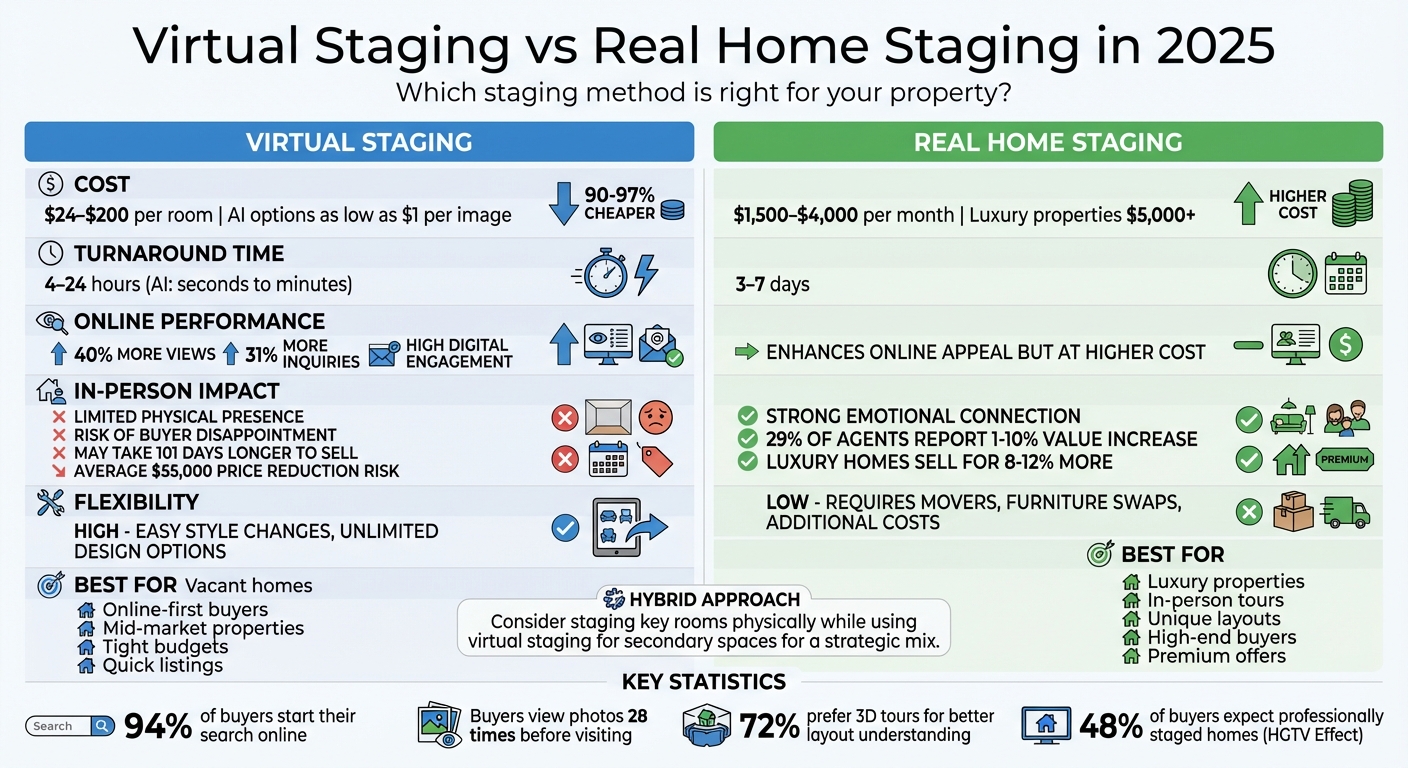
Virtual Staging vs Real Home Staging Cost and Performance Comparison 2025
Home Staging vs Virtual Staging How Does It Affect the Real Estate Sale?
What Is Virtual Staging?
Virtual staging is a modern tool in real estate marketing that uses photo editing software or AI to digitally add furniture, décor, and other design elements to property photos – without the hassle of physically moving items. Essentially, a designer or AI overlays furnishings onto photos of empty rooms, ensuring the additions match the room’s scale, lighting, and perspective. This approach helps potential buyers visualize how a space could look as a livable home.
By 2025, virtual staging has expanded beyond just furnishing empty rooms. It’s now used to digitally declutter occupied homes by removing outdated furniture, showcase unfinished new construction projects, and even simulate virtual renovations, such as changing wall colors, flooring, or fixtures. Some services have gone a step further by integrating with 360° tour platforms like Matterport, enabling buyers to experience digitally furnished spaces from every angle.
How Virtual Staging Works
The process is refreshingly simple. Users start by uploading high-quality property photos to a virtual staging service. They then select a design style – options like Modern, Farmhouse, or Transitional are popular choices – that complements the property’s character. Using these inputs, either a designer or an AI-powered tool adds furniture and décor that fit the room’s dimensions and architectural style. Within a matter of hours, the completed images are ready, and most services offer revisions to make any necessary tweaks.
Virtual staging is particularly effective for vacant homes, where empty rooms can feel uninviting and lack definition. It’s also a game-changer for rental properties and new builds, helping potential buyers or tenants see the property’s full potential. Christa Kenin, a real estate agent at Douglas Elliman, explains:
"Virtual staging is when furniture is added via a computer program to enhance a room’s space".
With a clear understanding of the process, it’s worth exploring the cost-effectiveness and quick turnaround times that make virtual staging so appealing.
Pricing, Turnaround Time, and Process
Virtual staging is surprisingly affordable. Most professional services charge between $20 and $39 per image, with delivery times ranging from 12 to 24 hours. For more intricate or custom designs, prices can climb to $75–$200 per photo, especially if detailed 3D renders or specific styles are required. On the other end of the spectrum, AI-powered staging has dramatically reduced costs, with some services offering prices as low as $1 per image and near-instant turnaround – sometimes in under 30 seconds.
Providers like Fast Virtual Staging streamline the process, delivering photo-realistic renders within 24 hours. Many services also include hassle-free revisions and assign dedicated account managers to ensure the final images meet expectations. For agents or photographers managing multiple listings, subscription packages and white-label solutions make bulk staging even more cost-effective, with plans starting at $10 to $20 per month for 6 to 15 images.
Pros and Cons of Virtual Staging
Virtual staging comes with a host of benefits. It’s far more affordable than traditional staging, cutting costs by as much as 90% to 97%. While physically staging a room can cost $500 to $600 per month, virtual staging offers unlimited design flexibility at a fraction of the price. A single room can even be staged in multiple styles to appeal to different buyer demographics. Moreover, virtually staged listings tend to perform better online, generating 40% more views and 31% more inquiries compared to non-staged listings. Another bonus? Since no furniture is physically moved, there’s no risk of property damage or additional rental fees.
That said, virtual staging isn’t without its challenges. The biggest drawback is the potential disconnect between the digital images and the physical property. When buyers visit in person, they might feel disappointed to find an empty room instead of the beautifully staged space they saw online. This mismatch can lead to frustration or even distrust. Staging Studio cautions:
"Virtual staging creates an online fantasy that doesn’t deliver in real life".
To avoid such pitfalls, transparency is key. Always label images as "digitally staged" and include the original, unaltered photos. This not only complies with MLS rules but also helps manage buyer expectations.
What Is Real Home Staging?
Real home staging is all about creating a physical, welcoming environment that helps potential buyers connect with a property. Unlike virtual staging, which relies on digital renderings, real staging involves furnishing a home with actual furniture, artwork, and décor to showcase its best features. This hands-on approach allows buyers to walk through the space, see how rooms are used, and imagine themselves living there. A big part of the process is "neutralizing" the home by removing personal items, making it easier for buyers to picture it as their own.
Jessica Lautz, Deputy Chief Economist and Vice President of Research at the National Association of Realtors®, sums it up perfectly:
"By staging a home, agents who are Realtors® strategically highlight the best features, ensuring sellers receive the most-competitive offers".
Real staging works particularly well for luxury properties, vacant homes, or spaces with unusual layouts that benefit from a fully furnished setup. It’s most commonly used in key areas like the living room (91%), primary bedroom (83%), dining room (69%), and kitchen (68%).
How Real Staging Works
The process begins with a consultation, where a professional stager evaluates the property and suggests which rooms to stage and what styles will appeal to the target market. This consultation typically costs between $300 and $600. Before staging begins, the property is prepped with repairs, cleaning, decluttering, and fresh paint to ensure it’s ready for the transformation.
Once prepped, the stager brings in furniture and décor – either from their own inventory or rented from third-party suppliers. Professional movers handle the transportation and setup, carefully arranging everything to enhance the home’s flow and appeal. The entire process, from consultation to setup, usually takes 3 to 7 days. After the home sells, the staging company removes the items, though many require a minimum three-month contract, even if the home sells sooner.
Pricing and Timeline
Real staging is a significant investment. The median cost is around $1,500, but for some properties, it can range up to $3,500 per month. In high-end luxury markets, it’s not uncommon for costs to exceed $5,000 per month. Renting furniture for individual rooms typically costs $500 to $600 per room, per month. Factoring in setup and preparation time, real staging generally takes 3 to 7 days to complete.
Pros and Cons of Real Staging
One of the biggest advantages of real staging is its ability to create an emotional connection. Buyers can physically experience the space, get a sense of the room sizes, and visualize how their own furniture might fit. This tactile experience often translates into higher offers, with 29% of real estate agents noting that staging can increase a home’s value by 1% to 10%.
However, the costs can be steep – real staging is up to 96% more expensive than virtual staging. It also comes with logistical challenges, such as coordinating designers, movers, and furniture rentals. There’s always a risk of items being damaged or stolen during the process. Plus, design changes can be time-consuming and costly. Another downside is the high expectations set by professionally staged homes on TV – 48% of agents report that buyers expect homes to look like these idealized versions. Disappointingly, 58% of buyers say they feel let down when a home doesn’t match these polished images.
sbb-itb-7eef225
Virtual Staging vs. Real Home Staging: Direct Comparison
Side-by-Side Comparison
Choosing between virtual and real home staging depends on factors like cost, speed, online performance, in-person impact, and adaptability. Each option caters to different types of properties and marketing strategies.
Cost is where virtual staging stands out. Real home staging can cost anywhere from $1,500 to over $4,000 per month for mid-market homes, with luxury properties often exceeding $5,000. On the other hand, virtual staging typically costs $16 to $50 per photo, with AI-powered options dropping as low as $1 per photo. This makes virtual staging a budget-friendly choice for agents working with mid-market listings or tighter financial constraints.
Turnaround time is another key difference. Real staging usually requires 3 to 7 days from consultation to completion. Virtual staging, however, is much faster – professional services deliver results within hours, while AI tools can complete the process in mere seconds.
Online impact heavily favors virtual staging, as it significantly boosts digital engagement. Virtually staged listings receive about 40% more views and generate 31% more inquiries compared to non-staged listings. While real staging also enhances online appeal, its higher cost doesn’t always translate to better digital performance.
In-person impact is where real staging shines. Physically staged homes create a tactile, emotional experience that helps buyers imagine themselves living in the space – especially important for luxury properties or homes with unconventional layouts. Virtual staging, however, can lead to disappointment when buyers visit a home expecting it to be furnished, only to find empty rooms. In some cases, virtually staged homes have taken an average of 101 days longer to sell and required price reductions averaging $55,000 compared to homes with real staging.
Flexibility is a strong suit of virtual staging. Changing room designs or layouts is as simple as submitting a new photo. In contrast, real staging often involves coordinating movers, swapping out furniture, and incurring additional costs.
| Factor | Real Staging | Virtual Staging | AI Virtual Staging |
|---|---|---|---|
| Cost | $1,500 – $4,000+ per month | $16 – $50 per photo | ~$1 per photo |
| Turnaround | 3 – 7 days | 4 – 48 hours | Seconds to minutes |
| Online Impact | High | High (40% more views) | High |
| In-Person Impact | High (emotional connection) | Low (risk of disappointment) | Low (risk of disappointment) |
| Flexibility | Low (hard to change) | High (easy style swaps) | Very High (instant iterations) |
| Best For | Luxury, unique layouts | Vacant homes, mid-market | Fast-moving, budget listings |
These factors help determine the ideal staging method based on the property and its marketing goals.
Which Method Works Best for Different Properties
Understanding the strengths of each approach makes it easier to match the right staging method to the property.
Entry-level and mid-market homes are ideal for virtual staging. Buyers in this segment often rely heavily on online searches, and virtual staging helps them visualize the space without breaking the bank. The quick turnaround also ensures these listings stay fresh and appealing.
Luxury properties are better suited for real staging. High-end buyers expect a premium experience, and physical staging delivers the elegance and ambiance needed to justify higher price tags. In fact, professionally staged luxury homes can sell for 8% to 12% more, making the investment worthwhile.
Vacant properties can be challenging to market. Empty rooms often make it difficult for buyers to visualize the space or understand its dimensions. Virtual staging fills this gap for online listings but can fall short during in-person tours. One workaround is to use large prints of staged images during showings to align buyer expectations.
Hybrid staging combines the affordability of virtual staging with the emotional appeal of real staging. For instance, physically staging key rooms like the living room and primary bedroom – identified as critical by 37% and 34% of buyers’ agents, respectively – while virtually staging secondary spaces like guest rooms or basements. This approach balances cost with impact, offering a strong in-person experience without overspending.
Occupied homes also benefit from virtual staging. If the current furniture or décor doesn’t align with market preferences, virtual staging can digitally replace outdated or overly personalized pieces with neutral designs. This avoids the hassle and cost of physically rearranging or removing items.
How to Choose the Right Staging Method
Step-by-Step Decision Guide
The staging method you choose plays a big role in how well your property performs online and in person. Start by assessing your budget and timeline. If you’re working with a tight budget or need to list a property quickly, virtual staging is a fast and affordable option. On the other hand, real staging works well for luxury homes where there’s more time and money available to create a high-end presentation.
Next, consider the type and current condition of your property. For vacant, mid-market homes, virtual staging helps buyers imagine how furniture fits into the space without the added expense of renting and moving real items. Meanwhile, luxury properties often benefit from real staging, as high-end buyers appreciate the tactile and emotional experience that comes with seeing physical furnishings in person. For homes that are occupied but have outdated décor, virtual staging can digitally modernize the space without requiring the hassle of moving furniture or redecorating.
Think about your market’s buyer behavior. Since 94% of buyers start their search online and typically view property photos 28 times before visiting a home, having strong visuals is crucial. Virtual staging can increase online views by 40% and generate 31% more inquiries. However, if your market leans heavily on in-person tours – especially for high-end properties – real staging can create the emotional connection that often seals the deal.
A hybrid approach can also be effective. For example, you might physically stage key rooms like the living room and primary bedroom, while using virtual staging for less prominent spaces like guest rooms or offices. This strategy strikes a balance between cost-efficiency and creating an inviting atmosphere for in-person tours.
With these factors in mind, let’s dive into some additional tips to fine-tune your staging plan.
Important Considerations and Tips
Once you’ve chosen your staging method, it’s essential to ensure that your approach aligns with buyer expectations and industry guidelines. Here are some practical tips to keep in mind:
- Follow MLS rules for virtual staging. Most MLS platforms require that digitally enhanced photos are clearly labeled, and in many cases, the original unstaged photos must also be included in the listing. Buyers often struggle to visualize empty rooms, so digital furnishings can help bridge that gap.
- Understand local MLS restrictions. Many MLS boards prohibit virtual staging from making structural changes, like removing walls or hiding damage. Stick to cosmetic enhancements only.
- Ensure consistency between online photos and in-person tours. If you’re using virtual staging, consider providing printed versions of the staged images during showings. This helps buyers connect the digital vision with the actual space. A study found that 58% of agents reported buyer disappointment when the home didn’t match its online photos.
- Prep the space for photography. Before any staging – physical or virtual – clean the home thoroughly, declutter, and make sure the lighting is perfect. This ensures that any digital additions blend seamlessly into the photos.
- Match the staging style to your property and market. The furniture and décor should feel natural and align with the preferences of local buyers. For example, avoid putting sleek, modern furniture in a traditional home or farmhouse décor in a contemporary space. Services like Fast Virtual Staging offer customizable design styles with quick turnaround times (12–24 hours), making it easy to experiment and adjust based on feedback (fastvirtualstaging.com).
Staging Trends in 2025
In today’s real estate market, online listings are the key to success. As Tech Helpline of Florida Realtors puts it:
"The screen is the new front door".
This transformation is heavily influenced by the so-called "HGTV Effect." Around 48% of real estate agents report that buyers now expect homes to look professionally staged, much like the polished spaces they see on TV.
By 2025, AI-powered staging technology has revolutionized the process. What used to take days can now be done in just 15 seconds. From digitally updating flooring and cabinetry to removing clutter, AI handles it all seamlessly. Features like Multi-View Staging ensure that furniture placement remains consistent across various camera angles, creating a cohesive and polished look. These advancements make online property listings more immersive than ever.
Interactive 3D and 360° tours have also become the new standard. Surveys reveal that 72% of buyers believe 3D tours provide a better sense of a property’s layout compared to static images, and 67% wish more listings included this feature. Platforms like Matterport and iGuide enable buyers to virtually explore staged spaces from anywhere, offering a more engaging and realistic experience.
To stay competitive, it’s essential to adapt your staging approach to meet these evolving online and in-person buyer expectations.
FAQs
How does virtual staging compare to traditional staging in terms of boosting the selling price?
Virtual staging can boost a property’s selling price by a margin similar to traditional staging – typically around 1% to 10%, with luxury homes seeing increases of 8% to 12%. The real standout, though, is the return on investment (ROI). Virtual staging delivers an impressive ROI, ranging from 500% to 3,600%, compared to the 102% to 909% achieved with physical staging.
This makes virtual staging an incredibly cost-effective way to enhance a property’s appeal. Using advanced technology, it creates stunning, realistic visuals for a fraction of the cost and effort required by traditional staging methods. In a competitive real estate market, this can be a game-changer.
How can I manage buyer expectations effectively when using virtual staging?
To handle buyer expectations effectively with virtual staging, focus on honesty and realistic representation. Always make it clear that the images have been digitally staged. Adding a note in the listing or photo captions is a simple way to ensure buyers aren’t caught off guard during in-person visits. Including at least one unedited photo of each room alongside the staged versions can help buyers see the home’s true layout while still appreciating its potential.
When staging virtually, aim for a natural look. Stick to accurate room dimensions, use lighting that feels authentic, and choose decor that matches the property’s style and appeals to the intended audience. Avoid cramming rooms with oversized furniture or adding decor that wouldn’t realistically fit – this can lead to false impressions and damage trust.
Lastly, make sure your marketing materials stay consistent. If the property undergoes updates, like renovations or new fixtures, refresh the staged images to reflect those changes. By staying transparent, realistic, and adaptable, virtual staging can elevate your listing while maintaining buyer confidence.
Can virtual staging update the look of an occupied home with outdated decor?
Virtual staging is an excellent way to refresh the look of an occupied home by digitally replacing outdated furniture and decor in photos. This method lets you modernize a space without the need to physically rearrange or replace anything, making it a practical and budget-friendly option. It’s a smart way to showcase a property’s potential while keeping things simple and convenient for homeowners.