
Virtual staging is a cost-effective, digital way to showcase homes by adding virtual furniture and décor to photos of empty spaces. It helps buyers visualize living in the property, which can lead to faster sales. Unlike physical staging, virtual staging is cheaper (around $100 per photo vs. $2,000–$2,400 for physical staging), quicker (12–48 hours vs. days or weeks), and highly flexible in terms of design. Homes with virtual staging attract more views, generate more interest, and often sell up to 73% faster. It’s a practical solution for real estate professionals aiming to market properties effectively in today’s online-first world.
How To Use Virtual Staging Ai Software For Only $.24 Per Image
How Virtual Staging Changes Property Listings
Virtual staging has reshaped the way properties are presented, turning simple listings into visually engaging showcases. By highlighting a property’s potential, it helps buyers connect emotionally and imagine themselves living there.
Making Empty Spaces Look Inviting
Empty homes can be a tough sell. Without furniture or décor, they often feel cold and impersonal, making it hard for buyers to picture how the space could work for them. Virtual staging solves this by digitally adding stylish furniture and décor, transforming barren rooms into warm, welcoming spaces.
"Virtual staging leverages digital technology to furnish and decorate vacant properties, transforming them into visually captivating homes." – HabileData
This approach doesn’t just make homes look better; it also boosts their appeal. Virtually staged listings can attract up to 30% more online views and sell 40% faster compared to unstaged ones. On average, staged properties sell for 17% more and spend 73% less time on the market.
"Virtual staging is a game changer for selling empty homes. It offers a cost-effective, flexible, and impactful way to present vacant properties in their best light." – Wilson Leung, The Own Team
To make virtual staging as effective as possible, start with high-quality photos and focus on key spaces like the living room, kitchen, and master bedroom. Designs should feel realistic and relatable, helping buyers imagine themselves in the home. Personal touches and before-and-after photos can further emphasize the transformation [6].
Beyond creating inviting spaces, virtual staging also caters to a variety of design preferences.
Showing Multiple Design Styles
Virtual staging does more than just fill empty rooms – it allows for complete design flexibility. Unlike traditional staging, which is limited to one look, virtual staging can adapt to different buyer tastes. You can even showcase multiple versions of the same room, highlighting various layouts or styles to appeal to a broader audience.
According to VirtualStaging.com, the most popular styles include Transitional (26.3%), Modern (19.1%), Farmhouse (13.5%), and Traditional (10%). Knowing these trends helps agents tailor their staging to the preferences of their target market.
Here’s how different styles can redefine a space:
| Style | Key Features | Best For |
|---|---|---|
| Modern | Clean lines, neutral tones, modern materials | Urban professionals, minimalists |
| Farmhouse | Rustic furniture, cozy textiles, vintage accents | Families seeking comfort, rural buyers |
| Transitional | A mix of traditional and modern elements | Broad appeal, undecided buyers |
| Luxury | High-end furniture, bold colors, statement lighting | Affluent buyers, upscale homes |
| Scandinavian | Light colors, natural materials, vibrant plants | Young professionals, eco-conscious buyers |
Strategic staging can also highlight a home’s unique features. For instance, a spare room staged as a nursery might resonate more with families, while showcasing high ceilings or a fireplace can draw attention to standout elements.
Adding Realistic Images to Online Listings
In real estate, first impressions often happen online. Virtual staging enhances listings with high-quality, realistic visuals that grab attention and build trust.
The key to successful virtual staging is balancing visual appeal with authenticity. Buyers should feel confident that what they see online matches the reality of the property. This means using furniture, lighting, and décor that align with the home’s style and target audience.
Virtual staging also ensures consistency across marketing platforms. Whether on MLS, social media, or real estate websites, staged images create a unified and professional presentation that strengthens the property’s appeal.
According to the National Association of Realtors (NAR) 2023 Profile of Home Staging, 20% of agents reported that staging increased a home’s value by 1% to 5%.
For the best results, focus on staging the most influential rooms – living areas, kitchens, and master bedrooms. Keep the designs consistent with the neighborhood’s style and the target demographic to create a polished, cohesive look that inspires buyer confidence.
How Virtual Staging Speeds Up Home Sales
Virtual staging isn’t just about making homes look good – it’s about moving them off the market faster. By helping buyers visualize themselves in the space and generating more interest, virtual staging has become a powerful tool for speeding up the sales process.
Helping Buyers Picture Living in the Home
Empty rooms can be a real challenge for buyers. Without furniture or décor, it’s hard to imagine how a space might feel as a home. Virtual staging solves this problem by transforming bare spaces into warm, inviting rooms that buyers can emotionally connect with. In fact, 81% of buyers say staging makes it easier to picture a property as their future home. Georgina Jacobson, a Real Estate Agent with Coldwell Banker, puts it this way:
"Virtual staging allows for the creative and imaginative implementation of furnishings that can make a property seem simultaneously luxurious, aspirational and inviting in a way that might not be doable in real life."
By showing realistic layouts and giving rooms clear purpose, virtual staging removes the guesswork for buyers. They don’t have to wonder if their couch will fit or where to put a dining table. They can see it all come to life – whether it’s a cozy family room, a sleek home office, or even a nursery. This versatility lets agents tailor spaces to appeal to various buyer needs, making the home feel like it’s ready for anyone, from remote workers to growing families. And when buyers can see the possibilities so clearly, they’re more likely to act quickly.
Getting Properties Sold Faster
The visual impact of virtual staging doesn’t just draw attention – it keeps it. Listings with virtual staging get 40% more views, 31% more inquiries, and hold buyers’ attention 20% longer. This heightened engagement translates directly into faster sales. Staged homes can sell up to 73% faster, with some studies even reporting sales happening up to 30 times quicker.
In today’s online-driven market, where over 90% of buyers begin their search online and 97% prioritize listing photos, the importance of strong visuals can’t be overstated. As Jerry Hendriks of Niagara & Hamilton Real Estate explains:
"Buyers rely on visual appeal, and virtual staging fosters a strong emotional connection. It makes it easier for them to imagine living there. Especially in today’s online-first market, the difference between a quick sale and a slow one can come down to how well your home photographs."
The numbers back this up: 40% of buyers’ agents say staged homes are more likely to lead to walkthroughs, and 48% of sellers’ agents report shorter market times when staging is used. Virtual staging also opens the door to remote and international buyers, who rely heavily on photos to make decisions.
Virtual Staging vs Physical Staging Comparison
When you compare virtual staging to traditional physical staging, the advantages become clear. It’s faster, cheaper, and far more flexible.
| Factor | Virtual Staging | Physical Staging |
|---|---|---|
| Cost | $20–$200 per room | $5,000–$20,000 total project |
| Setup Time | 12–24 hours | 1–2 weeks |
| Flexibility | Multiple design styles possible | Limited to one look |
| Maintenance | None required | Ongoing upkeep needed |
| Customization | Real-time modifications | Difficult to change once set |
| Geographic Reach | Appeals to remote buyers | Limited to local viewers |
| Transparency | Must disclose staging | Buyers see actual setup |
Virtual staging can slash costs by up to 97% compared to traditional staging. For example, staging a three-bedroom home physically might cost $8,000–$15,000, while virtual staging could be done for under $300. Plus, virtual staging allows agents to test different design styles quickly, without the hassle of rearranging furniture.
That said, honesty is critical. As Asaf Amit, Co-founder & CEO of Apply Design, emphasizes:
"Virtual staging is ethical as long as it is used responsibly. It should enhance the presentation of a property without misleading potential buyers. It’s important to accurately represent the space and avoid altering fundamental aspects like size, structural features, or significant property flaws. Transparency is key; realtors should disclose that the property has been virtually staged."
With its lower costs, faster turnaround, and ability to adapt to different buyer needs, virtual staging is becoming an essential tool for agents who want to sell homes quickly while maintaining a polished, professional image.
sbb-itb-7eef225
Cost, Speed, and Benefits of Virtual Staging
Virtual staging offers practical advantages for real estate professionals aiming to stretch their marketing budgets and speed up the selling process. By cutting costs, accelerating listings, and simplifying logistics, virtual staging has become a go-to solution for agents looking to stay competitive.
Lower Costs Than Physical Staging
One of the biggest perks of virtual staging is its affordability compared to traditional staging. While physically staging a home can cost between $1,500 and $5,000, virtual staging typically ranges from just $29 to $75 per photo. This massive price difference means you can stage multiple rooms digitally for what it would cost to stage just one room physically.
In fact, virtual staging can slash costs by over 90% when compared to traditional methods. The return on investment (ROI) is equally impressive. A HomeJab study revealed that virtual staging ROI ranges from 500% to a staggering 3,650%, far exceeding the 102% to 909% ROI of physical staging. Even better, Sotheby’s International Realty found that virtually staged homes often sell for 6% to 10% more than their vacant counterparts.
"Virtual home staging can be a game-changing tool that helps save your clients time and money. It may also attract more buyers when they see the impressive photos in the listing. As long as you follow ethical practices, virtually staging your client’s home may help you to stand out from the competition and generate a faster sale." – PNC Insights
Virtual staging doesn’t just save money – it also accelerates the entire listing process.
Fast Delivery for Real Estate Professionals
Speed is everything in the real estate world, and virtual staging delivers results quickly. While traditional staging can take 7 to 14 days to set up, virtual staging is typically completed within 12 to 48 hours. This quick turnaround allows agents to list properties almost immediately after the photos are taken.
This speed advantage is especially valuable in competitive markets. Homes staged virtually spend an average of just 24 days on the market, compared to 90 days for unstaged properties. And the pricing is straightforward, making it easy to plan. Providers like HomeJab charge around $50 per photo, while others offer packages starting at $19 to $29 per image, with premium options available for higher-end designs. This transparent pricing structure helps agents make quick, informed decisions.
Simple Process Without Physical Setup
Beyond cost and speed, virtual staging simplifies the entire process. There’s no need to arrange furniture deliveries, hire movers, or worry about maintaining staged spaces. Once the digital images are ready, the job is done – no ongoing upkeep required.
This process also offers unmatched design flexibility. Agents can experiment with various styles and layouts without the hassle or expense of physically moving furniture. If a particular design doesn’t click with buyers, adjustments can be made quickly and affordably through digital edits.
Additionally, virtual staging is more eco-friendly. It eliminates the need for physical resources and transportation, reducing the environmental footprint associated with traditional staging. For agents juggling multiple listings, this approach ensures each property can be staged independently without worrying about furniture availability or scheduling conflicts. The simplicity of virtual staging lets real estate professionals focus on selling homes, while the staging itself is handled by digital experts.
Fast Virtual Staging: A Professional Solution
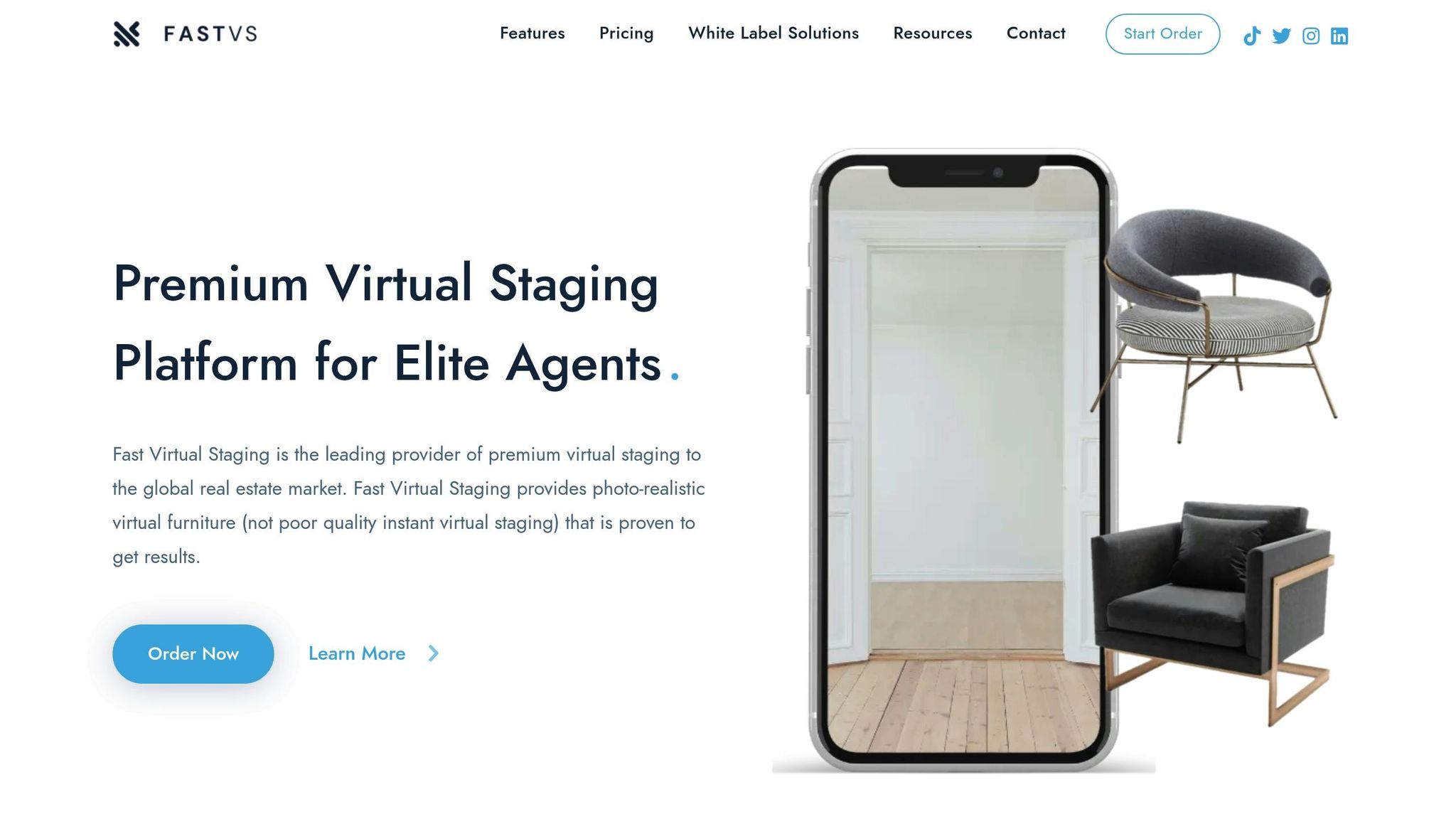
Fast Virtual Staging builds on the advantages of virtual staging, offering a high-quality service that takes property listings to the next level. This premium platform uses advanced 3D technology and industry know-how to create stunning, photo-realistic digital furniture renders. The result? Listings that stand out and homes that sell quicker.
Key Features of Fast Virtual Staging
What makes Fast Virtual Staging stand out? Here’s a closer look:
- Photo-realistic Renders: Each piece of digital furniture is crafted with meticulous attention to detail, ensuring realistic lighting, shadows, and proportions that make the images look like real-life photos.
- Quick Turnaround: Residential projects are completed within 24 hours, ensuring you can market your property without delays.
- Customizable Design Themes: Select from a variety of interior design styles to match the preferences of your target buyers.
- Dedicated Support: Whether you need revisions or assistance, the platform offers personalized support and account management.
Tailored Services for Real Estate Professionals
Fast Virtual Staging is designed with real estate professionals in mind, offering solutions that cater to a wide range of needs:
- White-Label Solutions: Real estate photographers and marketplaces can integrate Fast Virtual Staging into their services, benefiting from exclusive partner discounts.
- Proven Success: Professionals in the industry have reported increased buyer interest after using virtual staging. For instance, Jack Dangerfield from Ray White noted improved engagement with his listings, while Brad Minhinnick from LINK Property Management praised the platform’s simplicity and affordability.
- Adaptability: The service can enhance properties of all types, tailoring designs to suit the space and attract the right buyers.
To make things even easier, Fast Virtual Staging offers a user-friendly online ordering system.
How the Online Ordering Process Works
Fast Virtual Staging simplifies the staging process into five straightforward steps:
- Photo Submission: Upload high-quality images taken in natural daylight. Providing room dimensions or design references can help the team deliver precise results.
- Design Consultation: Share your design preferences and details about your target buyer to guide the staging process.
- Rendering & Editing: The platform’s skilled 3D artists digitally stage the room, ensuring natural shadows and consistent lighting.
- Review & Approval: Review the staged images, request any necessary revisions, and approve the final version.
- Delivery: Receive your polished images, ready to enhance your property listings.
With pricing set at just $20 per image, Fast Virtual Staging offers a quick, professional, and cost-effective way to upgrade your real estate marketing visuals.
Key Points to Remember
Virtual staging transforms empty or outdated spaces into warm, stylish rooms that help potential buyers imagine themselves living in the home. This emotional connection often leads to quicker decisions. According to a 2019 Redfin study, vacant homes sell for about $11,306 less and spend six extra days on the market compared to staged homes – all for a fraction of the cost. While traditional physical staging can cost thousands, virtual staging typically runs just a few hundred dollars per property.
The speed and flexibility of virtual staging are game-changers for busy real estate professionals. Instead of waiting days, images can be ready within hours. Sellers can also choose from multiple design styles, showcasing each space in its best light without the hassle of physical setup. This is especially crucial since over 90% of home buyers start their search online, and 97% consider listing photos the most important factor in their decision-making.
Virtual staging works particularly well for new constructions and vacant homes. Beyond just adding furniture, it can also declutter, repaint, or remove objects from spaces, creating clean and inviting images that stand out in competitive online listings.
Fast Virtual Staging takes these benefits a step further. Their service offers highly realistic renders delivered within 24 hours for just $20 per image. With customizable design options, dedicated support, and hassle-free revisions, they’re helping real estate professionals create stronger marketing materials and close deals faster.
FAQs
How does virtual staging create realistic images without misleading buyers?
Virtual staging creates lifelike images by incorporating high-quality 3D models of furniture and decor that perfectly align with the room’s proportions, lighting, and layout. Every element is thoughtfully designed to make the visuals appear as natural and convincing as possible.
For transparency, it’s essential to clearly indicate that the images have been virtually staged. This approach helps buyers recognize the modifications while still allowing them to imagine the property’s true possibilities.
What ethical guidelines should real estate professionals follow when using virtual staging?
When incorporating virtual staging into real estate marketing, honesty and clarity should always come first. Make sure to clearly indicate that the images have been digitally modified by adding a label like “Virtually Staged”. This helps potential buyers understand that the visuals are enhanced representations, not the property’s current condition.
It’s crucial to avoid making changes to permanent features such as walls, flooring, or structural elements, as this could lead to misunderstandings or even legal issues related to consumer protection. Instead, use virtual staging to add realistic furniture and decor that complements the actual layout and dimensions of the space. By being upfront and using this tool ethically, real estate professionals can highlight a property’s potential while earning buyers’ trust.
Can virtual staging update outdated furniture or décor in a home that’s already furnished?
Virtual staging can absolutely work for furnished homes. By digitally refreshing outdated furniture or décor, it offers a cost-effective way to present a more modern and inviting look. This technique helps potential buyers see the home’s possibilities, making it feel more attractive and ready for the market – all without the hassle or expense of physical staging or renovations.